

DIAMOND
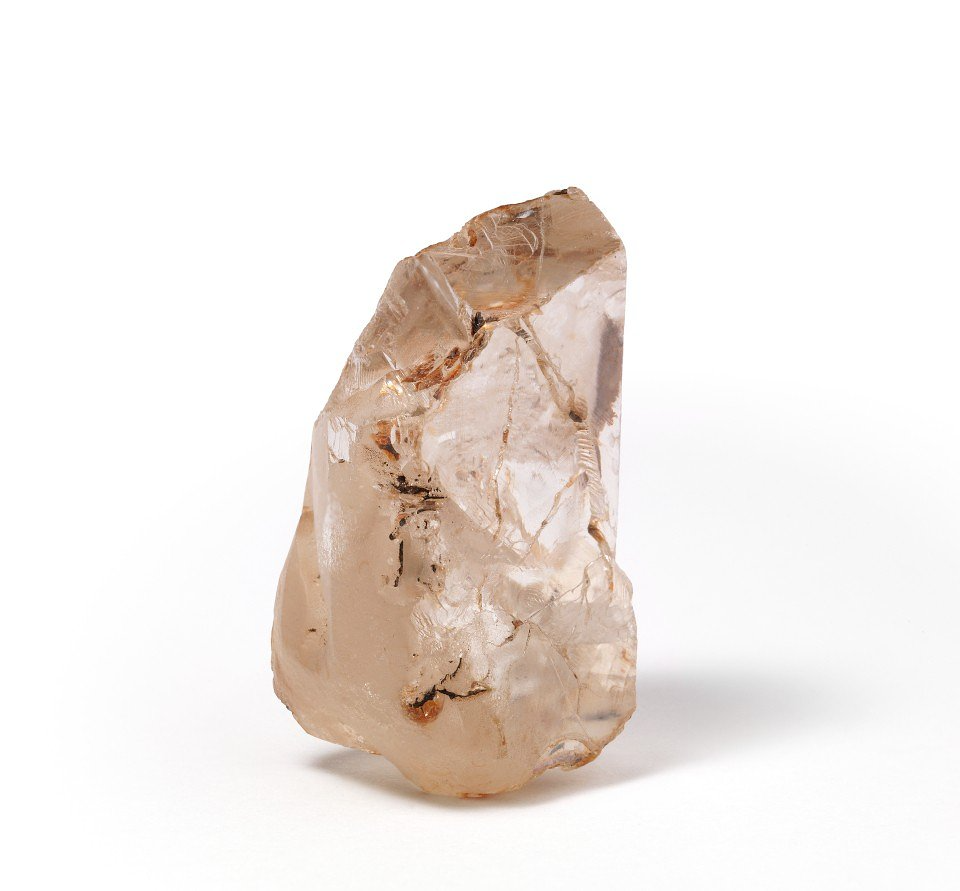
A rough diamond found in Minas Gerais, Brazil, in the late 18th century.
The Facts
Diamond is the only gemstone made (pretty much) of a single element. It is typically about 99.95% carbon, with the other 0.05% made up of trace element impurities. Trace elements are atoms that aren’t part of the diamond’s essential chemical structure but can influence its colour or crystal shape. While we generally think of diamonds as being colourless, these gems actually occur in nearly every colour, with the most common impurity, nitrogen, causing a yellowish to brownish tint, and boron, a much rarer trace element, causing a blue colour. However, not all diamonds are coloured by trace elements; brown and pink diamonds result from defects in the crystal structure and green diamonds occur due to vacancies, or holes, in the lattice structure. While diamonds with yellow and brown hues are generally less valuable than high quality colourless diamonds, other colours may actually increase the value of the gemstone. In these cases, more intense colouration is usually considered more desirable and therefore commands higher prices, with these diamonds being labelled as ‘fancy’ within the industry.
The oldest diamonds are believed to be almost 3.5 billion years old, but even the youngest are said to have formed over 100 million years ago. They crystallise when carbon is put under extreme pressure of approximately 725,000 pounds per square inch, and at a temperature ranging from 900 to 1,300 degrees Celsius. This process occurs deep within the Earth’s mantle and the diamonds are then brought to the surface by volcanic eruptions in which deep-seated magma, known as kimberlite, acts as a ‘geological elevator’. This intense heat and pressure force the carbon atoms into an ultra-dense isometric structure held together by strong covalent bonds which require an extreme amount of energy to break. As a result, diamonds are extremely hard, scoring a perfect 10 out of 10 on the Mohs scale of mineral hardness, above ruby and sapphire at 9. Yet this understates the level of difference, in fact, diamond can be more than four times as hard as corundum, allowing it to be polished to a level unlike any other.
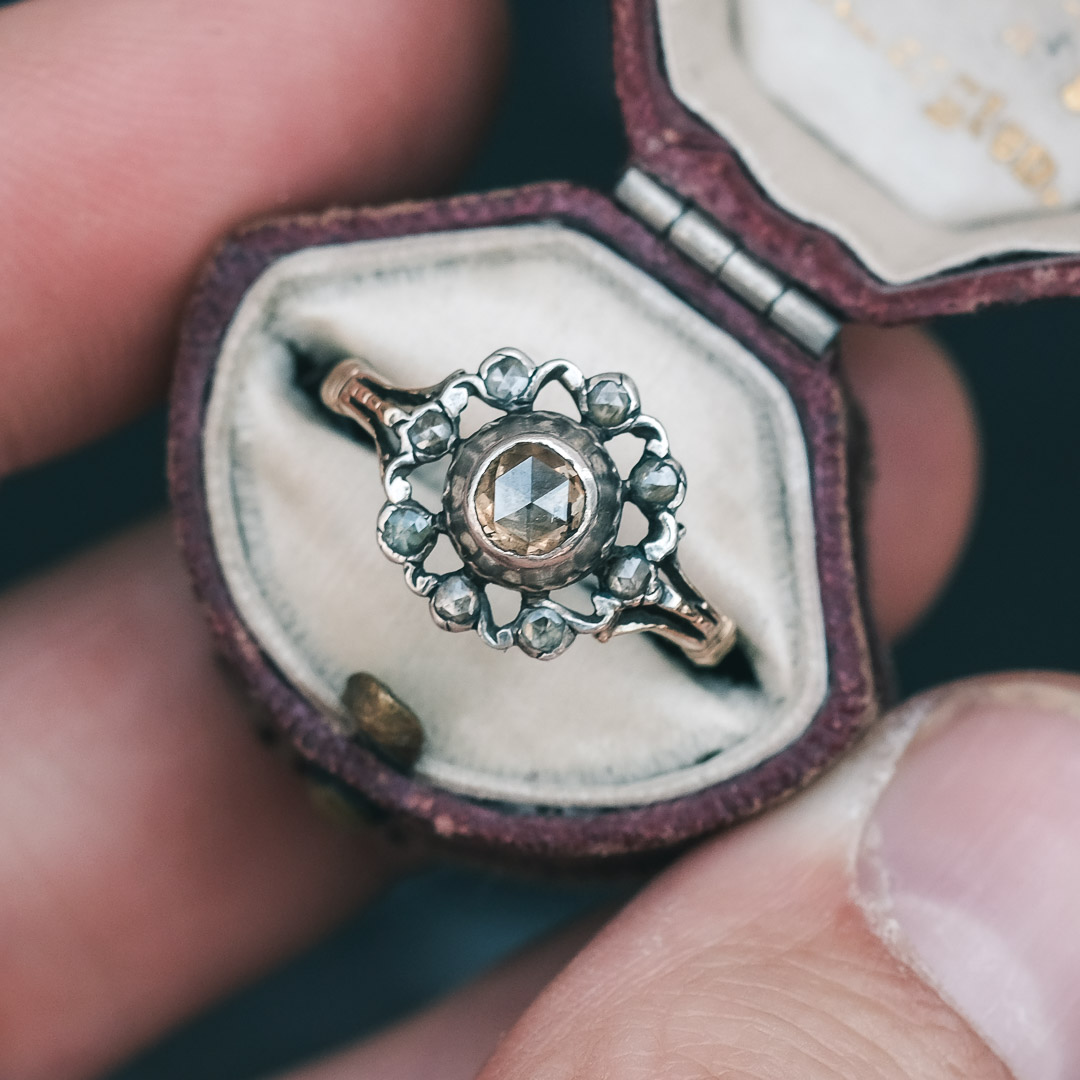
Georgian Fancy Diamond Cluster Ring, Available Now.
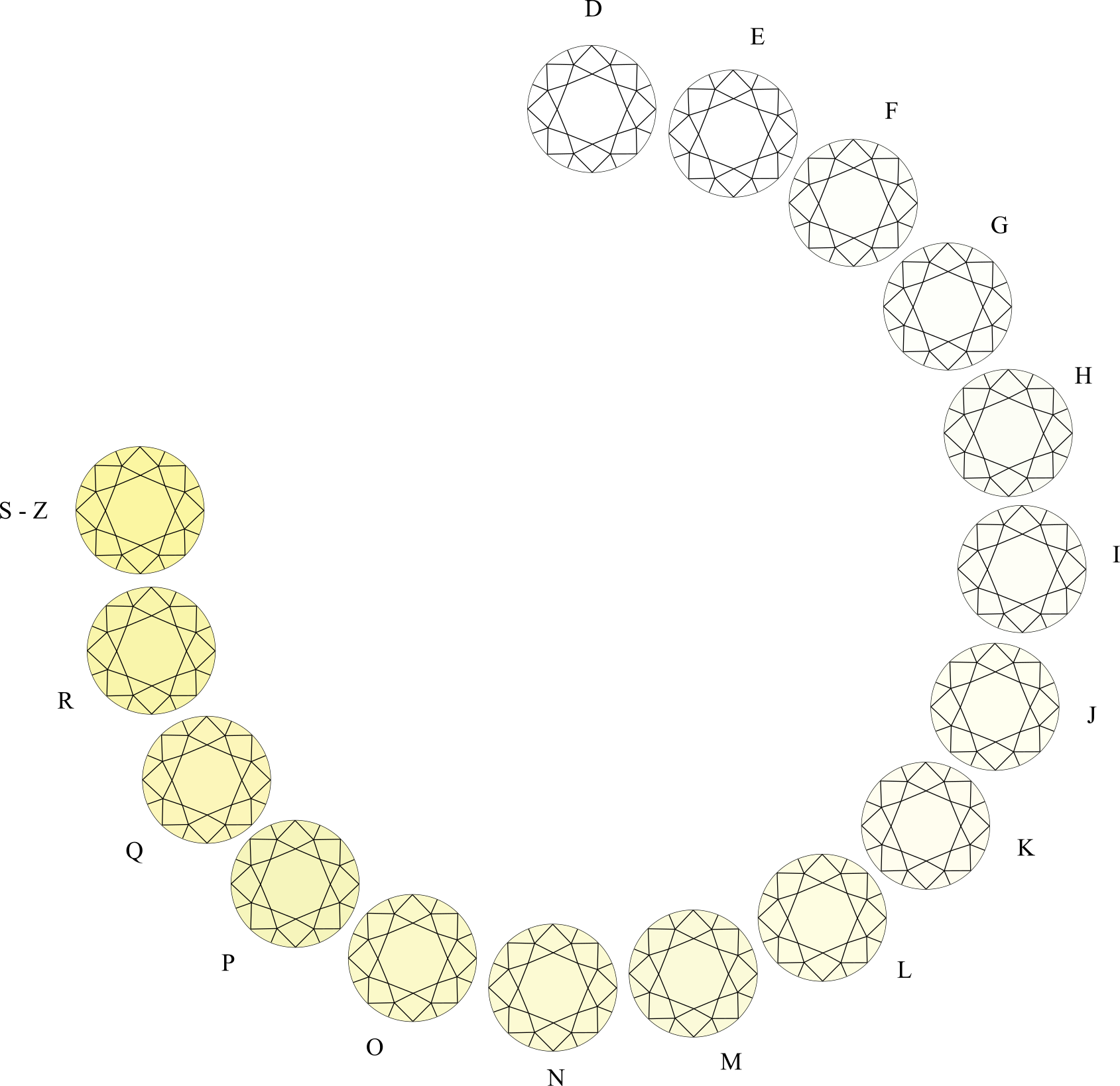
In 1953, the Gemological Institute of America (GIA) developed an internationally recognised standard to grade diamonds and evaluate their characteristics known as ‘The Four Cs’ of colour, cut, clarity, and carat weight. Colour refers to how close a diamond is to being completely colourless, with chemically pure and structurally perfect diamonds being perfectly transparent with no hue, although most natural stones contain slight imperfections caused by chemical impurities and/or structural defects. The GIA developed a rating system for colour in white diamonds which ranges from D to Z, with D being colourless and Z having a bright yellow colouration. Cut describes the manner in which a diamond has been shaped and polished, and is often considered the most important factor because it determines how effectively the stone reflects and refracts light, producing the diamond’s famous brilliance and inner fire. Clarity measures the presence of internal inclusions or external blemishes and is based on those visible to a trained professional when assessed under 10× magnification. Diamonds become increasingly rare when considering higher clarity gradings, with only about 20% of mined diamonds meeting the high clarity standards considered appropriate for use as a gemstone. Carat, meanwhile, indicates the diamond’s weight and contributes to its rarity and value. Beyond these four factors, additional characteristics such as fluorescence, origin, and overall cleanliness can also influence a diamond’s appearance and value, but it is the interplay of the four Cs that defines the diamond’s beauty and enduring reputation as King of Gems.
Diamond mining has evolved over thousands of years, with archaeologists working in Yemen finding evidence of the stones being used for drilling ornamental beads as far back as the second millennium BC. However, the world’s love of diamonds actually had its start in India, where these gems were gathered from the country’s rivers and streams, with some historians estimating that India was trading in diamonds as early as the fourth century BC. For centuries, India remained the world’s only known source of diamonds, and their limited quantities created an equally limited market, meaning the stones were initially reserved for India’s very wealthy classes. Over time, however, changes in the distribution of global wealth and the establishment of maritime trade, particularly with Europe following Vasco da Gama’s voyage in 1498, meant that, soon enough, diamonds were being traded widely across eastern and western cultures for both decorative and industrial purposes.
This monopoly ended with the discovery of diamonds in Brazil in 1725, at the same time as India’s supply was beginning to dwindle, allowing Brazil to take its place as the world’s leading diamond supplier for over 100 years. Then, in 1866, the diamond industry underwent a huge shift with the discovery of the gemstones in Kimberley, South Africa, and the opening of the first large-scale diamond mine. In a very short period of time, South Africa became the dominant global producer, with diamonds from this region accounting for over 90% of those on sale worldwide. Over time, new deposits were found in countries such as Botswana, Australia, and Canada, with improvements in mining techniques and yields increasing global output from around three million carats in the early 20th century to over 100 million annually by the 1990s. Today, much of the world’s diamond trade is centred in Antwerp, widely recognised as the diamond centre of the world, where a centuries-old tradition of cutting and polishing continues to support a vast international industry.
The Legend
The word ‘diamond’ comes from the ancient Greek word ‘adamas’, meaning unconquerable or invincible, a meaning that it has gained due to the stones' sheer strength. It is the birthstone for April, as well as the commonly given gift for the 60th and 75th wedding anniversaries, symbolising an unbreakable bond and the shared will to move through time together.
Throughout history, diamonds have carried deep symbolic meaning, rooted in their remarkable strength and brilliance. Perhaps the earliest symbolic use of diamonds comes from Hindu mythology, which asserts that Indra, known as the king of the gods, wielded the Vajrayudham as his primary weapon - a thunderbolt weapon named after the Sanskrit word Vajra, meaning diamond. Spiritual symbolism also appears in the Diamond Sutra, an ancient Chinese text used to describe the teachings of Buddha, whose title refers to a ‘diamond blade that will cut through worldly illusion to illuminate what is real and everlasting’. In the classical world, the Romans valued the diamond entirely on account of its supposed supernatural powers, with figures such as Pliny the Elder writing that the stones could prevent poisoning, ward off madness, and dispel fear. Across ancient Greece and Rome, warriors wore diamonds into battle as talismans of strength, courage, and invincibility, while in Medieval and Renaissance Europe, monarchs adorned their crowns and jewels with these rare gemstones as symbols of their noble authority, purity, and the legitimacy of their reign. The diamond’s brilliance served as a visible reminder of the divine light believed to guide kings. Over time, the diamond has come to represent resilience, creativity and clarity, their formation under immense pressure and heat serving as a powerful metaphor for endurance, transformation, and the perfection achieved through the force of time. Those who consider it a spiritual stone often regard diamond as a stone of light, believed to amplify energy, promote purification of the heart and mind, with its clarity and brilliance said to connect the wearer to higher truth and wisdom.
It is not only white diamonds which carry rich symbolic meanings, each hue of these valued gemstones expresses a distinct emotional and spiritual quality:
- Mysterious and powerful, black diamonds are often associated with strength and depth of character, their dark intensity reflecting determination and inner force.
- Rare blue diamonds symbolise wisdom, stability, and trust, their colour evoking the calm of the sky and a sense of inner peace and harmony.
- Yellow diamonds are radiant and full of life, and are linked to joy, creativity, and positive energy, much like the warmth and brightness of the sun.
- Delicate pink diamonds represent tenderness, romance, and emotional sincerity, embodying love, softness of heart, and femininity in all its beauty.
Together, these coloured diamonds highlight how variations in nature can mirror the full spectrum of human emotion and meaning.
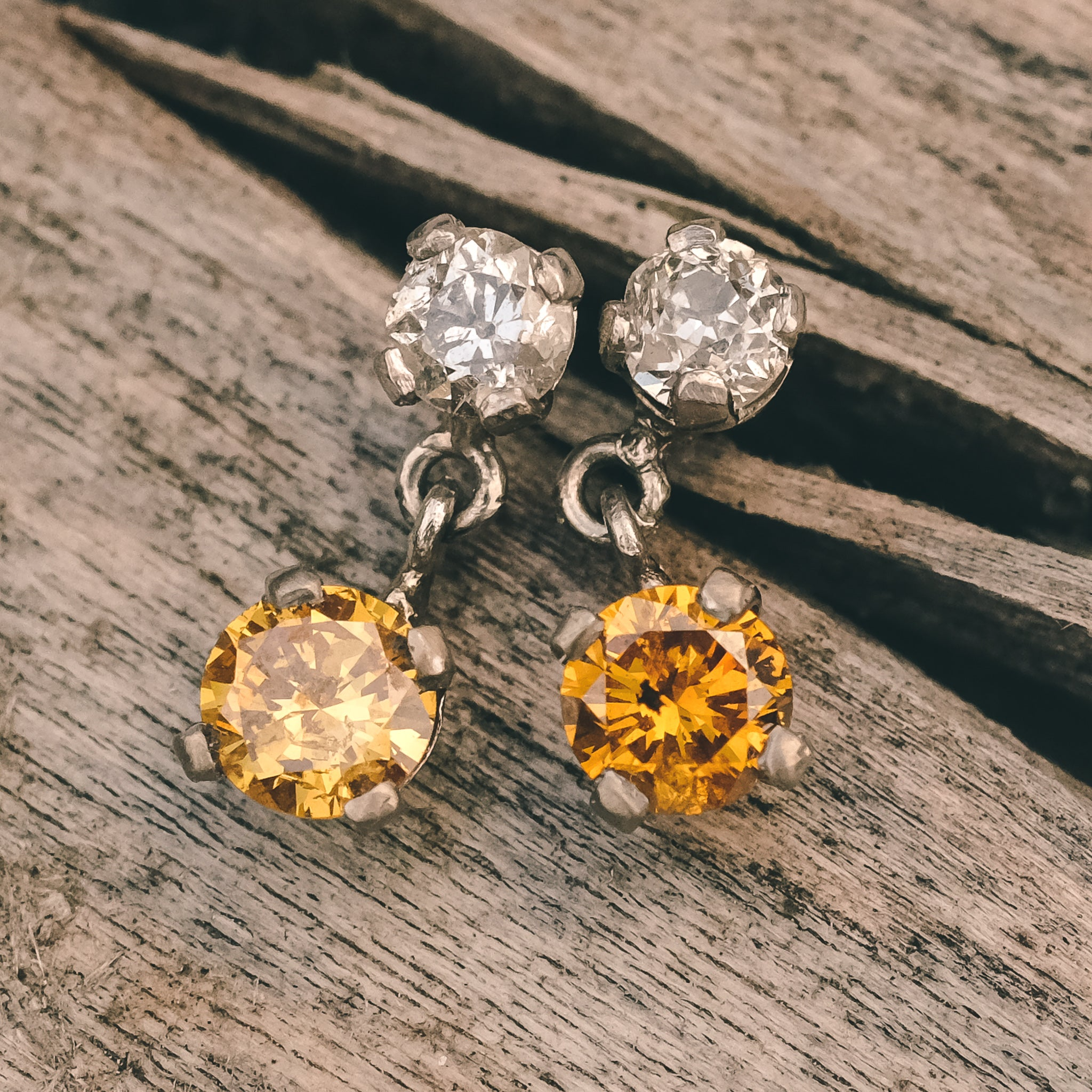
Mid-Century Yellow & White Diamond Earrings, Lost Owl Archive.
‘The most highly valued human possession, not only among gemstones, is the diamond, known for a long time only to kings, and then only very few of them’ - Pliny, 1st Century.
Diamonds have long been associated with love and commitment, with their use in engagement rings dating back to 15th century Europe. One of the earliest recorded examples occurred in 1475, when the Italian aristocrat Constanzo Sforza presented a diamond ring to Camilla d’Aragona, setting a precedent among European aristocracy. Their marriage was celebrated with a poem citing associations that would become universal and long lasting: ‘Two wills, two hearts, two passions / Are bonded in marriage by a diamond’. Although other gemstones like rubies and sapphires were once preferred, diamonds gradually came to symbolise enduring love, purity, and fidelity and, by the modern era, diamonds had become the dominant choice for engagement rings across the globe. In fact, it is estimated that over three-quarters of brides in the USA walk down the aisle wearing a diamond engagement ring.
However, this widespread cultural tradition was not simply the result of history’s gradual accumulation, but of powerful and deliberate marketing to uplift the diamond via the use of ‘propaganda in all forms’ - most notably by De Beers. As the company celebrated their 50th anniversary in 1938, De Beers partnered with the advertising firm N.W. Ayer to transform diamonds into essential symbols of romance and status. Together they produced some early results, with De Beers seeing a 55% increase in its retail success in the US by 1941, but it was not until 1947 that they really struck gold: the creation of the iconic slogan ‘A Diamond is Forever’, coined by Frances Gerety, which linked the gemstone’s physical durability to eternal love. Through strategic marketing campaigns, including the ‘two-month salary’ rule, placing diamonds on celebrities and royalty at marquee events, and the promotion of the 4 Cs to encourage even the smallest stones to be sold, De Beers successfully reshaped public perception of the diamond with ideas that have now become deeply ingrained in our minds. They even navigated the shifting diamond landscape, managing to present the constant impression that the often plentiful material was both rare and desirable. A genius example of this came with the discovery of the Soviet Union’s diamond mines in the 1950s which produced an abundance of smaller stones of which De Beers became the sole distributor. Their solution to this was the ‘eternity ring’, a jewel composed of tiny diamonds and marketed at married men as a gift for their wives as an expression of their enduring love. As a result, diamonds became not only a romantic tradition but one of the most successfully marketed luxury products in history, symbolising prestige, commitment, and timeless devotion.
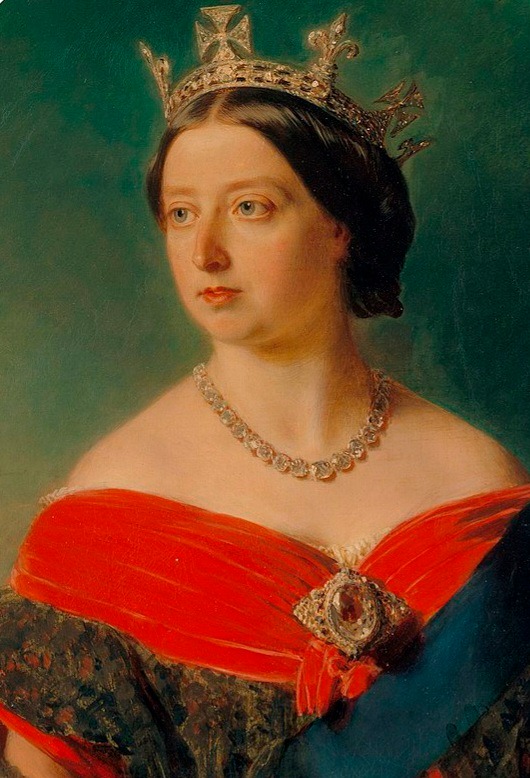
It is also important to recognise the position of the diamond as, above all, a political gem, and one that has been a source of great wealth, exploitation and power exchange history. The Koh-i-Noor diamond is one of the most legendary stones in the world, renowned not only for its size - 105.6 carats, reduced from its original 186 - but for the dramatic and often violent history that surrounds it. Mined in India, its earliest recorded appearance dates to 1628 during the reign of Shah Jahan, when it adorned the magnificent Peacock Throne. From there, it passed through the hands of powerful rulers, including the Persian conqueror Nader Shah, who seized it after invading Delhi in 1739. Over time, the diamond moved across Central and South Asia, eventually coming into the possession of Sikh ruler Ranjit Singh in 1813. Its journey reflects the turbulent politics of empires, conquests, and ambition, illustrating how such gemstones became potent symbols of authority and wealth. As historian William Dalrymple famously noted, many who possessed the Koh-i-Noor met tragic fates, contributing to its enduring reputation as both a treasure and a curse.
The diamond’s most controversial chapter began in 1849, when the British East India Company forced the young Duleep Singh to surrender it under the Treaty of Lahore, transferring ownership to Queen Victoria. It was subsequently displayed at the Great Exhibition of 1851 in London, where it was later recut under the direction of Prince Albert to enhance its brilliance, though this significantly reduced its size. The Koh-i-Noor became part of the British Crown Jewels, eventually set into the crown of Queen Elizabeth The Queen Mother and now displayed in the Tower of London. Today, it remains at the center of ongoing debates about colonial history and restitution, with India and other nations calling for its return. The story of the Koh-i-Noor encapsulates the enduring symbolism of diamonds as objects of desire, power, and political significance, as well as the complex legacies they carry across history.
From their formation deep within the Earth’s mantle to their journey through history as symbols of love, power and resilience, diamonds remain one of nature’s most extraordinary creations. Their unrivalled striking appearance, rarity, and cultural significance, shaped by both natural processes and human influence, help to secure their enduring status as the ‘King of Gems’
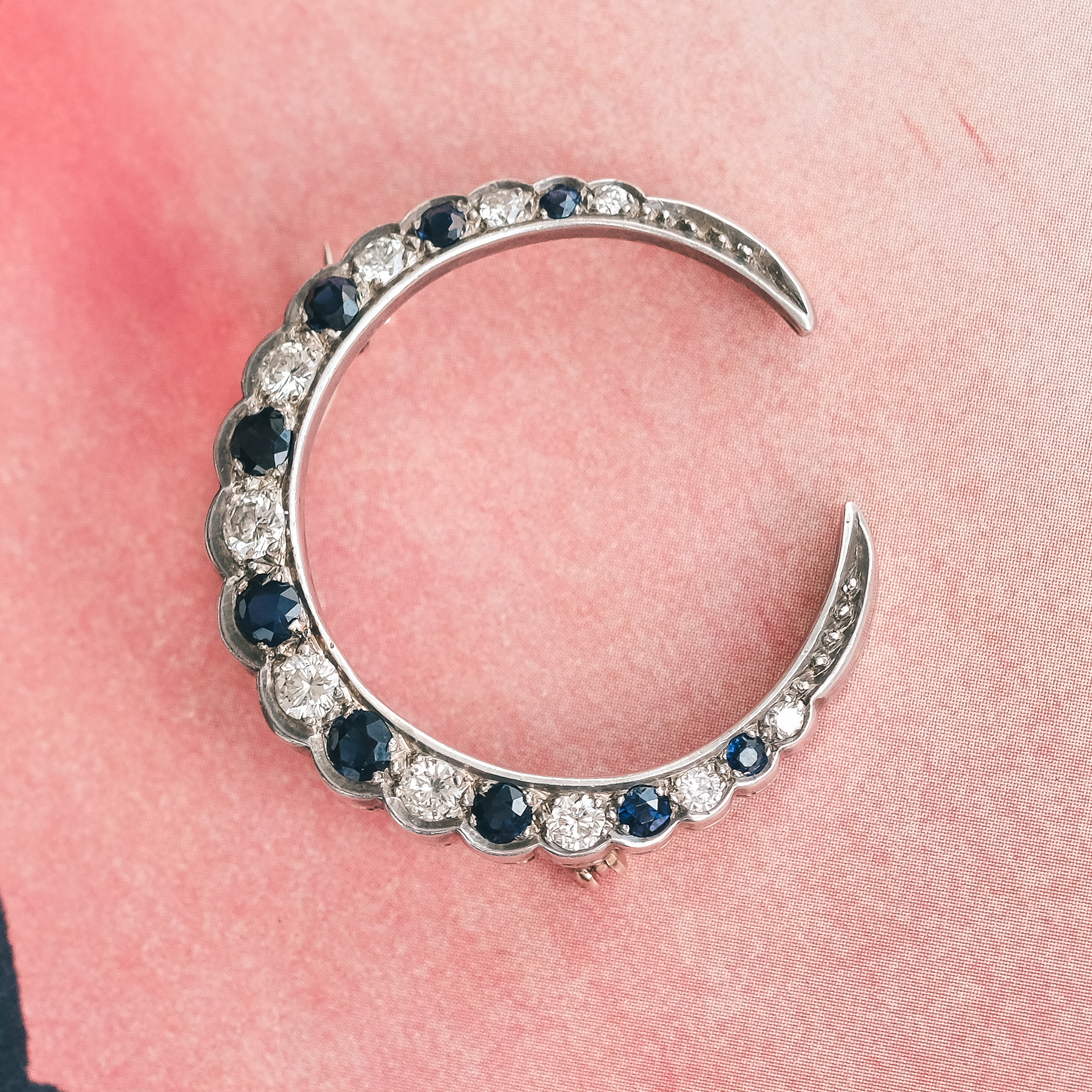
Mid-Century Crescent Moon Brooch, Available Now.
The Specifics
Composition: Carbon (C)
Crystal System: Isometric (Cubic)
Lustre: Adamantine
Inclusions: Olivine inclusions, grain lines, ‘feathers’ and cleavages
Refractive Index (RI): 2.417
Transparency: Transparent
Hardness: 10
Colour: Colourless, yellow, green, blue, orange, red, pink, purple, brown, grey and black