

A gemstone is never just a gemstone
How YOU CAN CHANGE HISTORY WITH CAMEOS AND INTAGLIOS
Dear reader,
In order to fully enjoy the second installation of Game of Stones, be sure to read (or refresh) Part 1: I've seen the ripples of history ..., as many key characters and themes will return in what follows...
Introduction
As a novice in the field, I once asked an experienced jeweller (rather stupidly, perhaps):
“But what is a gemstone exactly? Where’s the line between just a stone and a gemstone?”
The connoisseur (none other than Mr. Cutteridge himself, proprietor of Lost Owl) replied:
“It depends on what you do with it. In the North East of Scotland, buildings are made from granite, but granite is also used to make jewellery, at which point it might be called a gemstone”
Agate stones are a distinct variety of Chalcedony. Agate varies widely in colour; it may be multi-coloured, or display many hues of the same colour and these colours are arranged in bands or levels. It belongs to the family of Chalcedony stones - like onyx, sardonyx, and carnelian - but all are varieties of Quartz, which is the second most common mineral on the planet. Unlike other members of the Quartz family, Agate can be found almost almost everywhere - it is found somewhere on every continent.
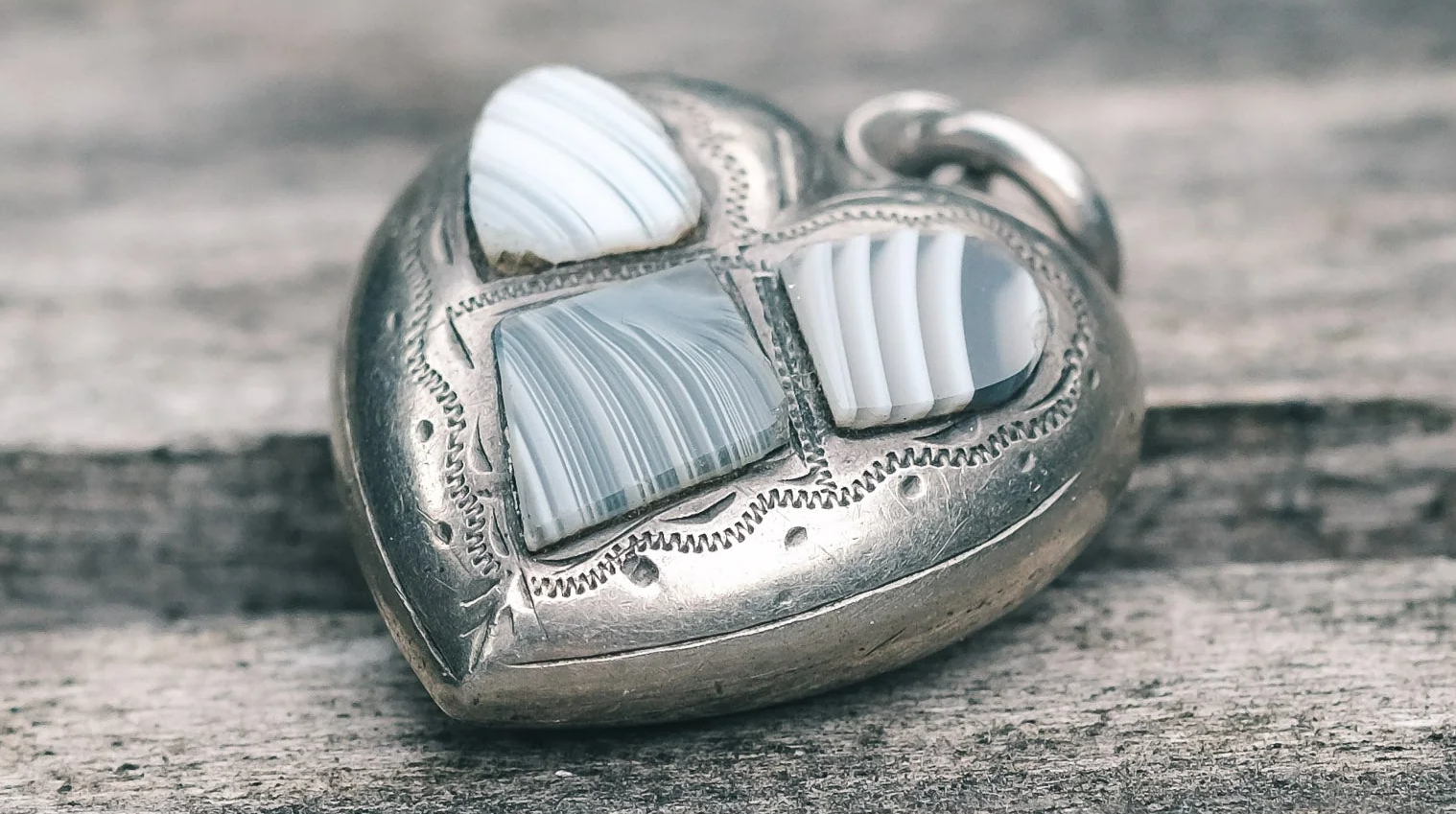
Lost Owl: .Victorian Heart Pendant, 'Lace Agate' from Montrose area, Scotland, circa 1870 (see in store)
When Daphne the Nymph, who had rejected all suitors, rejected yet another - the God Apollo -, the jilted Apollo transformed Daphne into the eternal Laurel Tree which Apollo then took as his sacred symbol.
In a similar way, agate - this most unremarkable of earth’s minerals (not that Daphne was unremarkable, but...) - in its interaction with artistry, imagination and ingenuity, in spite of its ordinariness, may be transfigured and become eternal and extraordinary.
And so a gemstone is never, can never be, just a gemstone.
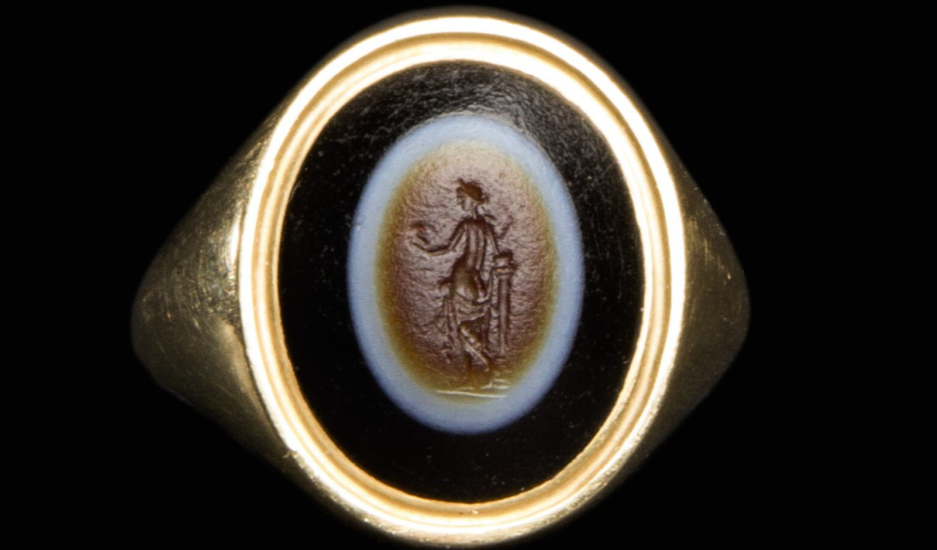
Sotheby's: Banded Agate Intaglio Ring Stone, (1st/2nd Century A.D)
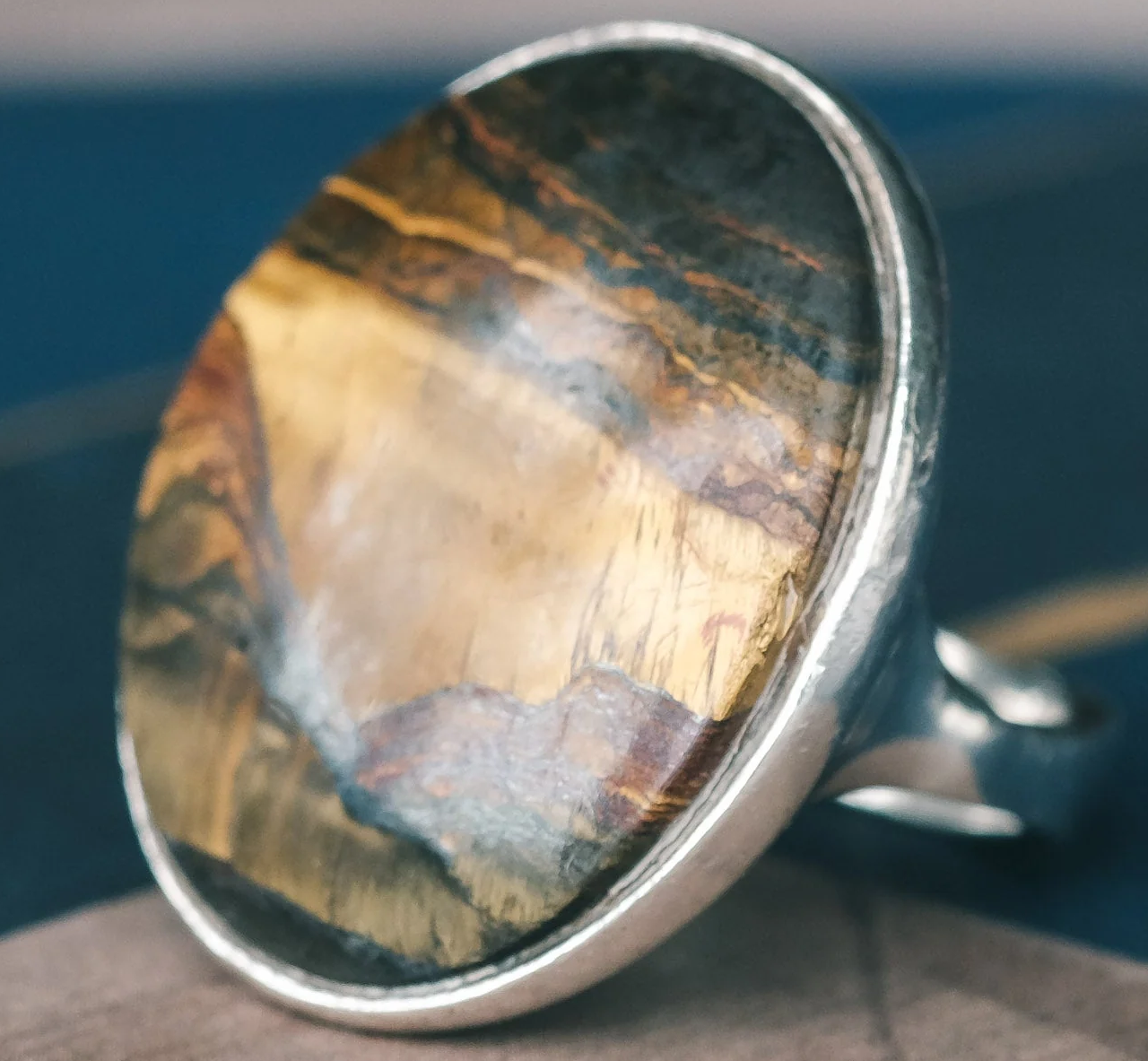
Lost Owl: Venusian Landscape Agate Ring, circa 1970. (see in store)
On Monsoon Winds: The Romans
A merchant sailor, a Roman, stood on the shores of the great port of Muziris in Kerala, the southern tip of India. The Hippalus, the monsoon winds, were beginning to blow and would carry the merchant back west - 40 days if the winds were good - to the Red Sea Ports in east Africa. His cargo - spices, prized textiles and precious stones - would then be carried down the Nile and into the Mediterranean and the Empire.
In the heart of the Roman Empire, only one important stone of the Chalcedony group was abundant. Since before Alexander the Great, agate had been mined on Sicily where the Greek philosopher Theophrastus had discovered it, catalogued it, and given it its name.
The characteristic coloured bands of Agate were like a sculptor's colour palette: colours would be chiselled away or left behind as the artist cut into the rock, creating contrasting layers to reveal depth, tone, and shadow.
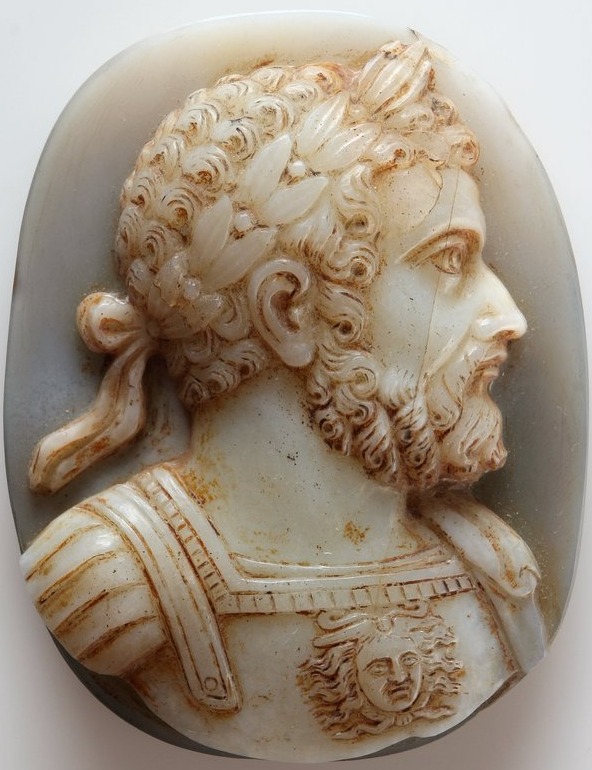
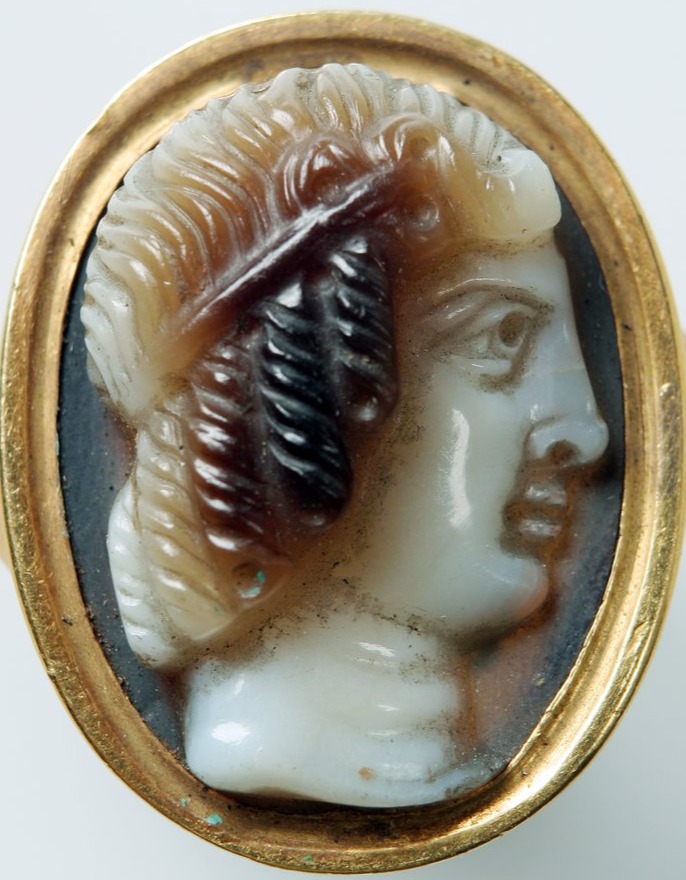
According to the great Roman author, naturalist, and scientist Pliny the Elder, agate “was once held in high esteem, but now enjoys none.” This may have been because of its abundance in the heart of the empire, or perhaps because it occupied a middle space: neither solid in colour, nor quite as deeply contrasting as other stones. Sardonyx, for example, was prized for its more dramatic shades and came, according to ancient sources, from further afield - the Greek Islands, Egypt, and Babylon
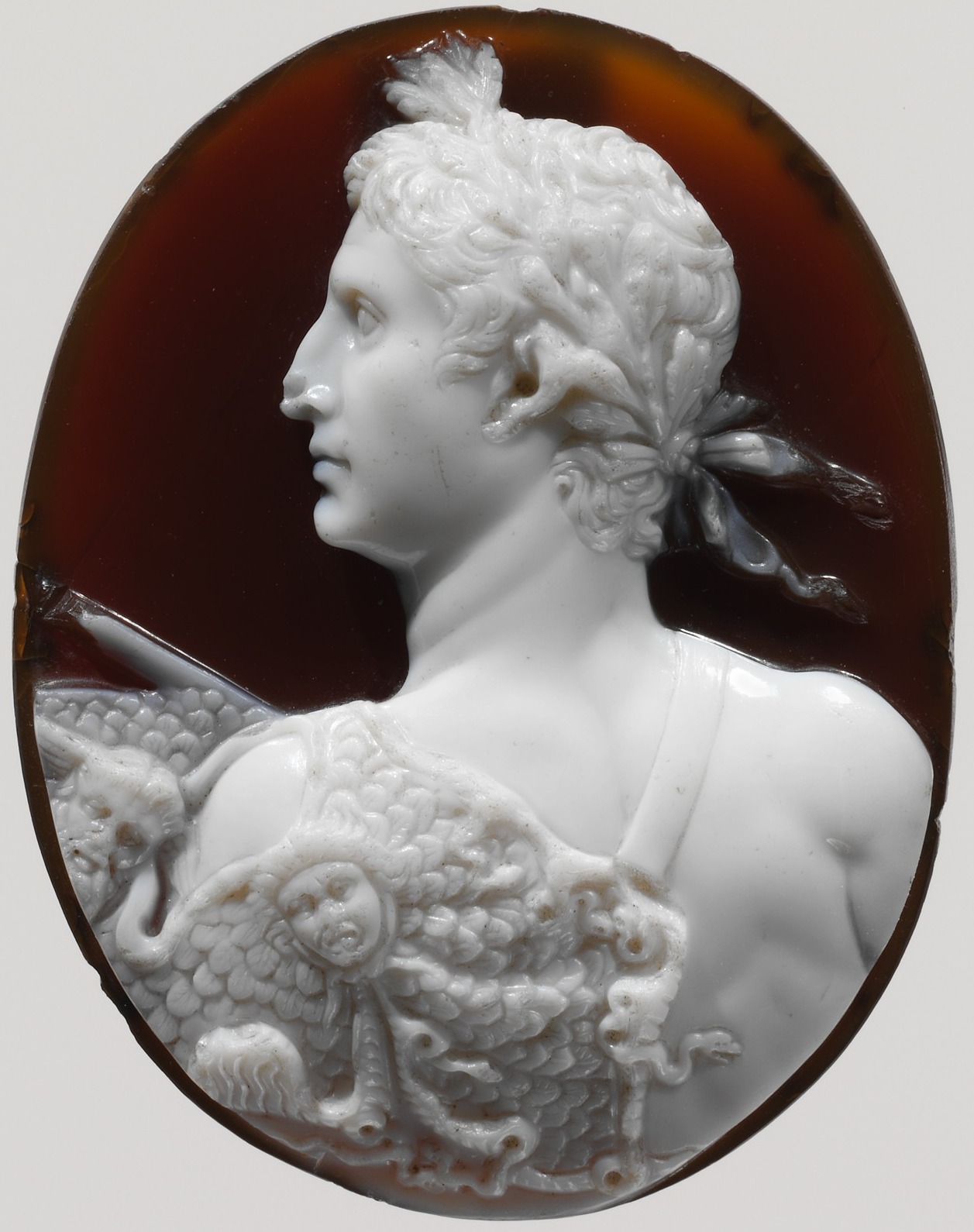

And from India and Persia, through the Red Sea Ports, Onyx was brought to Rome, and carved so that on a creamy white top layer, figures rose out of the black background of the stone’s lower layer.
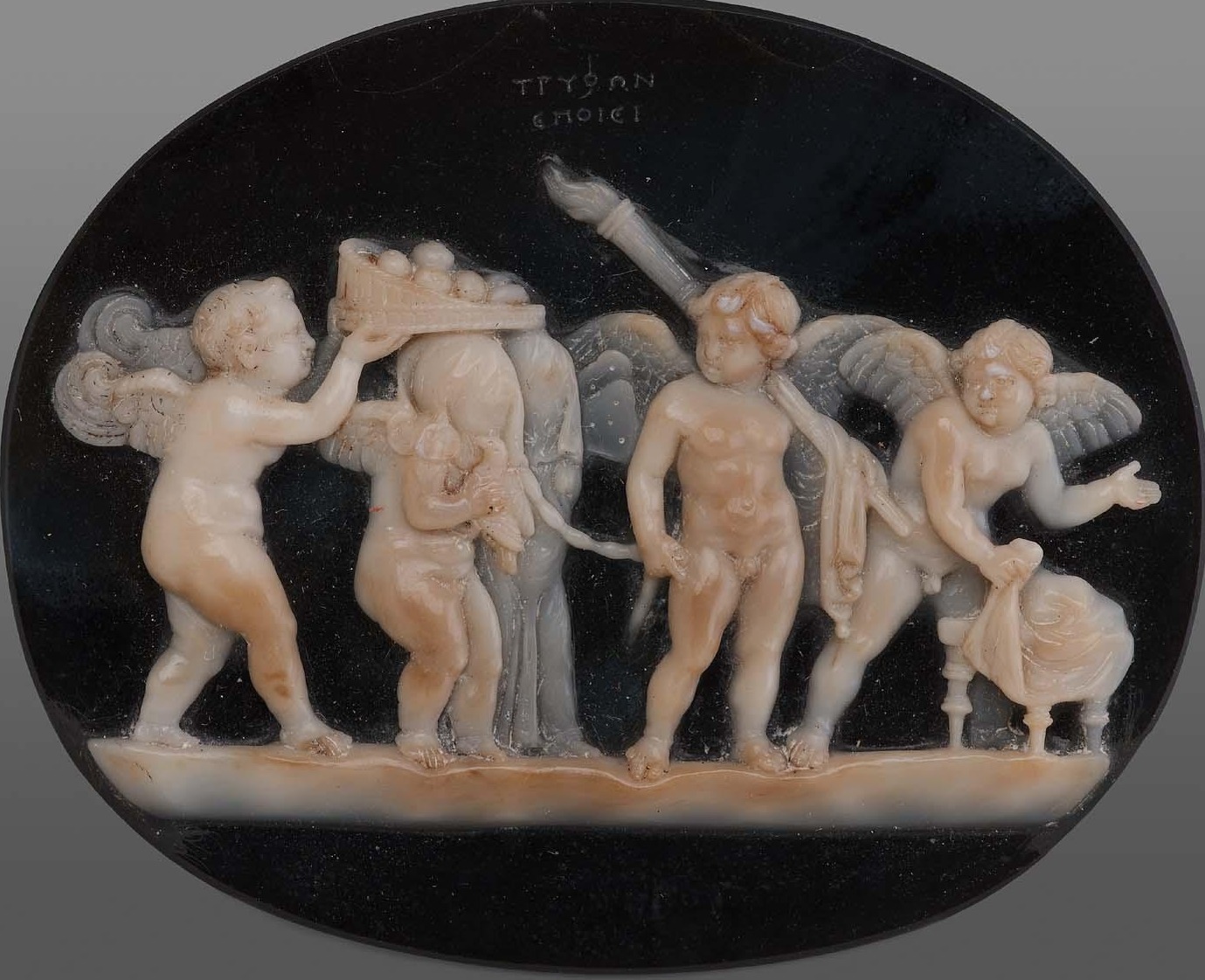
Museum of Fine Arts Boston: Onyx Cameo with the wedding of Cupid and Psyche, or an initiation rite (50–25 B.C)
Indian Carnelian, as it had been for centuries and would be for centuries more, was prized for its unchanging, solid red colour and its hardness which, under the craftsman's drill made of Naxos emery (see Game of Stone part 1), neither broke nor splintered, but permitted fine, detailed carving.
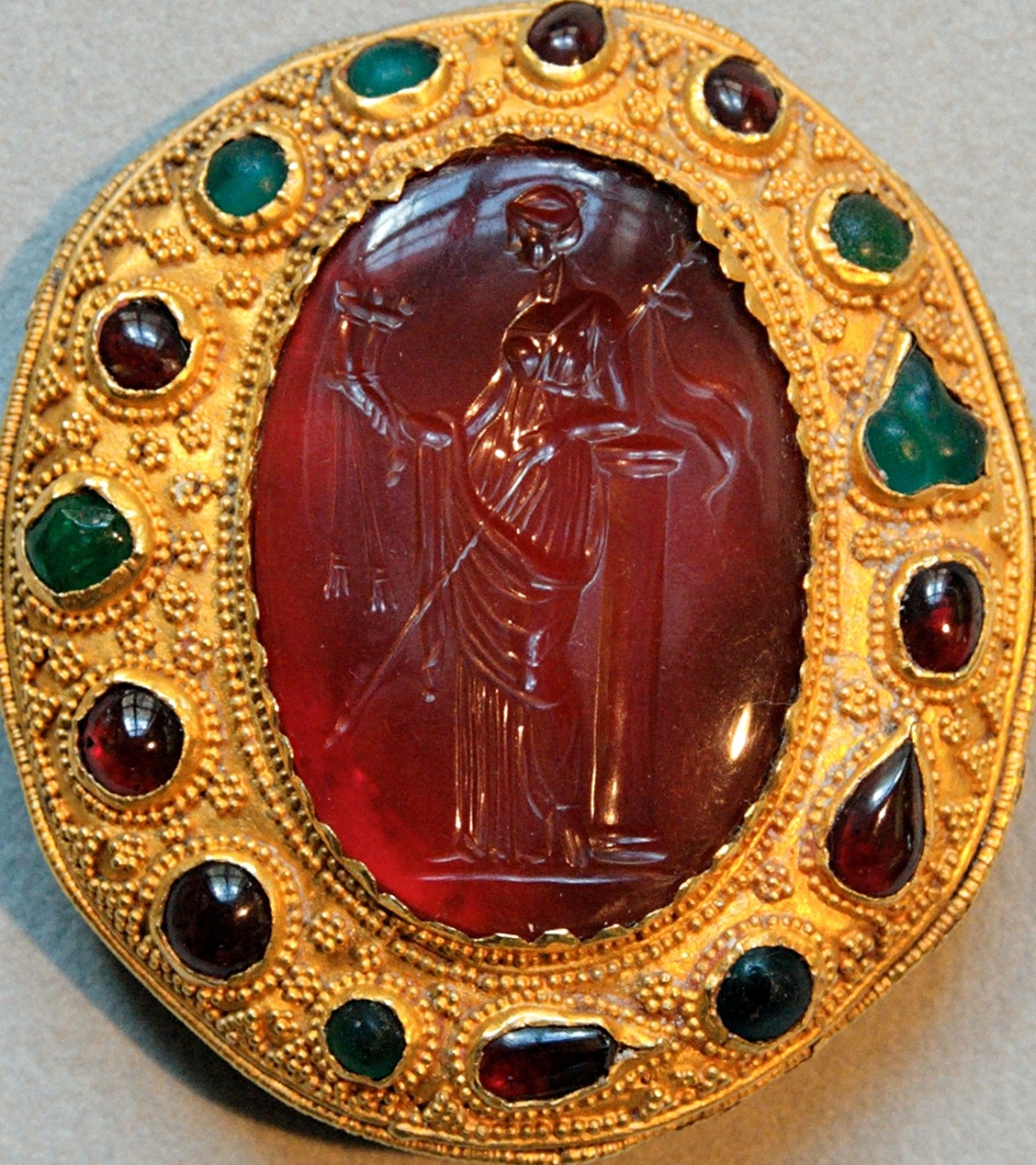
Carnelian intaglio with a Ptolemaic queen, early 1st century BC; gold, garnet, emerald and glass paste mount, 1724
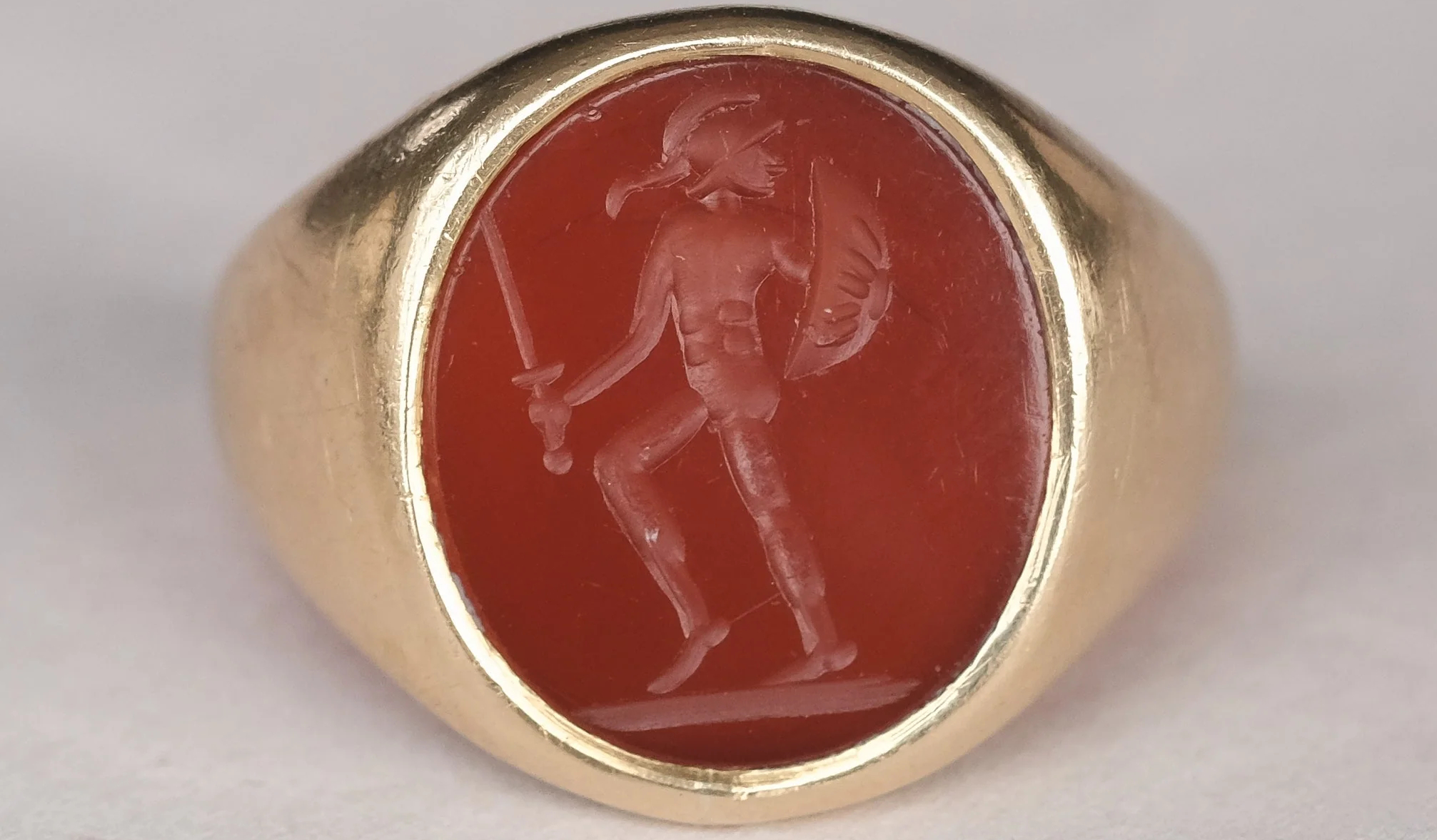
Lost Owl; Carnelian intaglio datings from imperial Rome; 18 carat gold Victorian signet ring (see in store)
It was the Greeks who had first mastered the techniques in the centuries before. But the Roman cameos became vastly more complex in their subject matter, depicting mythological scenes with multiple characters. This technique - the technology - of drilling through layered stone to leave behind a sculpture revealed through relief and colour contrast - was neither different nor superior to that of the Greeks.
But Emperor Augustus (63 BC–14 AD) had brought about a golden age of art and culture: in the workshops of Rome itself, the artisans experimented with new techniques, using glass...
Like coating a ripe strawberry in melted chocolate, a blown glass object - a vase, for example - was immersed in molten glass of a different colour. A highly-skilled craftsman would then set about the exhaustive and most delicate procedure of lightly chipping away the outer layer. And, as if carved into onyx, the creamy white subjects of the sculpture appeared to emerge from the glassy black depth...
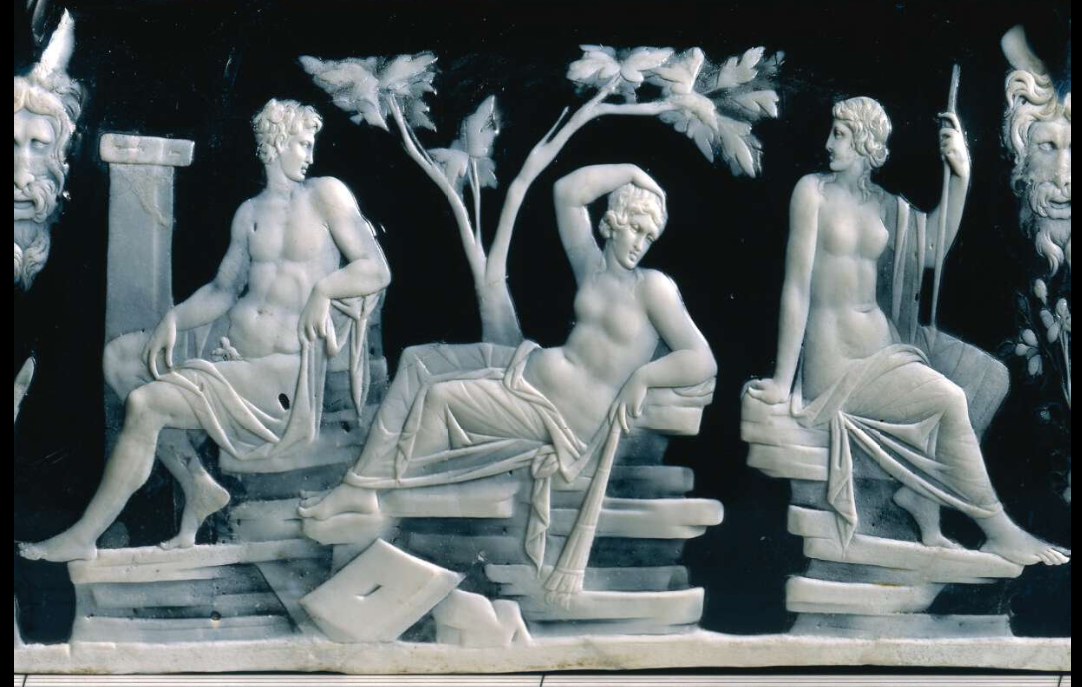
Scene from the Portland Vase (between AD 1 and AD 25) for more, see "Game of Stones Part 1"

Lost Owl: Neoclassical "Cupids Riding Dolphins" Shell Cameo Brooch circa 1850, (see in store)
Apocrypha III: The Mysterious Client of the Bonaparte Sisters (1806-1815)
Hello. My name is Benedetto Pistrucci.
You exiled my father.
Prepare to be exiled yourself!
When Napoleon's armies arrived, many Romans fled the city. As the situation on the Italian peninsula destabilised, Emma Hart and Sir William Hamilton were recalled from Naples where they had married and had lived for almost two decades, they sailed for England as Napoleon implanted a new King of Naples. The King, a general in Napoleon’s army, married the Emperor’s youngest sister, Caroline. And in Milan, Caroline’s sister, Pauline, married another of Napoleon's Generals and became Madame Pauline Leclerc…
"She wore clasps of cameos on her shoulders, on her hips, and on her bosom.
There were cameos, too, on her sleeves, which were short and loose. …
Never did a woman produce a greater sensation upon entering a salon."

Paula Maria Bonaparte Leclerc Borghese by Robert Lefèvre, (1809) - how many cameos?
Rarely, it seems, did the Bonaparte sisters receive an audience without their bespoke or antique cameo adornments. They commissioned works from a young Roman artist who had worked for their eldest sister Elisa, in Tuscany.
The artist (for eight days it was said!) worked without rest on a cameo of Elisa for a competition she had organised. Elisa then named him the winner and awarded him studio space on her property in Florence.
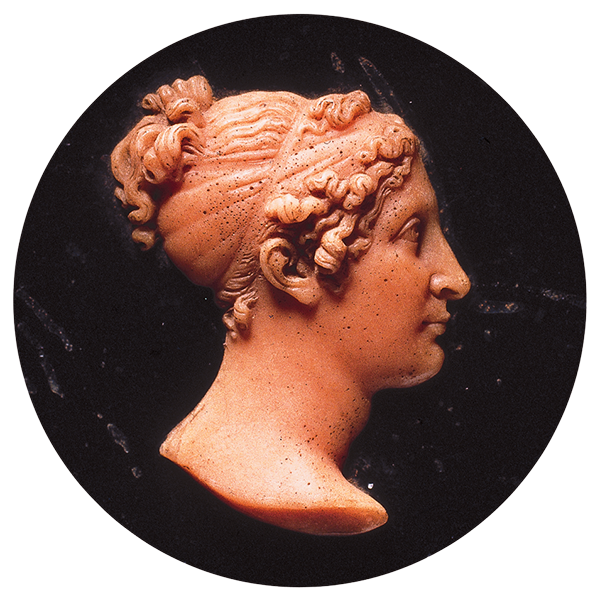
Museo Zecca di Roma: Cameo of Elisa Bonaparte Baciocchi, by Pistrucci, (c.1812)
Paolina and Carolina Bonaparte by Pistrucci
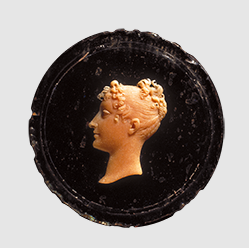

But for the Bonaparte Sisters the good years were numbered. They lived tumultuous lives in the decade or so that followed the Napoleonic campaigns in Italy on account of their older brother’s continuing wars. Husbands were killed in battle, Pauline herself sailed to the Caribbean, to Haiti as her husband was ordered to quell the Haitian revolution. Pauline like many French in Haiti caught yellow fever from which she never fully recovered. As their brother's empire collapsed, they lost rank and title, adopting pseudonyms and living in exile - and of course, Napoleon too was exiled, but for the time-being (1814-15), only temporarily…
A park in Paris - late spring or early summer of 1815
The meadow and the ponds of the gardens were frequented on Sundays and public holidays by Parisian high society. And on one such day in 1815 - eager to be seen, keen for his noble Parisians to be stirred by this glorious return from exile - Napoleon Bonaparte himself, Emperor in his imperial capital, strolled proudly among the lush greenery of the Bois de Bologne.
A second man caught sight of the first. He was a traveling artist, an Italian, and no admirer of Bonaparte. The second man’s family had fled from Rome when Imperial France put a bounty on his father’s head. Had the Emperor been privy to this Italian's true identity, he may not have allowed - all those years ago - his sisters Elisa, Pauline, and Caroline to commission bespoke works from him; works of a minute detail and delicacy unparalleled in Europe at the time - perhaps unparalleled in Europe in the thousand-or-so years since the Italian’s Roman ancestors had dominated the continent.
The second man’s name was Benedetto Pistrucci. And hidden there, under heavy and ancient oak trees in a meadow close to where the Eiffel Tower would one day stand, Benedetto Pistrucci lightly pressed a tiny ball of wax in his hands, his eyes only straying from the Emperor to glance down occasionally and follow the progress of his almost imperceptible finger movements, which ever so tentatively were pressing into the wax the last portrait of Napoleon Bonaparte before his historic defeat at the Battle of Waterloo.
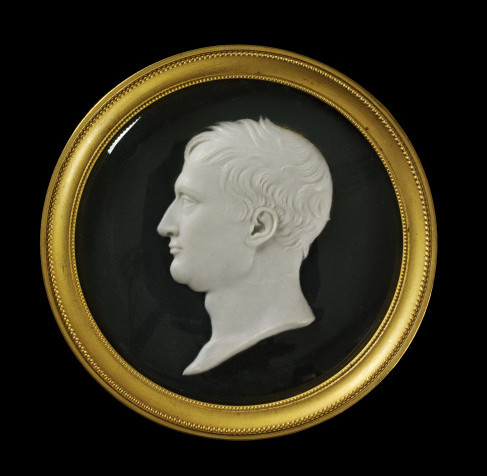
The V and A: Cameo of Napoleon Bonaparte , by Pistrucci, (1815)
Epilogue: The Game of Stones
After Napoleon's defeat at Waterloo, Benedetto Pistrucci moved to England where he was employed by Napoleon’s rival and vanquisher, the Duke of Wellington’s brother, in Britain’s royal mint. He made designs for British sovereign coins which are still in use to this day. Years after his death, his cameo portraits were mounted by Castellani and Giuliano.
The Barberini Vase was deposited by Josiah Wedgwood in the British Museum where at 3:45 p.m. on 7 February 1845, the vase was shattered in an act of vandalism by William Lloyd. Lloyd was charged, and the vase was restored. It has remained in the British Museum ever since.
Emma Hart took on a second lover in her later years in Naples: Lord Nelson of the British Navy. She travelled with her husband and her lover and her mother to England - a happy, if unusual, family. She out-lived both men. Nelson's last words were a plea to his country - for which he had given his life - to take care of Emma and their child. The British state ignored him, and Emma Hart died alone, in debt, with a laudanum addiction in a convent in France.
And as for the countless engraved gemstones of Antiquity…
...they had been used to change the past.

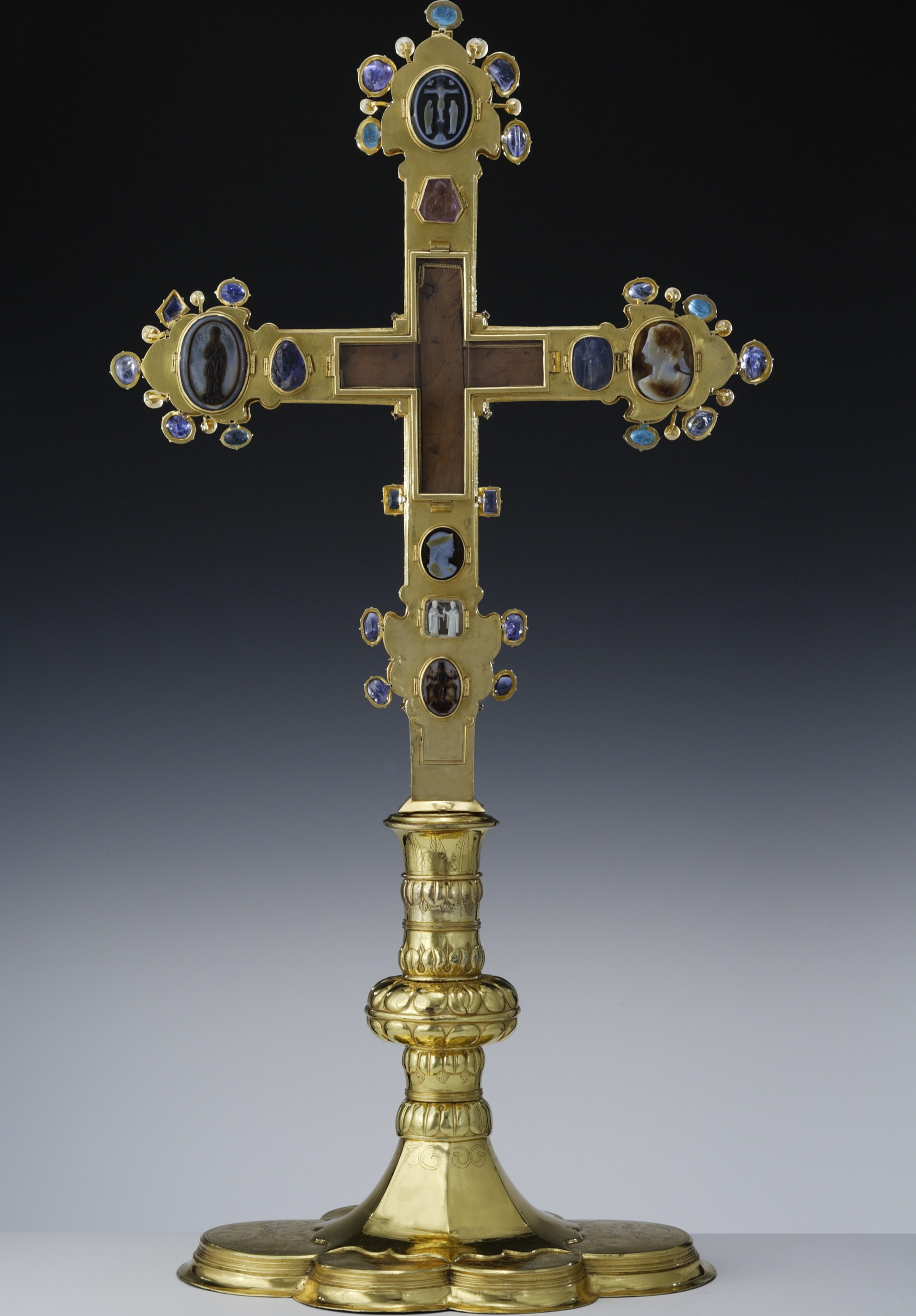
The Lothar Cross
Exorcism, Consecration, and Interpretatio christiana were the standard methods of... safely achieving this.
As the Greeks had long ago discovered, stones were imbued with magical properties. The Medieval Catholic West had now come to the same conclusion. In the 11th Century, Lapis Lazuli was known as Sapphire. Of course, today we know that are two distinct stones - sapphire is translucent while lapis lazuli is solid, opaque blue.


1. Lapis lazuli pendant; 2. Sapphire ring
In the LIBER LAPIDUM (THE LAPIDARY), a french bishop and … "poetic geologist"… refers to two different "varieties of Lapis Lazuli" which today are known to be two very different stones:
one "is picked when the African sea withdraws and leaves the Libyan syrtis dry."
(referring to today's lapis lazuli: there are no sapphire deposits in North Africa, but the Ancient Egyptians had imported vast amounts from the middle east)
"Another kind comes from Media, excellent, although it is said that it is never very transparent.
(referring to sapphire: deposits would have been further east than Media - modern-day Iran - and the transparency of sapphire ranges from translucent to transparent)
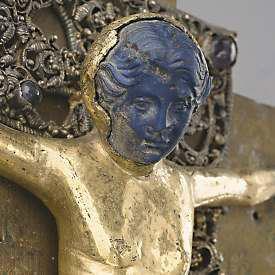
But as the Liber Lapidum says, any “blue stone” - with its colour of heaven - brings wealth to the powerful and is "gem among gems", "fit only for the fingers of kings".
Moreover, says the text, the magical stone “heals ulcers; and if dissolved in milk clears up cloudy eyes and relieves headache.”
Of course, the precious gem would first have to be “adjured” - liberated from the “habitation by un-Christian spirits” notes Dale Kinney.
The processes of exorcism and consecration saw the incorporation of countless carved gemstones into the liturgical and devotional objects of abbeys, churches, and cathedrals of mainland Europe. They were gifted into the possession of the ecclesiastic hierarchy under whose Sacred Hand they could be excised of all unholy contamination.
As you scroll down through the next image - The Reliquary of St Foy - notice the many cameos and intaglios adorning the piece...
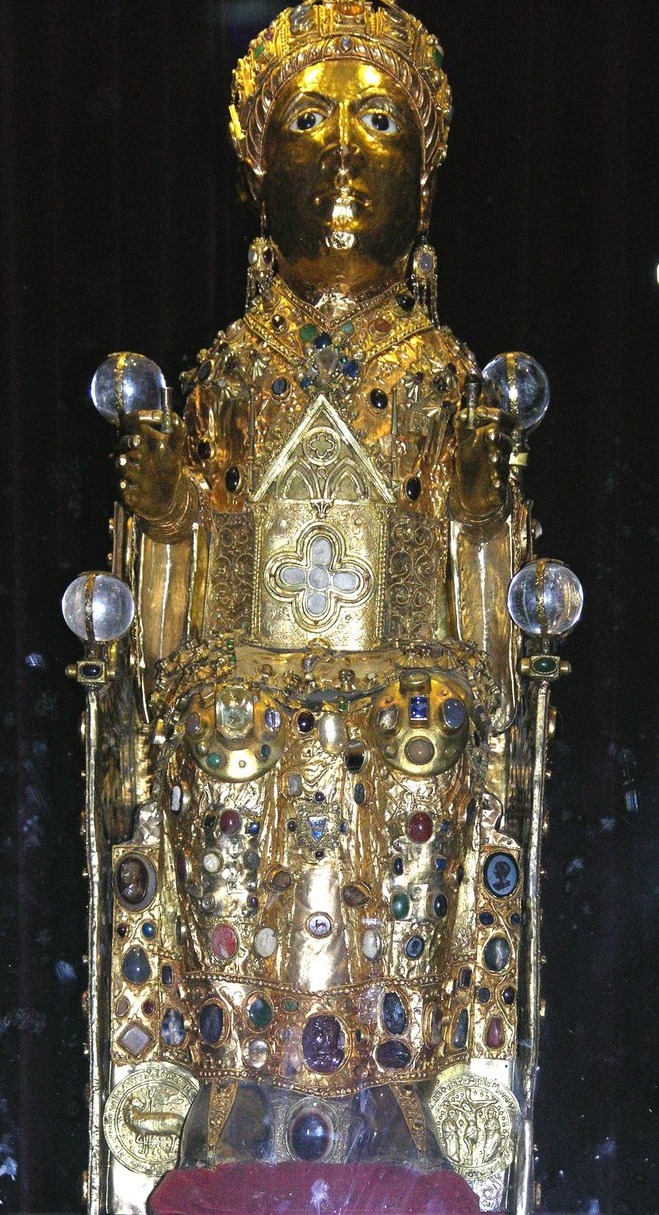
The Abbey at Conques, where this statue is held, was gifted "Charlemagne's A", marking it as his favourite abbey.
Important too, was the removal of such powerful objects from the hands of heretics - from secular and anti-christian forces. Already with the forerunner of the Holy Roman Emperors, Charlemagne - Carlomagno - this "game of stones" was afoot, albeit in its simplest form of Interpretatio christiana.
“If he needed a seal ring, it was enough to find a gem with the carving of a bearded male head. Whether the male had the attributes of a Roman general or of the god Serapis was of no consequence; both could serve, and both may have been considered Charlemagne's portraits”.
Powers were neither imbued nor excised in this “un-naming” process - but the “true” Emperor was written into history, or the “pretender” was written out.
“Conversion was a political event”, says art historian Dale Kinney in her "Concept of Spolia".
After all, when you play the Game of Stones "you win or you die", says Cersei Lannister in Season 1, Episode 7 of the well-known HBO series.
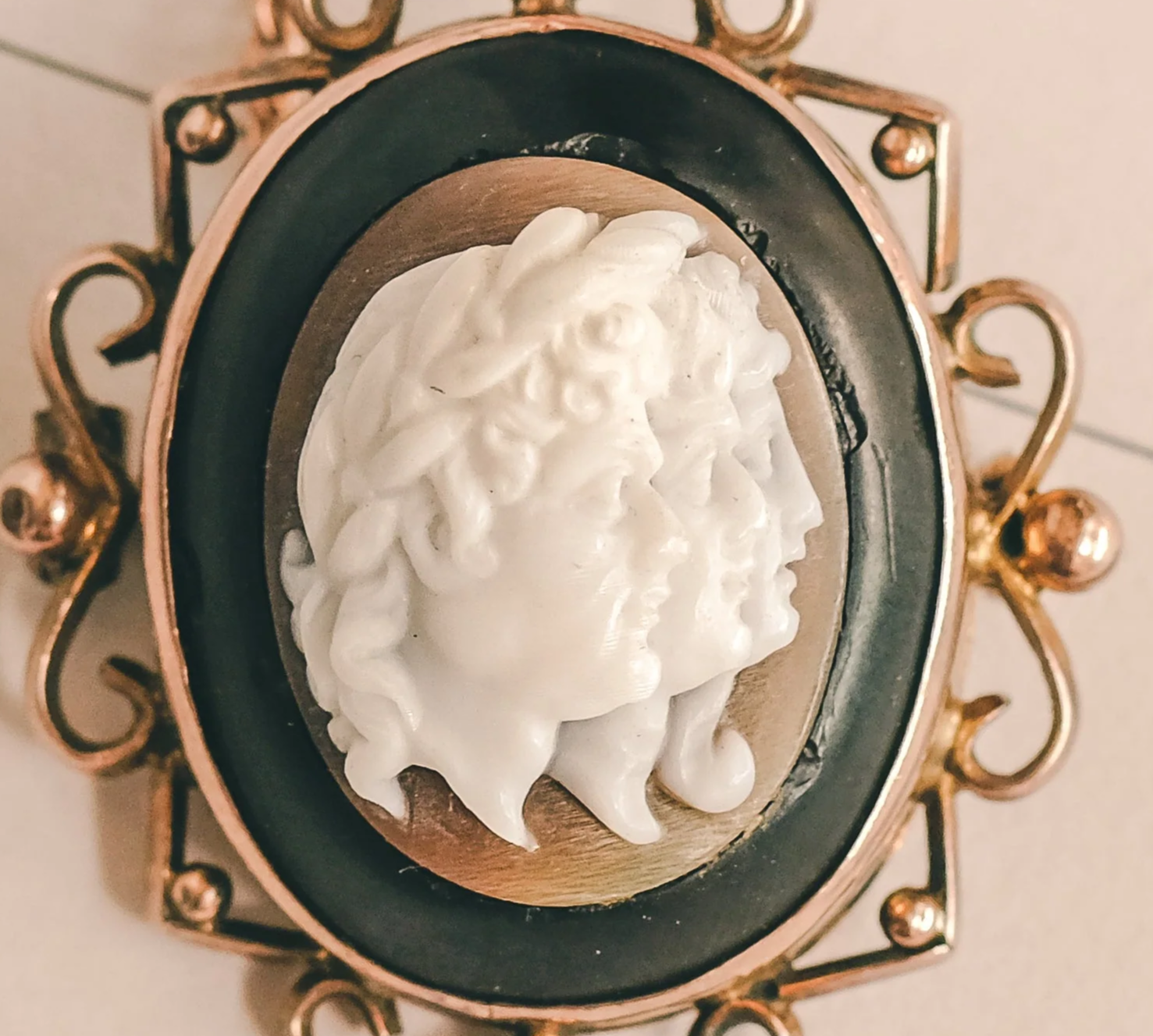
This brooch may depict the first Roman triumvirate (Julius Caesar, Pompey Magnus, and Marcus Crassus), but might it actually depict your three siblings, or three children?
Perhaps one should wear and acquire one's jewellery more as Charlemagne and the Holy Roman Emperors did...
Conclusion
All roads lead to Rome
Historical Memory had to be controlled by the ecclesiastical authority and this Game of Stones was just one way of trying to legitimise the Holy Roman Empire as the only spiritual successor of Imperial Rome and the true Kingdom of Christ on Earth, in opposition to Constantinople, Byzantinium.
Converted Imperial treasures “were vehicles of memory”: they projected the nobility and sanctity of the Holy Roman Emperors into the past and the future.
After the sacking of Constantinople in 1204, the Crusades brought countless Imperial and Greek treasures to their true “home”: the sacred places in central and northern Europe where the Holy Roman Empire now dwelt. These, now, were the lands of the Emperors; Christian lands that had once been Charlemagne’s "Carolingian" Empire. Greece was lost, and the city of Rome itself was little more than a name…
"decayed, ruinous, and infested by a papal curia… a city, moreover, which had again been deserted by the Emperor..."
...wrote the Renaissance poet and scholar, Petrarch.
Among the spoils of Constantinople were innumerable carved and engraved gems, and larger cameo works - like the Grand Cameo of France. In the old Carolingian lands, over the centuries of Medieval Europe, thousands of gemstones underwent processes of exorcism and conversion.
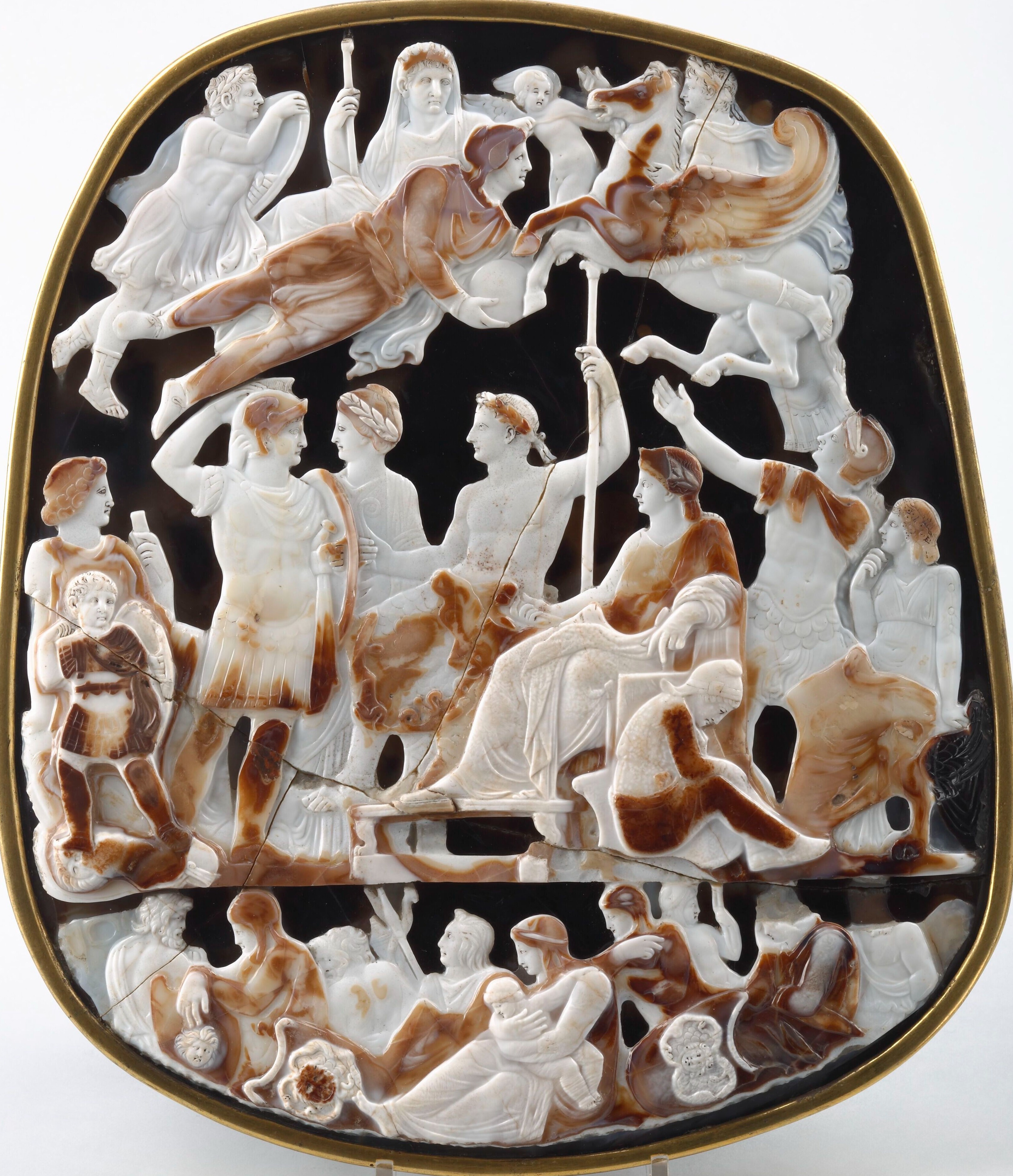
But in actual Rome - that is to say, in Italy, not in Northwest Europe -, in spite of the emperor’s absence, the power and wealth of the papacy had been growing.
On May 29, 1453, a Venetian Cardinal - Pietro Barbo - was likely thrilled to hear of the fall (again) of Constantinople , this time to the Ottomans - fantastic news for the Holy Empire!
Barbo was an enthusiastic connoisseur of the arts. And when he was anointed Pope Paul II, his collection of cameos and intaglios already amounted to “more than 800 antique stones”. Upon his death in 1471 many of these treasures were dispersed to the wealthy noble houses of the north, including the Medici of Florence, the Gonzagas of Mantua, and the Grimani of Venice.
Slightly over a century later, around 1600, three individuals found themselves in Italy. Each was confronted by a great cameo: The Gonzaga, the Barberini Vase, and the Gemma Augustea. And each individual, in their own way, was engaged in a Game of Stones:
The first was Rudolf the II, Holy Roman Emperor, who acquired the Gemma Augustea in Venice. He took it back to Vienna, and seems to have promptly broken it while mounting it in a gold frame - during its exorcism, perhaps.
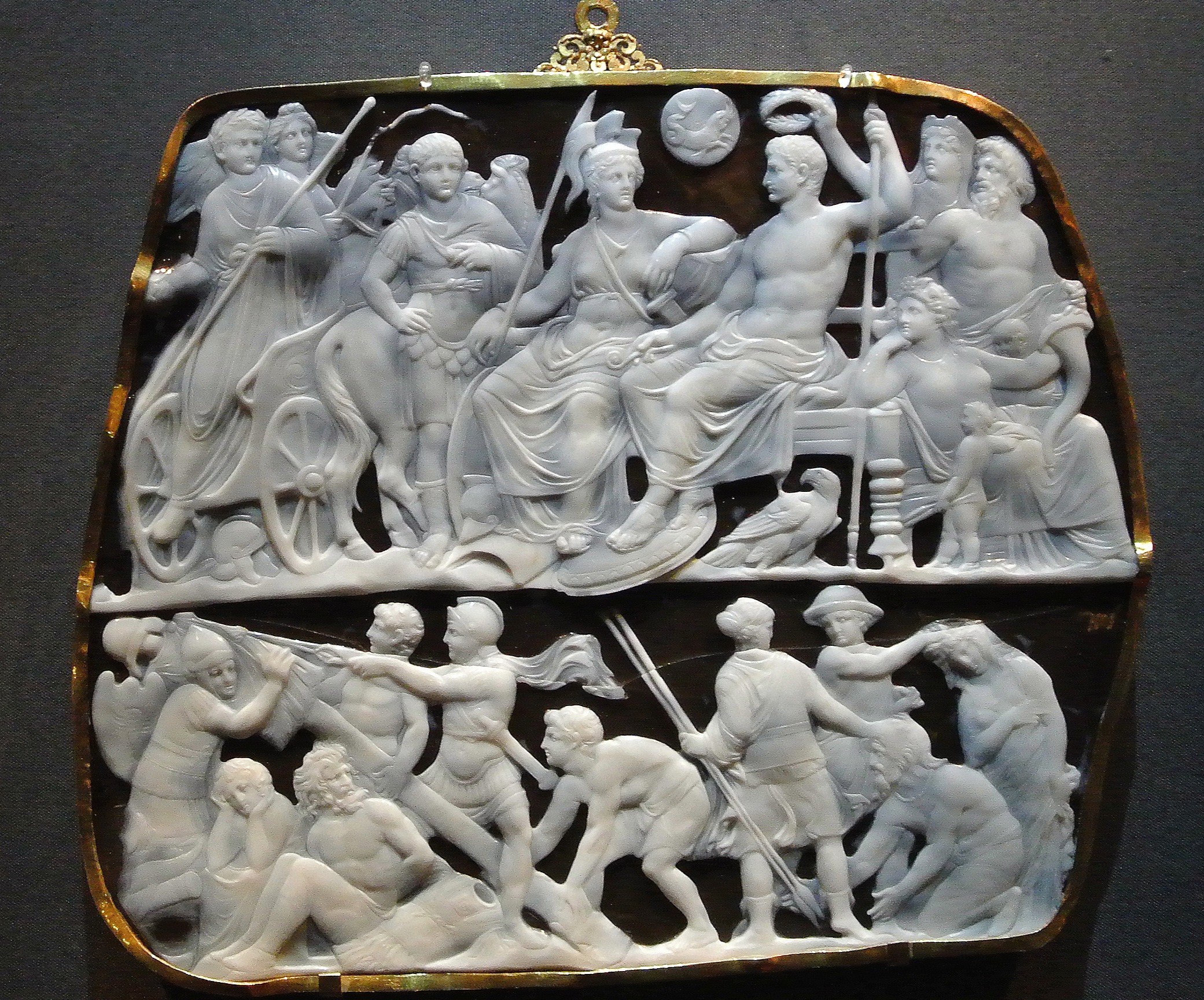
Gemma Augustea
notice the large crack along the lower scene
The other two were Peter Paul Rubens and one of history's first antiquarians Nicolas-Claude Fabri de Peiresc.
And so it was that when their paths crossed with the great cameos of Houses Gonzaga and Medici, the painter and the antiquarian drew from those spoils of Constantinople and the heritage of ancient Empires, a new, Renaissance vision of Antiquity.
But of that Game of Stones, of that exorcism (or consecration) well… as T.S. Eliot wrote:
"…the end of all our exploring
Will be to arrive where we started
And know the place for the first time..."
... because, of the Cardinal, the Painter, and the first Antiquarian, we have already spoken.
BIBLIOGRAPHY
INTRODUCTION
- Practical Gemmology Handbook (page 166)
- OVID, Metamorphoses, Book 1, (lines 820-30) Translated by Ian Johnston, Vancouver Island University
ON MONSOON WINDS: THE ROMANS
- PLINY, Natural History, Book 6 , (sections 71-141), Translated by H.Rackham (1952)
- TRENTINELLA, Rosemarie; Roman Cameo Glass, Met Museum Essays (October 1, 2003)
APOCRYPHA III: The Mysterious Client of the Bonaparte Sisters
- The Britannia Coin Company, Who was Benedetto Pistrucci (link)
- TROWBRIDGE, W.R.H , The sisters of Napoleon, Charles Scribner's Sons (1908)
EPILOGUE: The Game of Stones
- MARBODE DE RENNES. LIBER LAPIDUM / The Lapidary, Translation by Sigismond ROPARTZ
- KINNEY, Dale; Reuse Value, Introduction, Richard Brilliant mad Dale Kinney 2011
CONCLUSION
- MARBODE DE RENNES. LIBER LAPIDUM / The Lapidary, Translation by Sigismond ROPARTZ
- BAYLEY C.C; Petrarch, Charles IV, and the 'Renovatio Imperii' Speculum Vol. 17, No. 3 (Jul., 1942), pp. 323-341, The University of Chicago Press
- DAMEN, Giada; Antique Engraved Gems and Renaissance Collectors, Met Museum Essays, (March 1, 2013)