

The perfect chain,
a chain never and nowhere interrupted
FROM LOST OWL's
HISTORY OF SOLIDARITY AND RESISTANCE JEWELLERY
"There is a darkness reaching like rust into everything around us. We let it grow, and now it's here…
The Empire is a disease that thrives in darkness.
It is never more alive than when we sleep."
Maarva Andor
Don't forget to check out Chapter 2 - "The Ring is in my I but I, I am also in the Ring" - before continuing with...
Lost Owl's "History of Solidarity and Resistance Jewellery"
Introduction
Starting in the 1880s, the Norwegian Suffragettes created a broad network of organisations and associations that collaborated with trade unions (medical and crafts).
They also participated in international congresses - stretching their connections and influence globally.
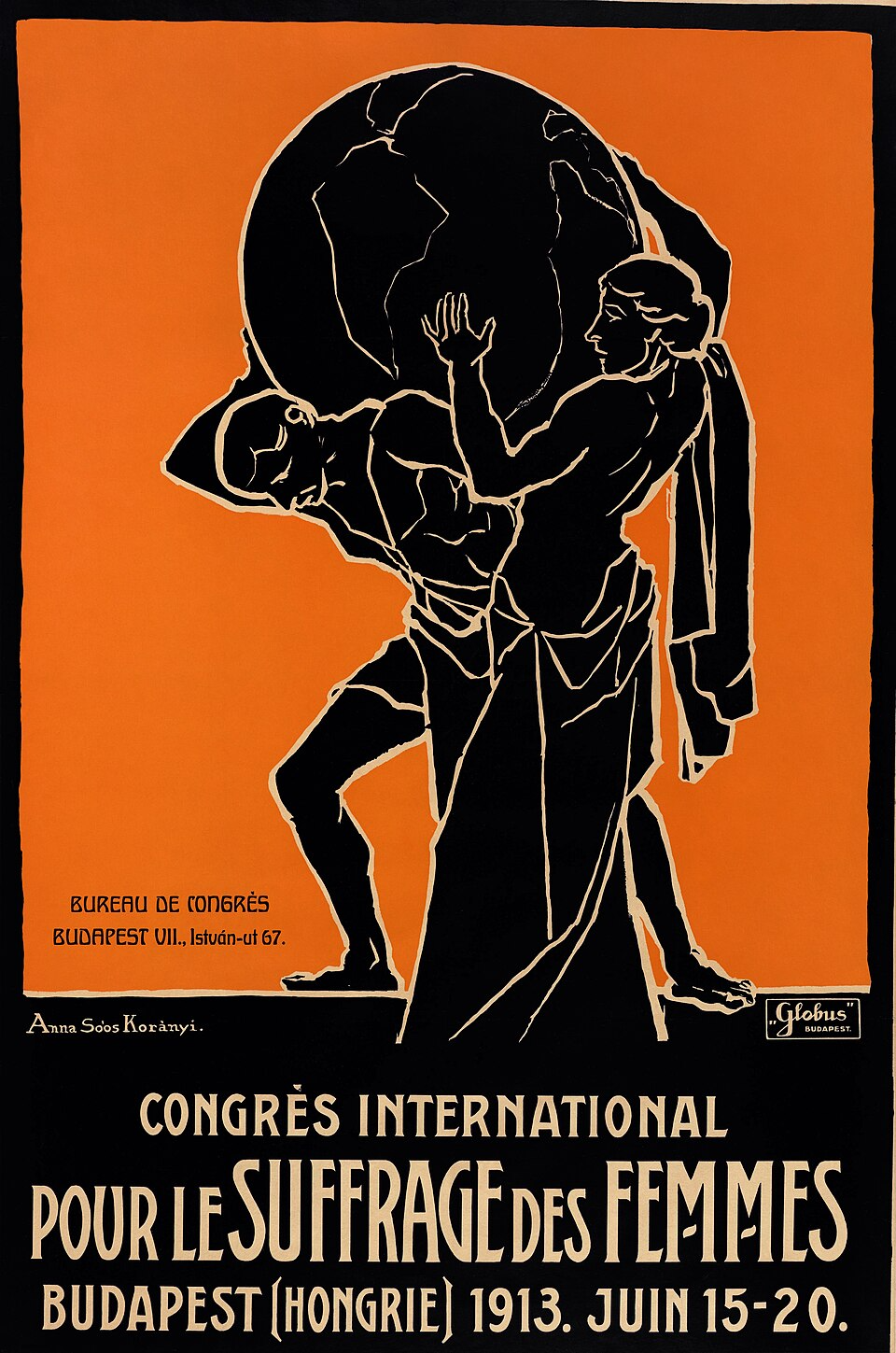
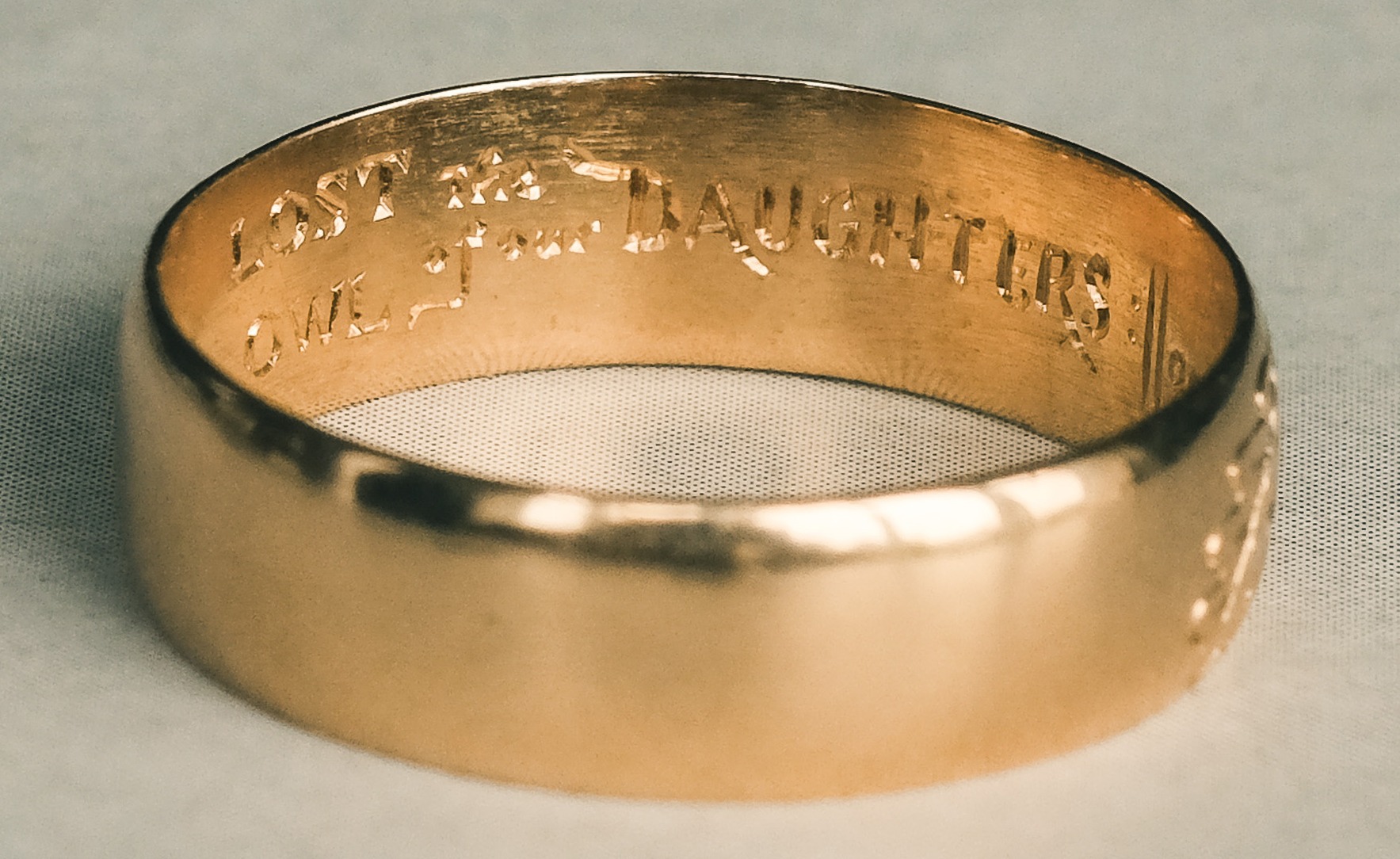
Fredrikke Marie Qvam and Gina Krog had both been pivotal figures in the suffrage movement (1880s onwards) and in the Norwegian Women's Public Health Association.
Three decades later, Norway became the first country in the world in which women won the right to vote.
In the USA, the constitution was only amended to grant full and equal voting rights in 1920.
British women would not win this fight until 1929. Suffrage jewellery had emerged in the English speaking countries during the pre-war period - green, purple and white (or silver) representing the colours of the women’s movement.
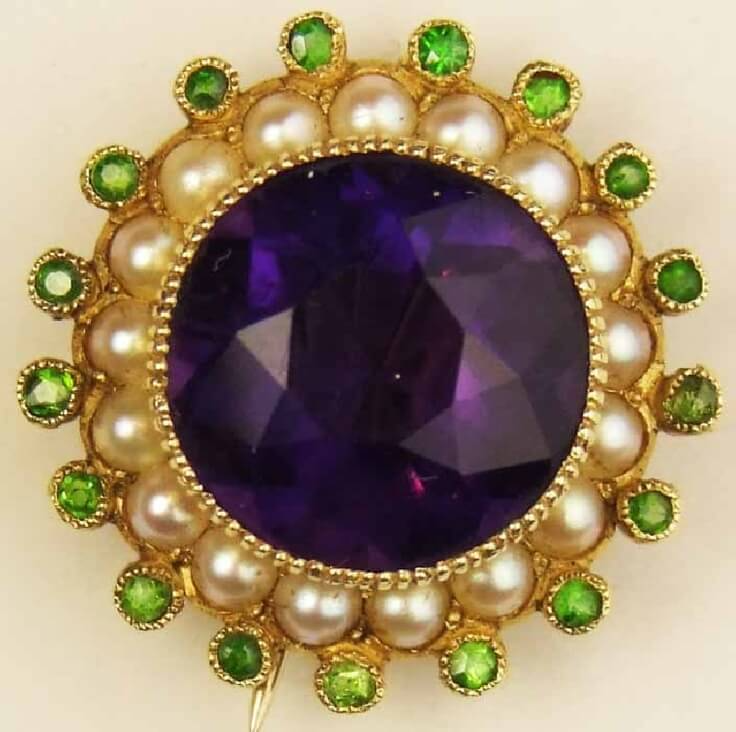
From Jewels of Denial: A Look at British Suffrage Jewelry (Kim Cady, Assistant Curator, Car and Carriage Museum)
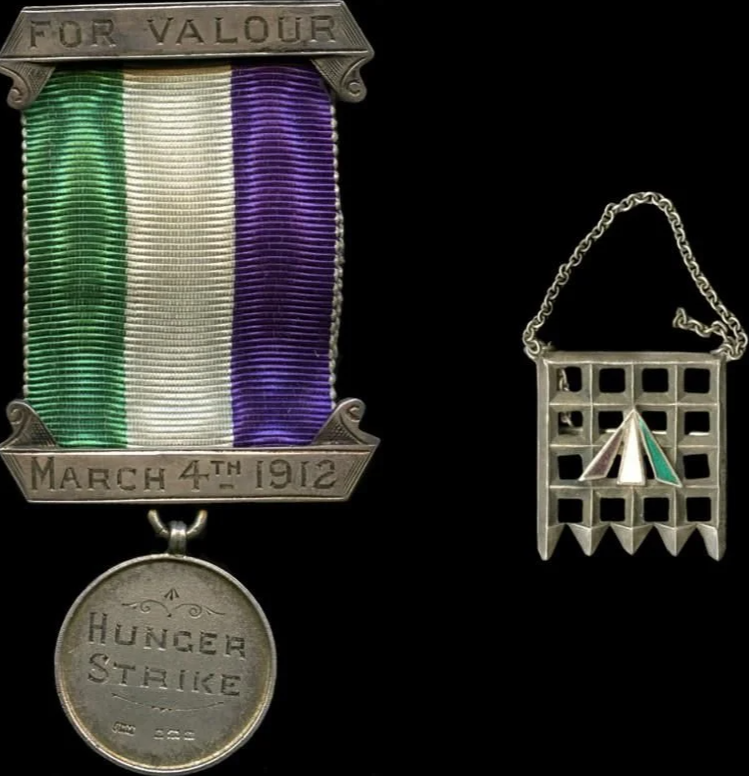
In 1915, Women’s Associations from around the world met at a congress in the Hague. 1,100 women from 12 countries gathered to try and stop the First World War. Jane Addams, founder of Hull House and patron of the Arts and Crafts scene in Chicago - was president of the congress. Although they failed to put an end to the war, the congress established an international community of women organisers known as the Women’s International League for Peace and Freedom (WILPF) .
One wonders about the transition from late romantic, arts and crafts, nouveau style into the early modern and deco...:
To what extent does it tell a story of pre and post women’s suffrage?
Is woman, in the romantic, not somehow “part of nature”? She is not seen as a complete, engaged subject but (at best) muse and at worst... better not to say..., and she is therefore excluded from political life and her social interactions are often curtailed . Her jewellery motifs reflect this: tying her into nature, not culture.
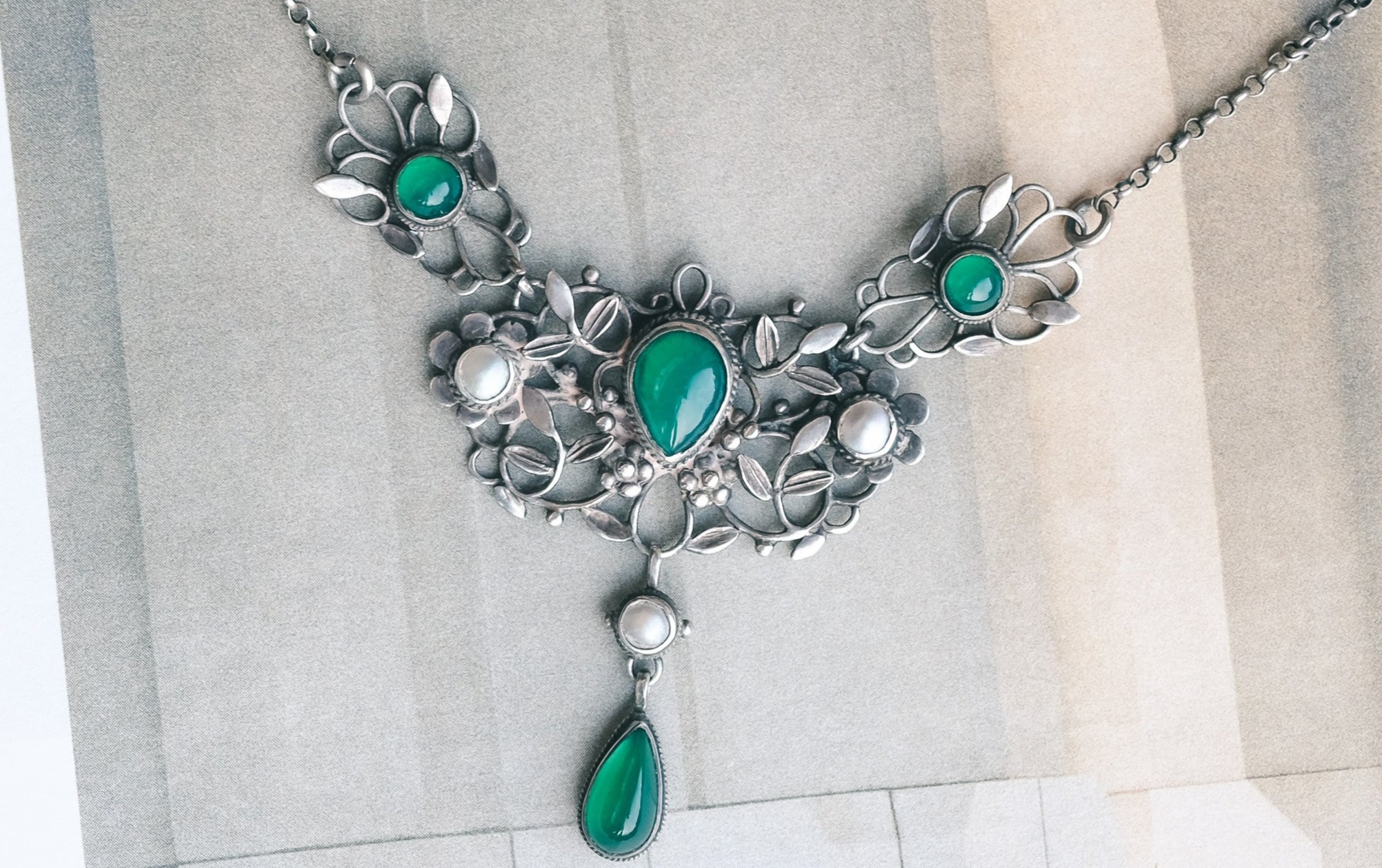
On sale at LOST OWL: The Gaskins Arts & Crafts Necklace: Sterling Silver, Chrysoprase & Mabé Pearl, circa 1905
In modern and Art Deco, jewellery is liberated from “nature” motifs as women become part of “culture” - political actors. The romantic, nationalist, ethnic, transitions to the modern and internationalist.
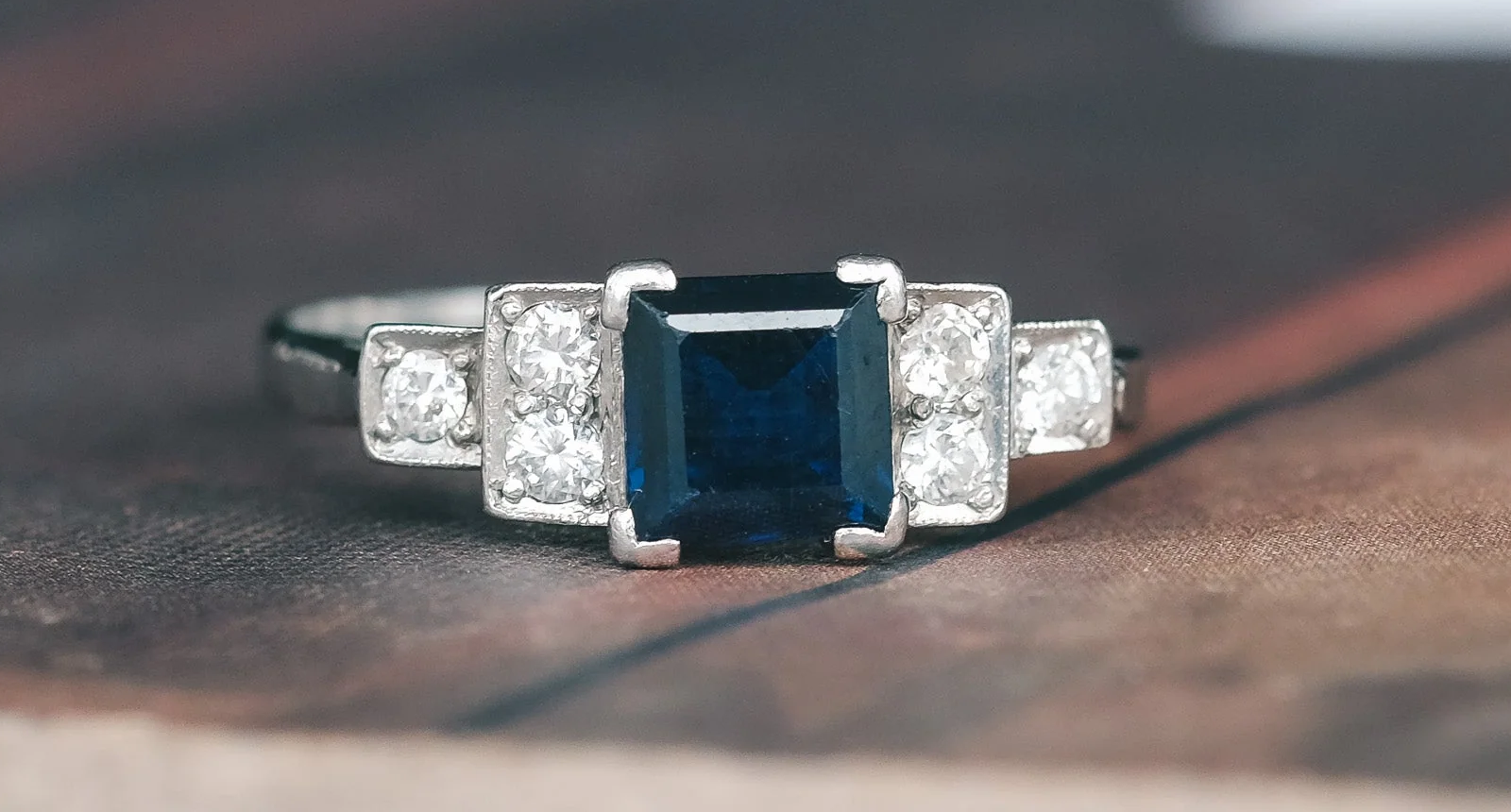
On Sale at LOST OWL: Art Deco Stepped Sapphire Ring, Platinum Natural Sapphire & Transitional Cut Diamonds (circa 1920)
But that is only speculation; a curiosity that we may explore in an other article at a later date - or not.
What is not speculation, however, is that when the Nazi’s began their occupation of Norway in the Summer of 1940, the Women’s Front was so firmly embedded in Norwegian civil society it seemed as if they had knowingly been preparing a civil resistance architecture for over two decades.
They had friends everywhere. And they knew how to organise.
What follows draws from the first hand accounts of individuals present during the Nazi occupation of Norway, their interviews with military personnel and journalists, as well as military analysis, museum and archival documents
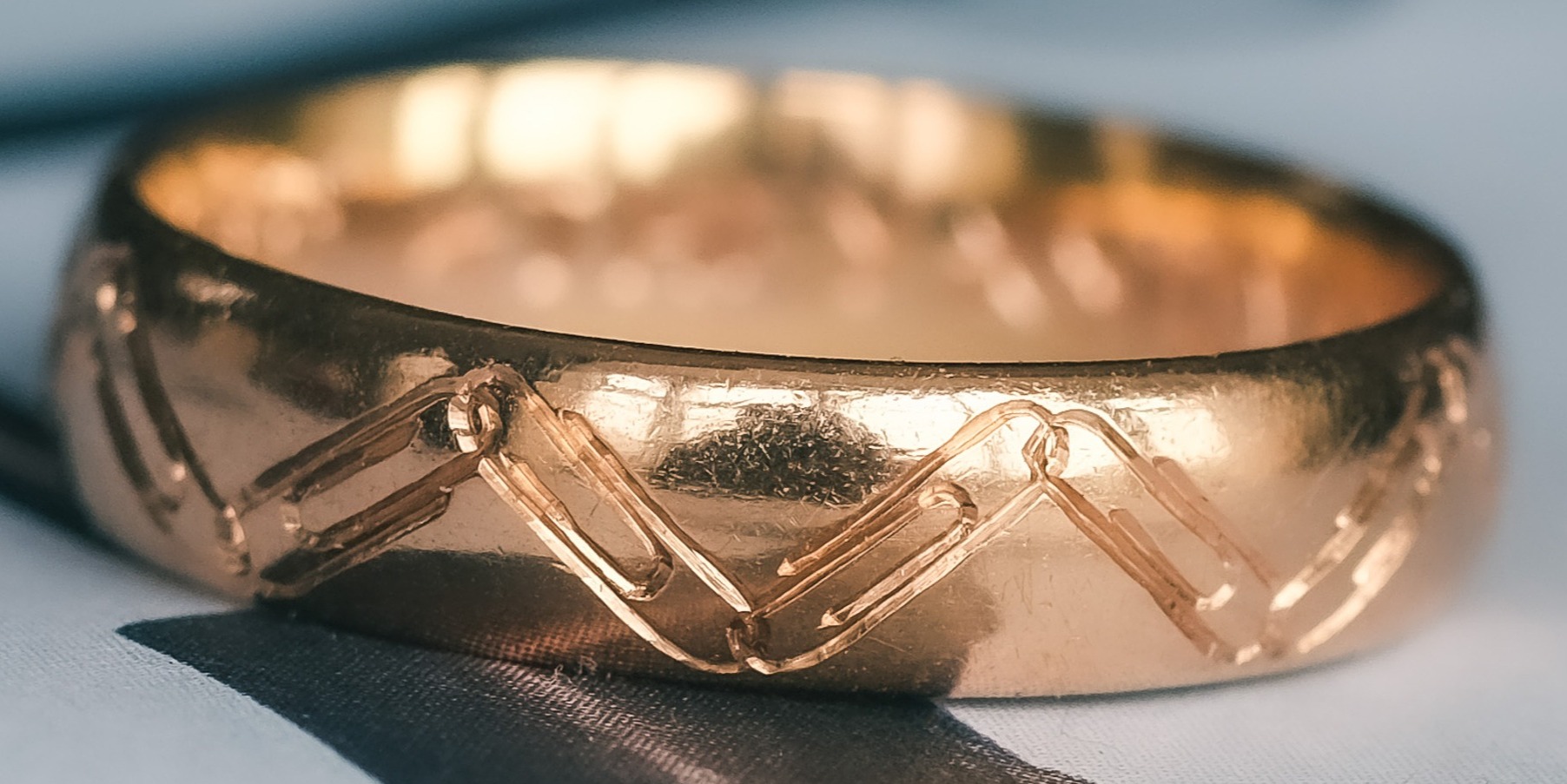
A second Modern Posy Ring by LOST OWL...
I. The First Link in the Chain
“They knew what they were doing.”
Mari Rutge
CATEGORIES OF RESISTANCE ACTIVITY:
— M.R.D. Foot
- Intelligence Gathering and Dissemination
- Assistance in Escape
- Direct Subversion
- Actions against material targets
- Actions against individuals or troops
-
Diversion of the Enemy's Main Effort
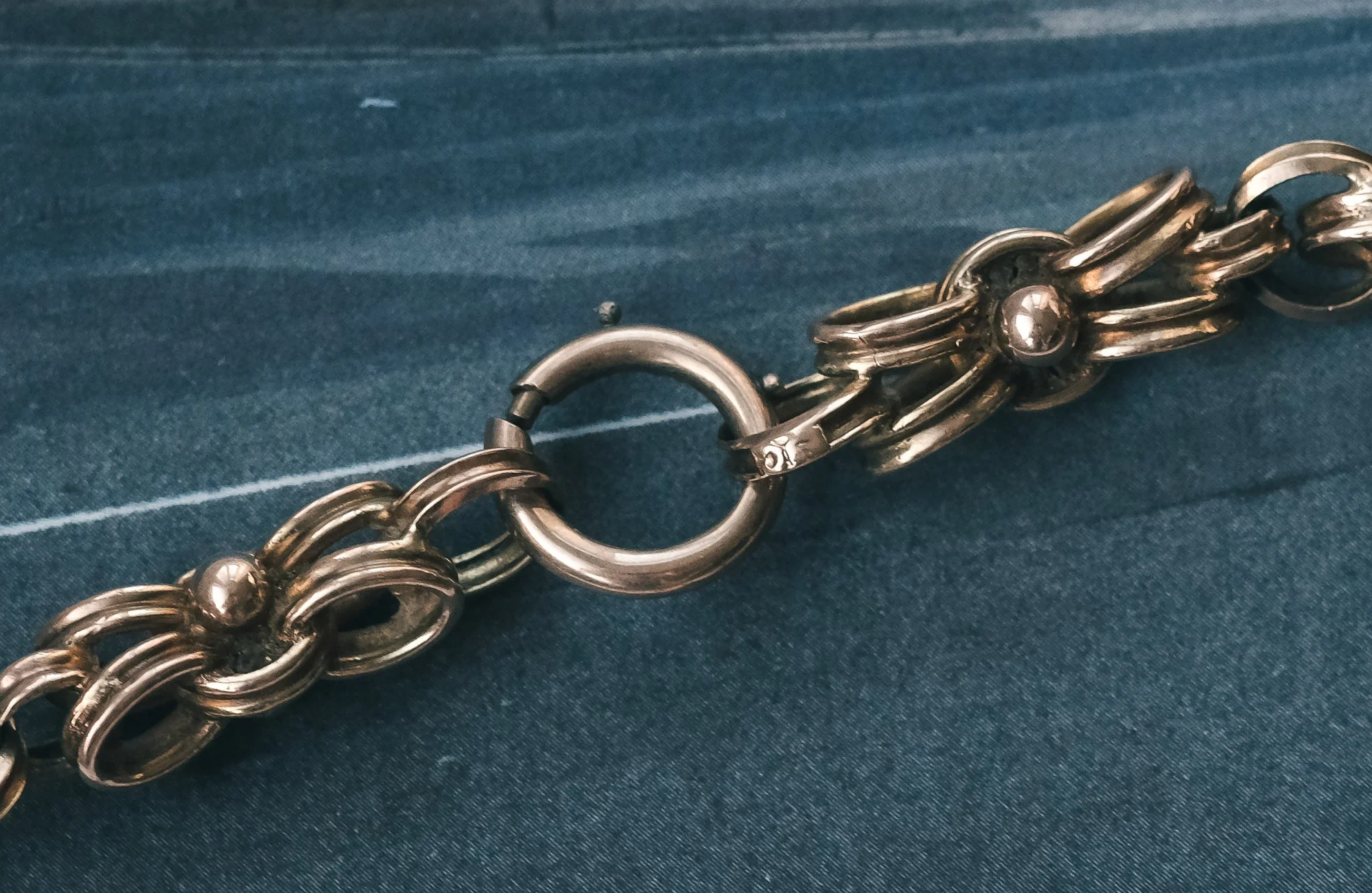
On Sale at Lost Owl: Victorian Chain Necklace (shop)
Norway had surrendered to the Nazis in April of 1940.
The government and King Haakon VII had refused to collaborate and had fled to London.
The pro-Nazi party of Vidkun Quisling now functioned as Hitler’s puppet regime in Norway.
The Norwegian Women's Public Health Association had a long history of collaborating with the State’s Health Ministry. They set up improvised hospitals during the April invasion. From then on, according to the Norwegian Biographical Encyclopedia...
"they provided medical and first aid supplies, … meals at schools, … food stations and distributed several hundred tons of food packages and clothing”.
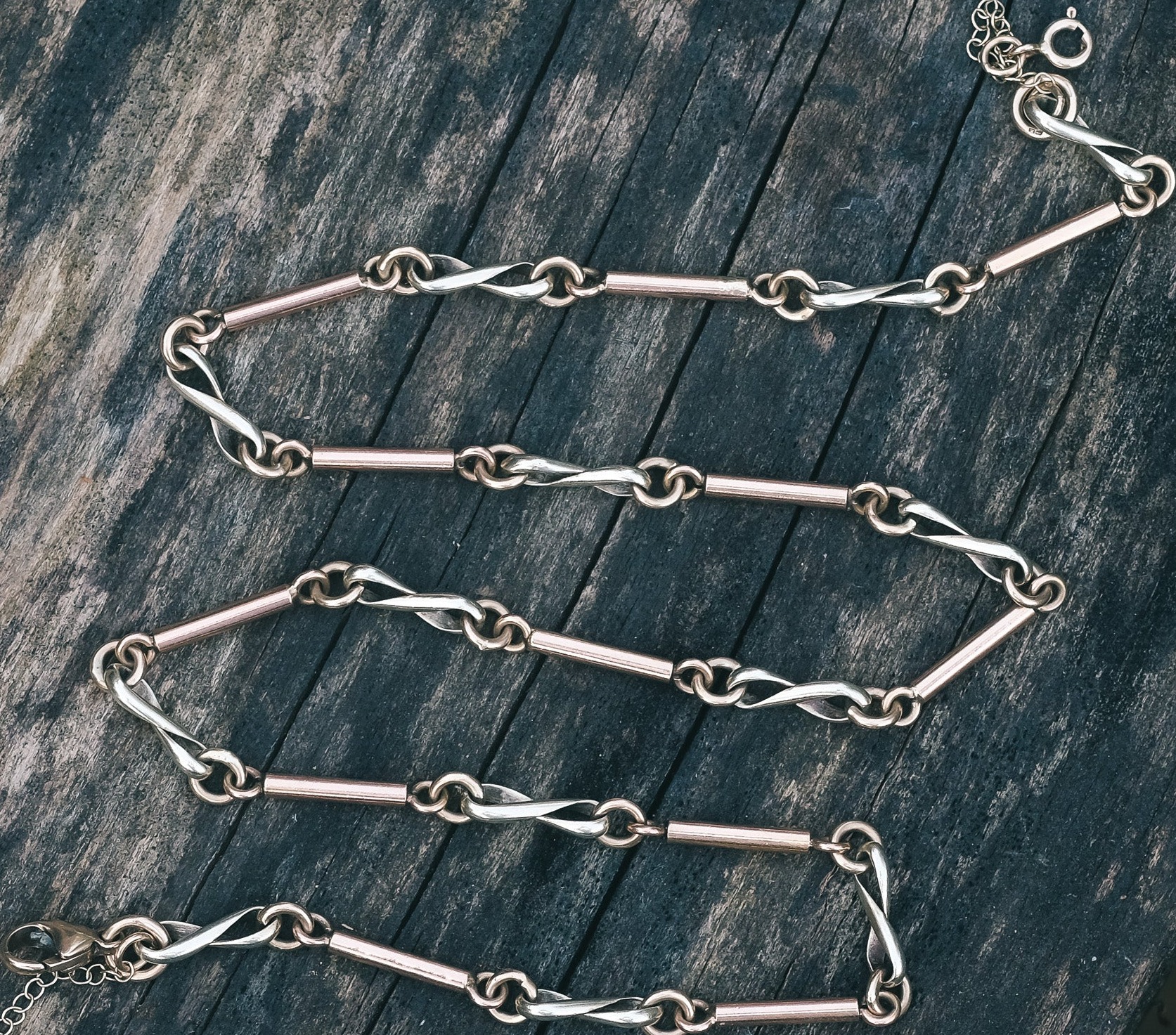
Topple and Burn: 18 inch chain, high quality surgical steel. 100% nickel & copper free.
An occupier attacks the very geography - the urban fabric - of the occupied territory. Roads are blocked, redirected, their names changed, made accessible only with a permit - checkpoints - the familiar now becomes alien. Families are forced out of their homes, forced to live in a single room in a neighbour’s house or even, not uncommonly, forced to share their homes with the occupiers.
Occupation is as much psychological domination as it is physical.
Under the leadership of Martha Emily Larsen Jahn and in collaboration with Physician’s Union, the state Health Ministry managed to remain independent from the Nazi Government. Martha had worked in the Ministry of Church and Educational affairs, had connections in the Armed Forces and was chair of the WILPF (the Women's International League...) branch in Norway and a had been a delegate to the League of Nations.
“These were Women’s League people. They knew what they were doing.”
- Mari Rutge
Martha Jahn was 70 years old at the time of the invasion. And she had friends everywhere. But the full extent of her role in the Underground is not known...
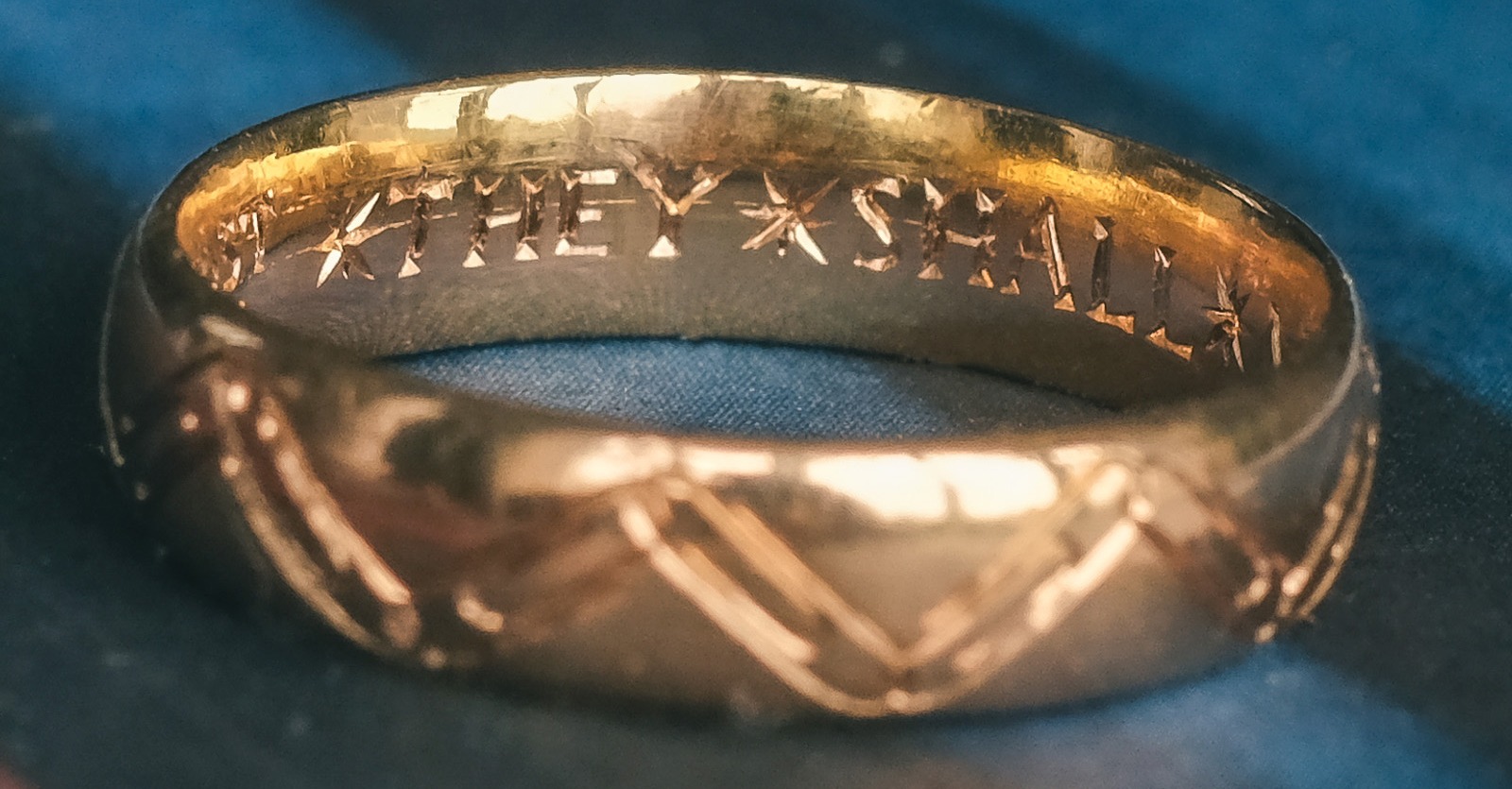
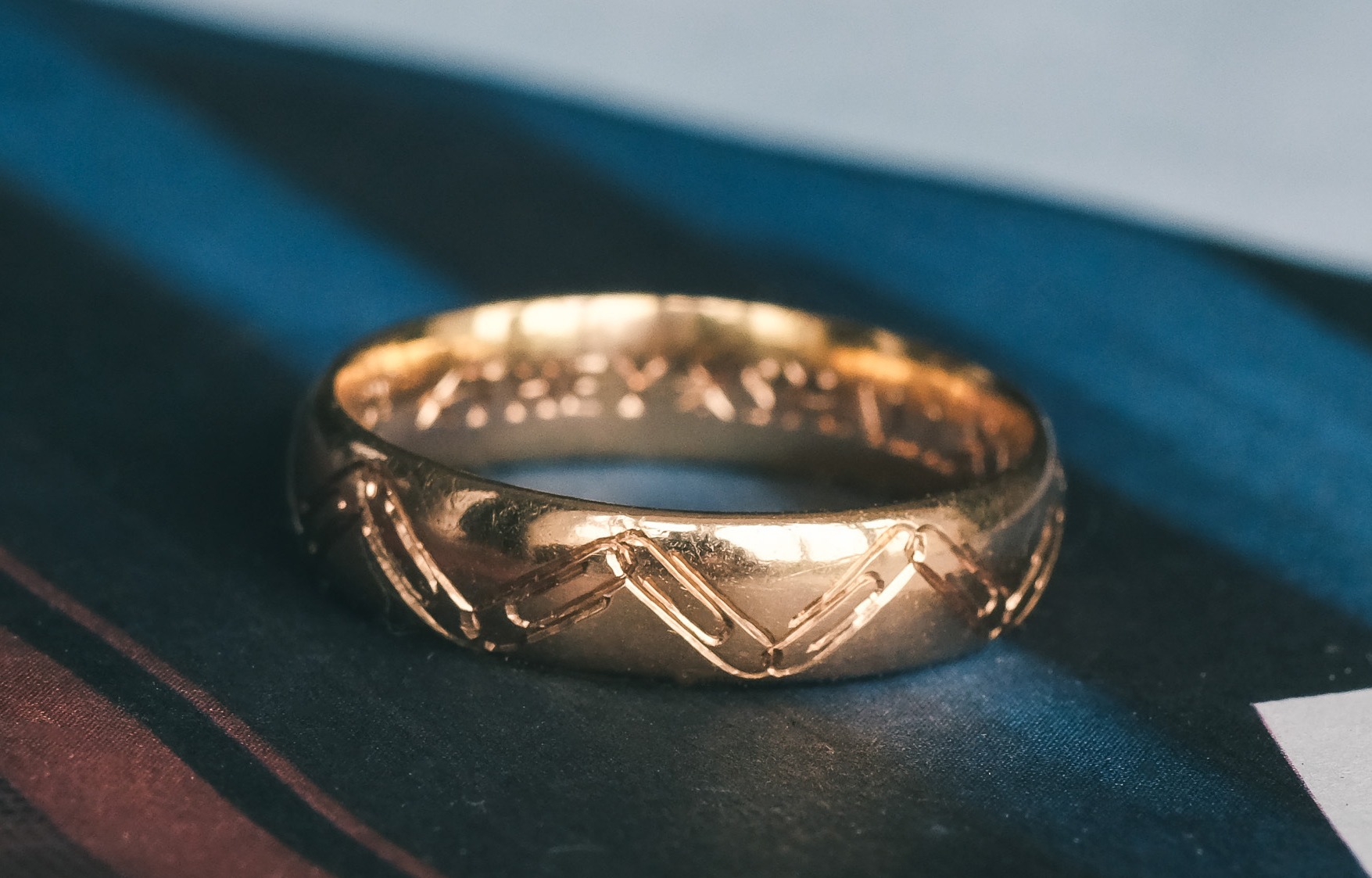
"They shall not... " - a second Modern Posy Ring by LOST OWL...
II. Link by Link, Yard by Yard
“Do your duty, put all your energy into the work for the country and the people.
But let everything happen in silence...”
The civil underground was woven through the Norwegian Church, the National Association for Sport, the Farmer's Union, the Norwegian Medical Association, the Trade Union Organization and the Communist Party.
The armed underground was first led by the XU. These were largely Norwegian military personnel who at first worked in intelligence.
Together, the underground - the resistance - worked to maintain communications with Britain’s Special Operations Executive (SOE).
Mari Rutge recalls...
“full laundry baskets with letters arrived at the ministry”
As the resistance movement grew, it became necessary to further fragment the organisation and Milorg, a second armed group was formed.
“The cellularized organization was designed to link its operatives and elements at a single point, minimizing the hazards posed by the arrest, torture and coerced divulgence of incriminating information by any single agent.
What an agent doesn't know he can't tell.”
They blew up train lines and factories, smuggled people, radios, and arms across the borders to Sweden and over the sea to the Scottish Shetland Isles.
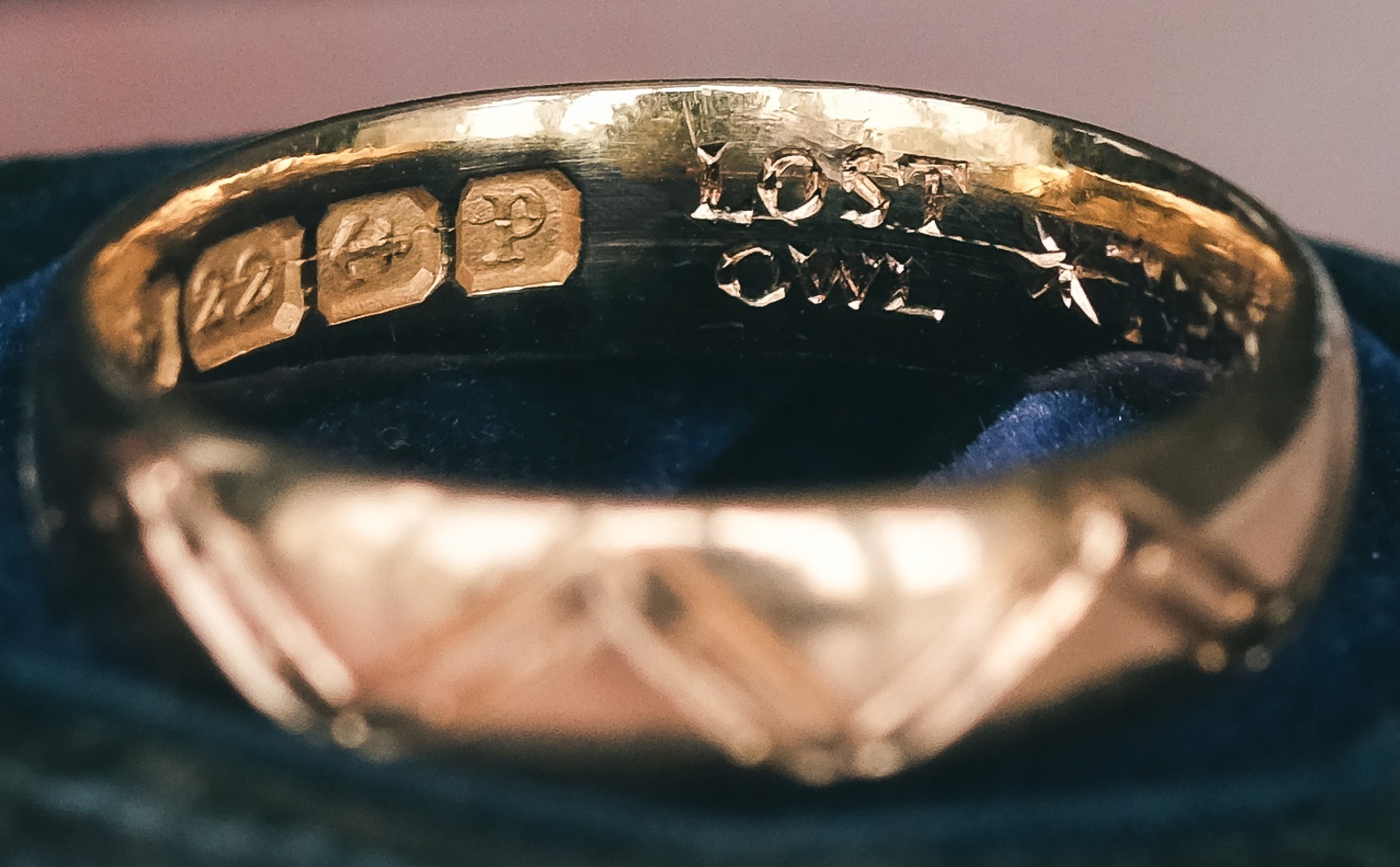
"They shall not... " - Modern Posy Ring by LOST OWL... 22k gold ring, vintage, from the year 1939
Anne-Sofie Østvedt took on the male name "Aslak" to hide her identity. She was a leader of XU, and directed intelligence networks.
Tore Gjelsvik was a student in 1940. He had contacts with XU leadership and later coordinated the civil resistance. He was interviewed about intelligence efforts by a Lieutenant in the U.S. Navy for a study on Resistance Management.
The Lieutenant wrote...
“ Tore Gjelsvik described the techniques used in Norway as diverse, using a variety of methods from sophisticated microscopic messages that required a microscope to read and was only the size of a matchhead to less intricate techniques, including hidden compartments in cases and the utilization of women as couriers, hiding the messages in their bras and panties.”
So effective was the resistance network, that in 1943 they managed to set-back the Nazi's atomic bomb program, when Norwegian commandos, aided by the underground, entered The Vemork plant and succesfully planted explosives.
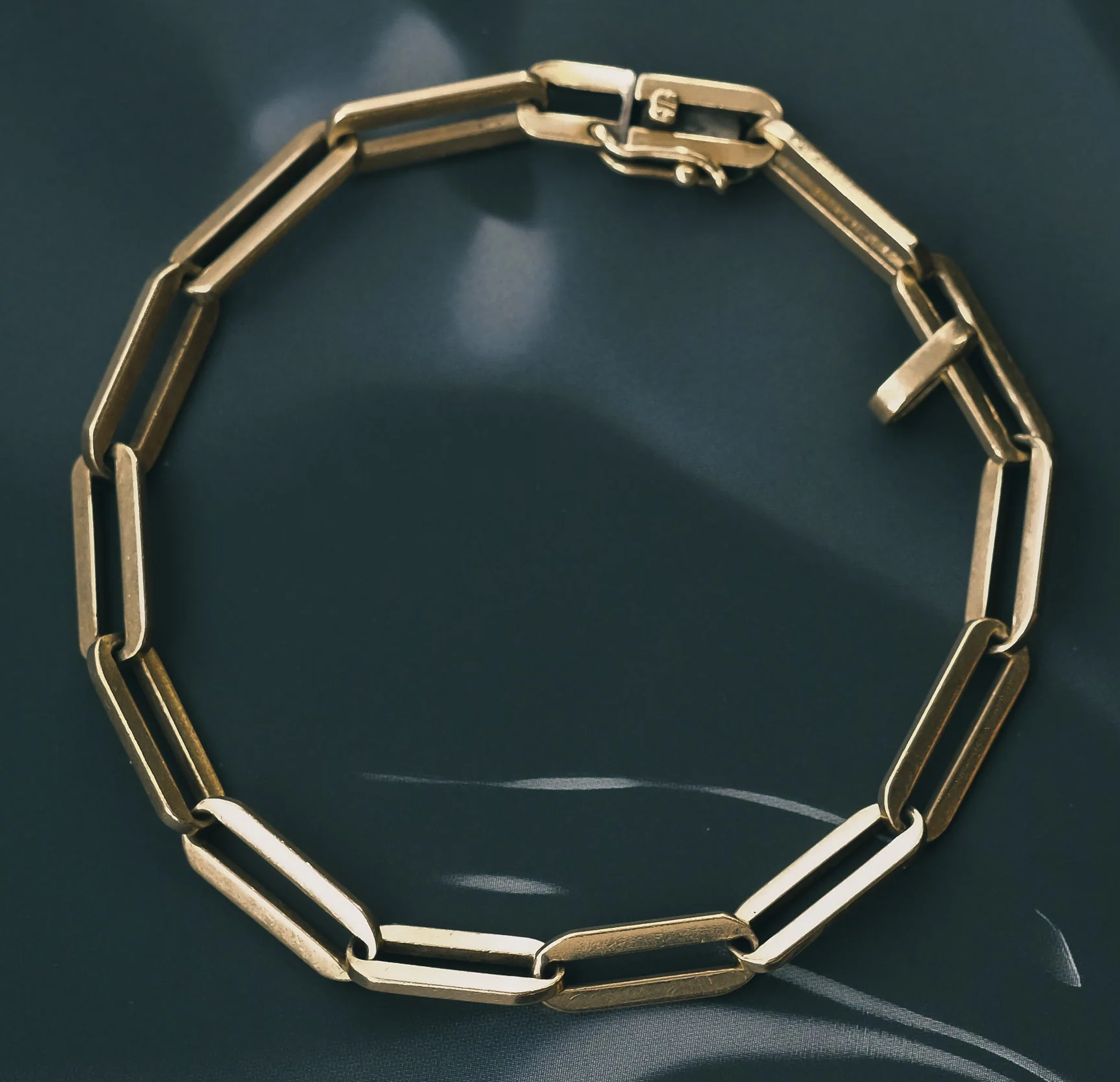
Lost Owl: Vintage 18ct Paperclip Bracelet
III. The Perfect Chain
“Can one ever be too aggressive in preserving order?”
Mari Rutge’s father was a teacher. He received cash and messages from the Resistance, often hidden in matchboxes in designated parts of Oslo, and he distributed the packages in secret to others in the underground. They would only meet in person in the safe-houses - never in members’ homes, and only in twos or in small groups. The safe-houses ensured that addresses were kept hidden, and prevented multiple resistance members being captured at once.
And it was at the Schools and Universities, the Teachers Unions, and the Ministry of Church and Educational affairs, where a large part of the Civil Resistance would be fought, and won.
Magne Skodvin was a history student at the University of Oslo when the Paperclip Resistance began.
Magne recalls...
“In the first week of December 1940 it became fashionable to wear a paperclip on one's lapel - signifying that the Norwegians stuck together. The Nasjonal Samling (NS), the Norwegian Nazi Party, decided to stop this practice and ordered their lackeys to tear the paperclips off of all lapels”
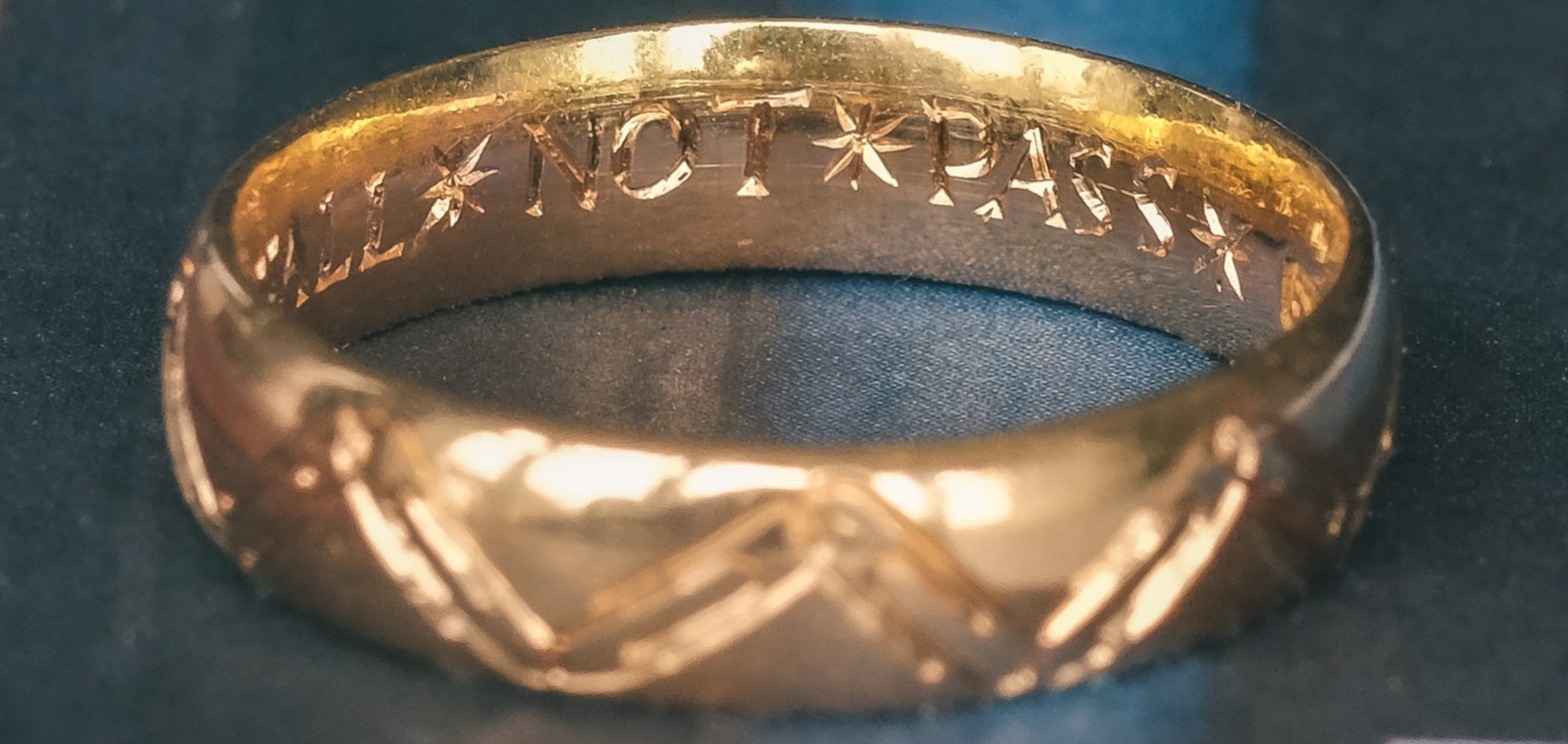
"They shall not pass " - Modern Posy Ring by LOST OWL... 22k gold ring, vintage, from the year 1939
The fashion may not have started in the capital - as Magne Skodvin believed - however.
Almost 100km away in the Norwegian town of Sarpsborg, the paperclip resistance was already unifying students and teachers... and making the Nazis look increasingly panicked:
WARNING
To the population in Sarpsborg and surrounding areas.
From National Socialist Road No. 1.
The attempts at passive organized resistance that we have recently observed and regarded seriously, and which on Sunday contributed to gatherings and reckless behaviour by people of all ages, from 10 to 60 years, will no longer be tolerated.
After the London broadcaster has officially explained the demonstrative and provocative purpose as to why the small paperclips have been attached to jacket lapels or coats, I hereby announce that anyone who is found from now on with such marks, regardless of personal status, will be arrested.
Provocations or attempts against our Führer will not be tolerated.
Sarpsborg, 18 November 1940.
Gunnar Lie
County Leader
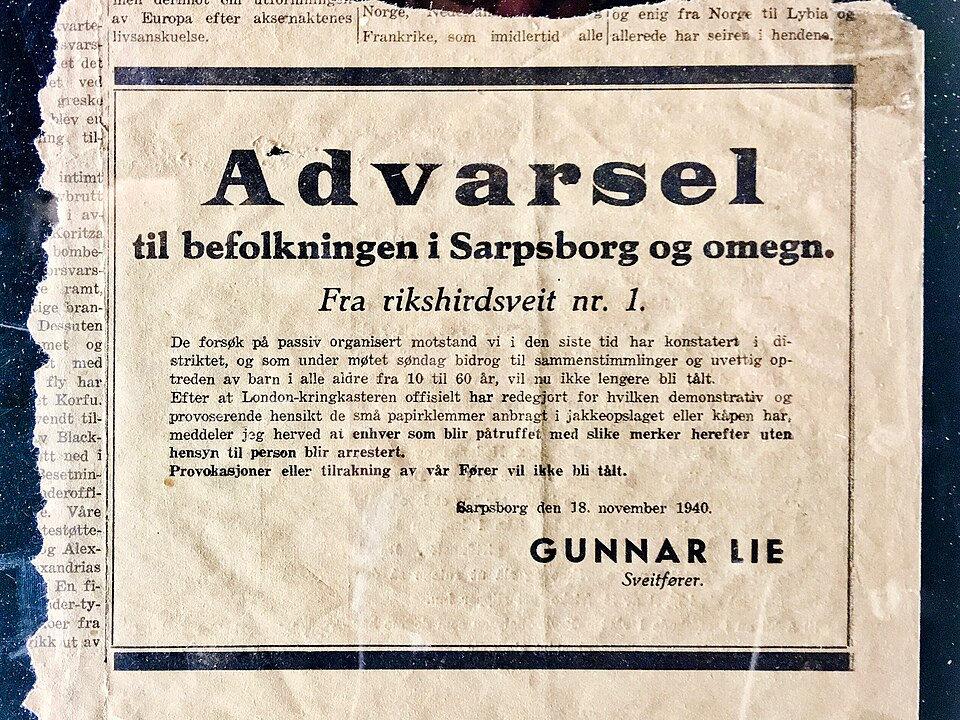
From the WW2 Resistance Museum in Oslo
Magne Skodvin - the history student at the University of Oslo - years later - gave an interview for a study on resistance movements in World War II. In the interview, on 13 January 1993, he told reflected on the Nazi's clampdown on the paperclip trend.
Skodvin said...
"The result was that everybody wore them."
Conclusion
Dori (Hahn) Altshuler was an American, but her name (Alt - old, german/yiddish; shul - synagogue - yiddish) suggests central European Heritage and Ashkenazi Jewish heritage.
Given her conceptual, experimental, reuse approach to jewellery-making, it may be coincidental that in the 1950s she decided to make a paperclip necklaces; unaware, perhaps, that paperclips had been a symbol of resistance to the Nazis in Norway.
Or perhaps not.
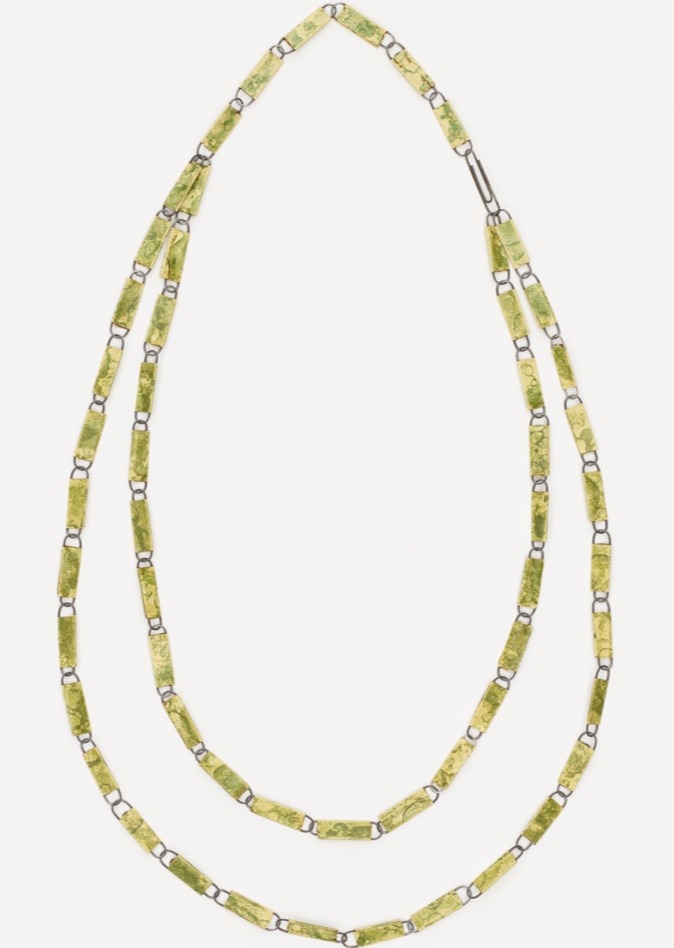
Dori (Hahn) Altschuler: Paperclip Necklace, Paperclips, foil, and paper (1950s)
It may also be a coincidence that before Dori Altshuler was born, artists from her school - the Art Institute of Chicago - had collaborated frequently with Jane Addam’s school at Hull House which had once been an unofficial branch, meeting place and lecture theatre for the women, activists, and suffragettes of the WILPF (Women's International League...), the society whose members throughout the Nazi occupation had organised the parents, students and teachers unions in protest and civil disobedience against the occupiers.
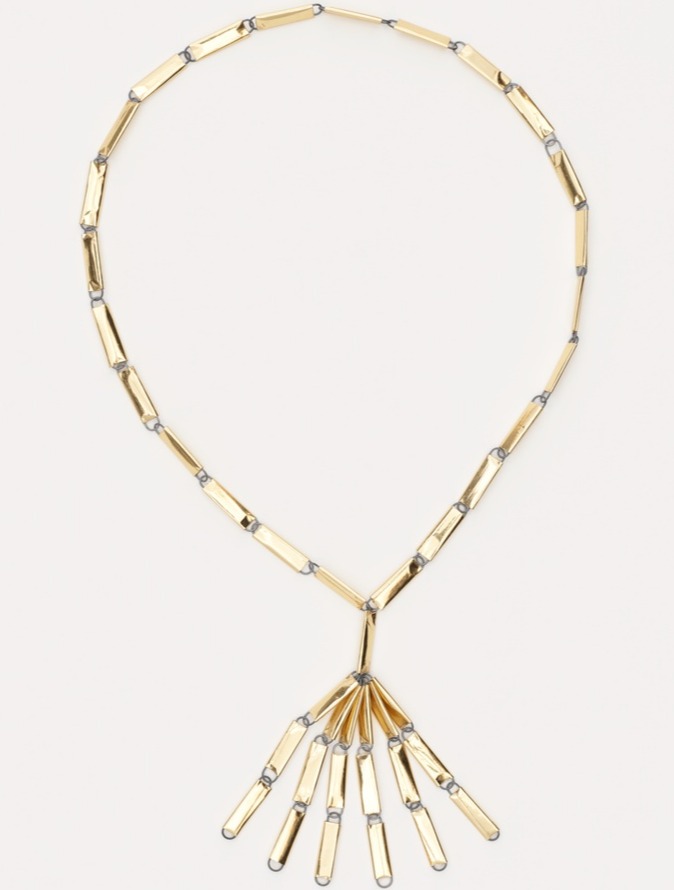
Dori (Hahn) Altschuler: Paperclip Necklace, Paperclips, foil, and paper (1950s)
Or perhaps Dori knew all this, and her paperclip necklaces were a way to chain all these pieces of the puzzle-necklace together: from the Suffragettes, to Hull House, to the Women's League, to Norway and the Teachers' Resistance and back to Chicago and the Art Institute.
I don’t know.
What I do know is that the paperclip as a symbol of the resistance, an unbroken ring of interlocking units - like the trade unions and women’s associations and the cells of the Norwegian underground, their “friends everywhere” that created an impenetrable band of solidarity and support within a community under siege, a firewall against the monstrosities of fascism and imperialist occupation - the paperclip chain, the paperclip itself as a symbol, is today as powerful as it is relevant.
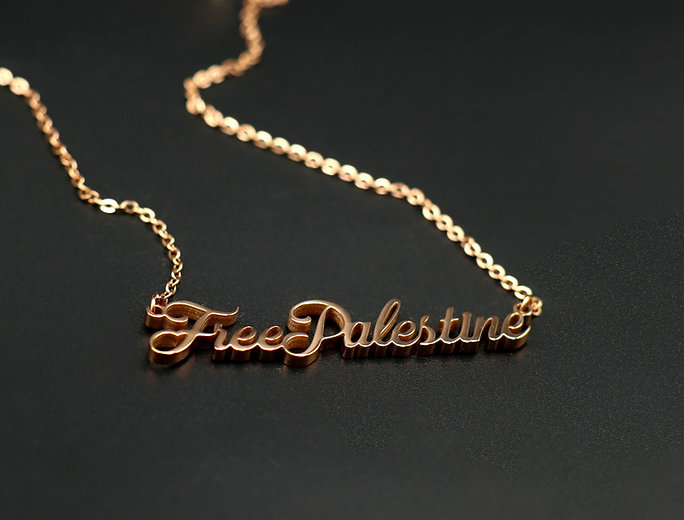
Topple and Burn: 18 inch chain, surgical steel. 100% nickel & copper free.
Bibliography
WILPF and Norway's Women Activists/Politicians
- NORWEGIAN BIOGRAPHICAL ENCYCLOPEDIA, entry on Martha Larsen Jahn (link)
- Tønnesson, S. (2022) Lives in Peace Research : The Oslo Stories. 1st ed. Singapore: Springer Singapore Pte. Limited.
- WILPF 94 Years, exhibition publication (link)
The Norwegian Resistance
- Christenson, Christian E. ; Underground Management: An Examination of World War II Resistance Movements (1994) (link)
- Hetland, Ø., Karcher, N., & Simonsen, K. B. (2021). Navigating troubled waters: collaboration and resistance in state institutions in Nazi-occupied Norway. Scandinavian Journal of History, 46(1), 84–104. (link)
- Jorgensen, Timothy J.; How a Sneak Attack By Norway’s Skiing Soldiers Deprived the Nazis of the Atomic Bomb, Smithsonian Magazine, 2018 (link)
- NORWAY'S TEACHERS STAND FIRM, Royal Norwegian Government's Press Representatives, Washington D.C. (link)
About the Author
Daniel is a language expert and hispanophile who, through his work with heritage professionals in Spain - his adopted home - , has developed an unexpected interest in all things history-adjacent.
His collaboration with Lost Owl is an endeavour to pursue the many half-written or incomplete stories in the history of jewellery. In this capacity, he turns his attention to the stately-yet-weather-beaten garden path of art history, caringly and tentatively turning over its many loose cobblestones and hoping to capture and share in writing the great craftsmanship and the stranger-than-fiction vicissitudes that the historic-landscaper repeatedly bears witness to.
But now as he writes and as ever, he must be true to his daily passions - the pot on the stove which requires his attention, and his electronic music which will - much to his perpetual frustration - not produce itself.