

In myth and in jewellery motif,
ceres confronts the capitalist patriarchy
From Lost Owl’s
“A History of Solidarity
and Resistance Jewellery”
"The frontier of the Rebellion is everywhere. Even the smallest act of insurrection pushes our lines forward…
Tyranny requires constant effort. It breaks, it leaks.
Authority is brittle." 1
Introduction
In Ovid's Metamorphosis, the myth of Ceres and her daughter Proserpina begins thus:
"Not far from the walls of Enna, there is a deep pool. Pergus is its name... A wood encircles the waters, surrounds them on every side, and its leaves act as a veil… The branches give it coolness, and the moist soil, Tyrian purple flowers: there, it is everlasting Spring."
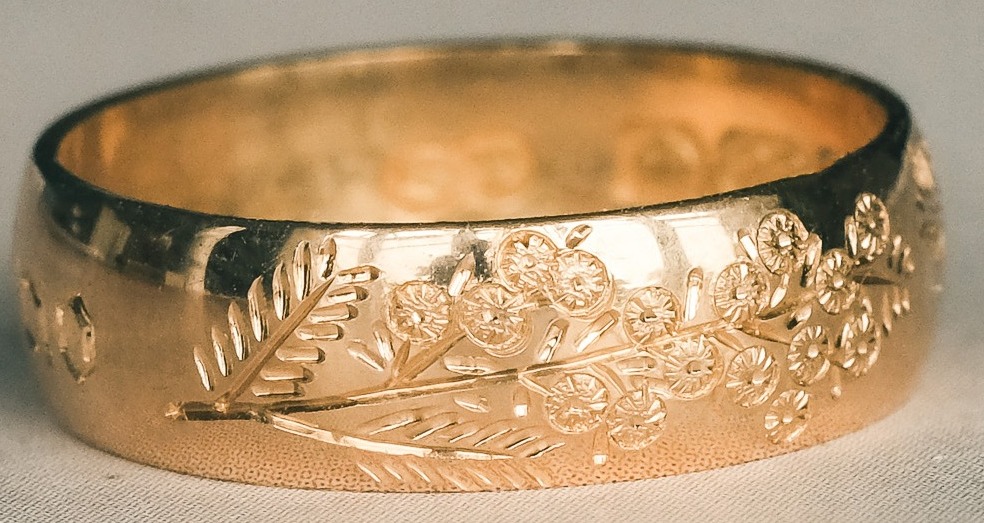
A Modern Posy Ring by LOST OWL - more on this ring later...
Wheat and agricultural tools, together with Ceres/Demeter themselves, are understood to symbolise prosperity, fertility, unity or closeness with the land and… new beginnings.
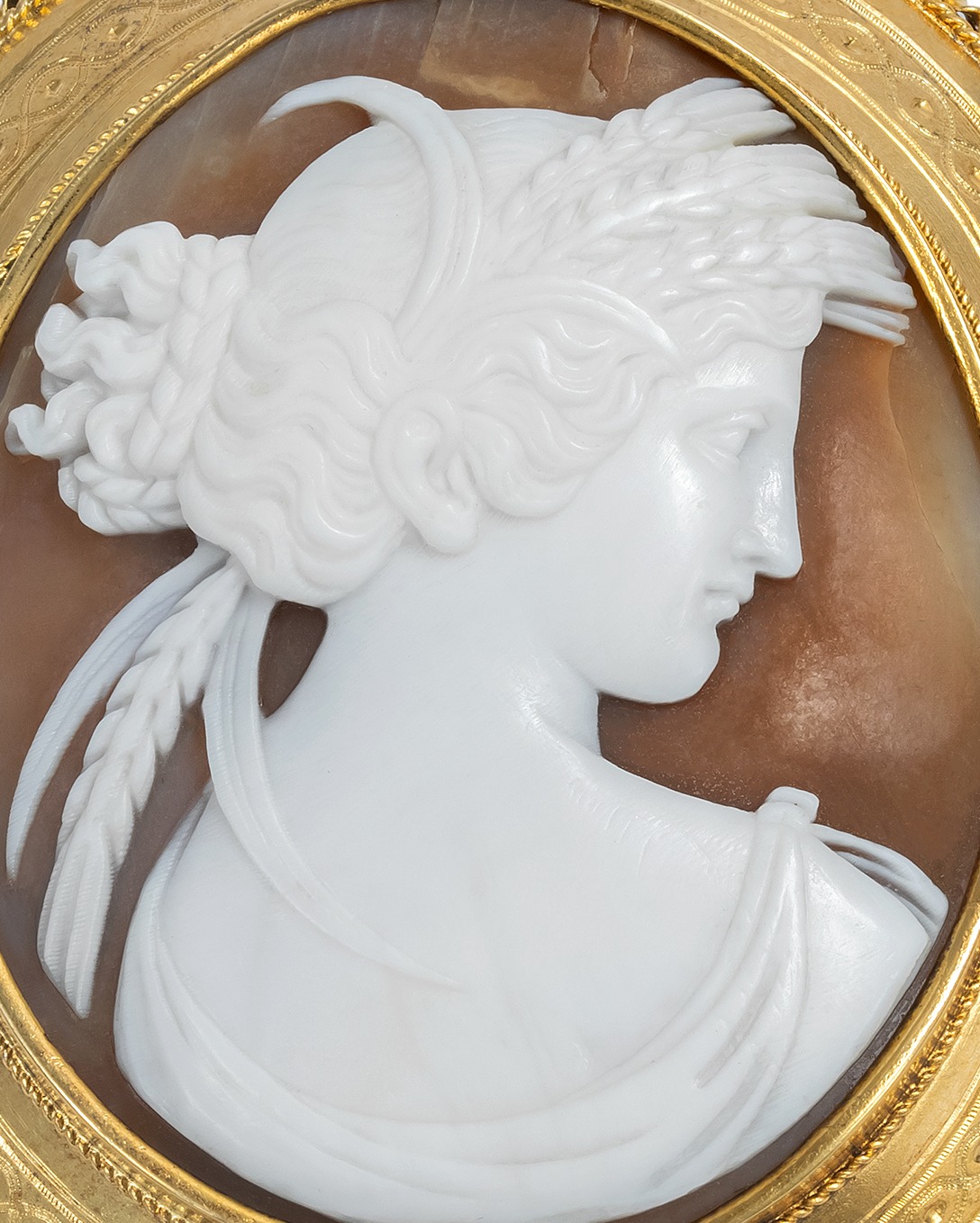
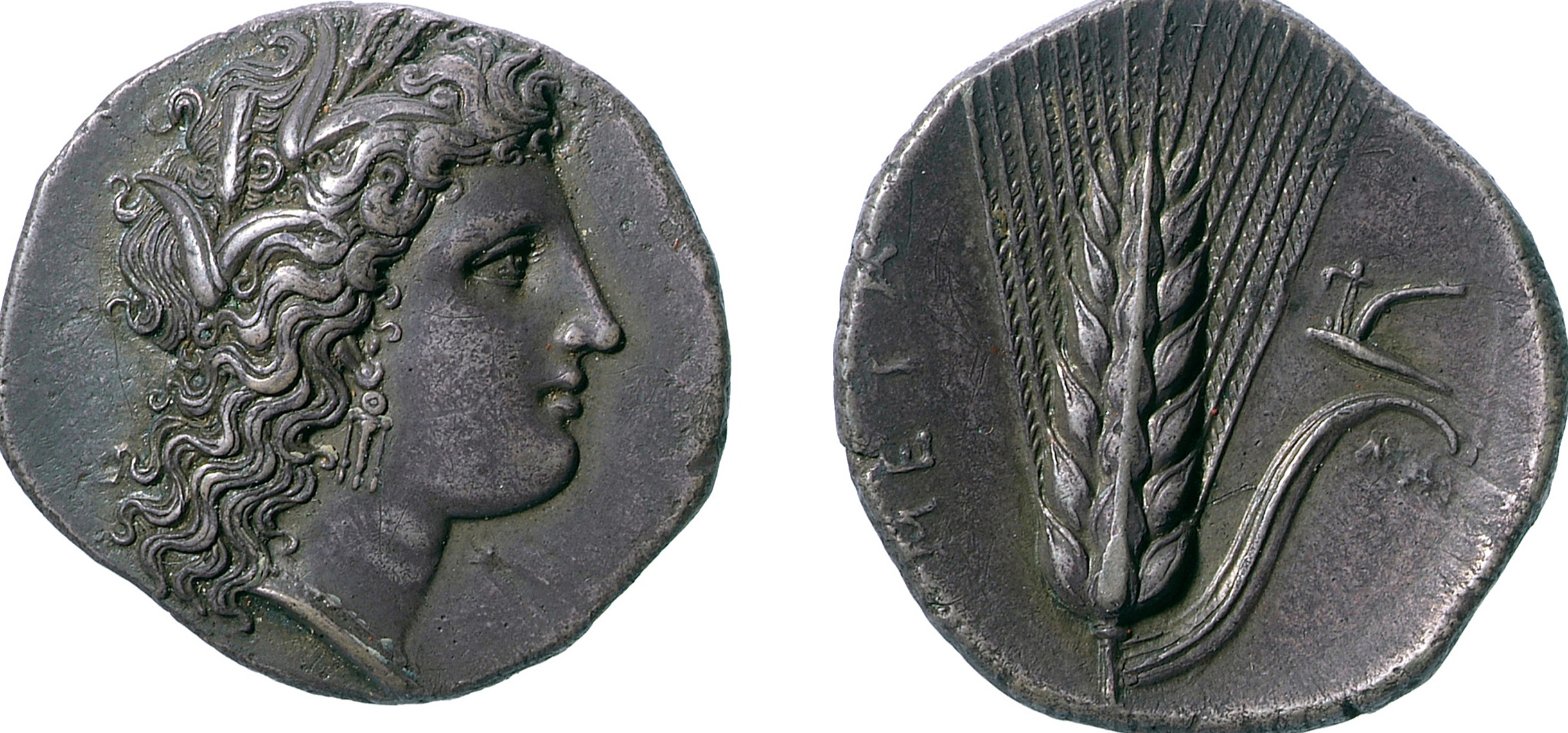
Ceres and Demeter are Mothers whose Daughters - Persephone and Proserpina - while “gathering violets or radiant lilies” are abducted by Pluto/Hades - Lord of the Underworld.
“The frightened goddess cries out to her mother, to her friends, most of all to her mother, with piteous mouth”.
Many know the story of Persephone in the Underworld, - but not in its entirety - and fewer know the story of how the distraught mother, sister of Jupiter/Zeus and Pluto/Hades, brought the world to its knees in search of her lost, abducted, daughter. To fully appreciate the significance of the mother's image we must fill in these gaps.
The daughters are bundled onto the Pluto's chariot and, writes Ovid...
“The earth, pierced, made a road to Tartarus, and swallowed the headlong chariot, into the midst of the abyss.”
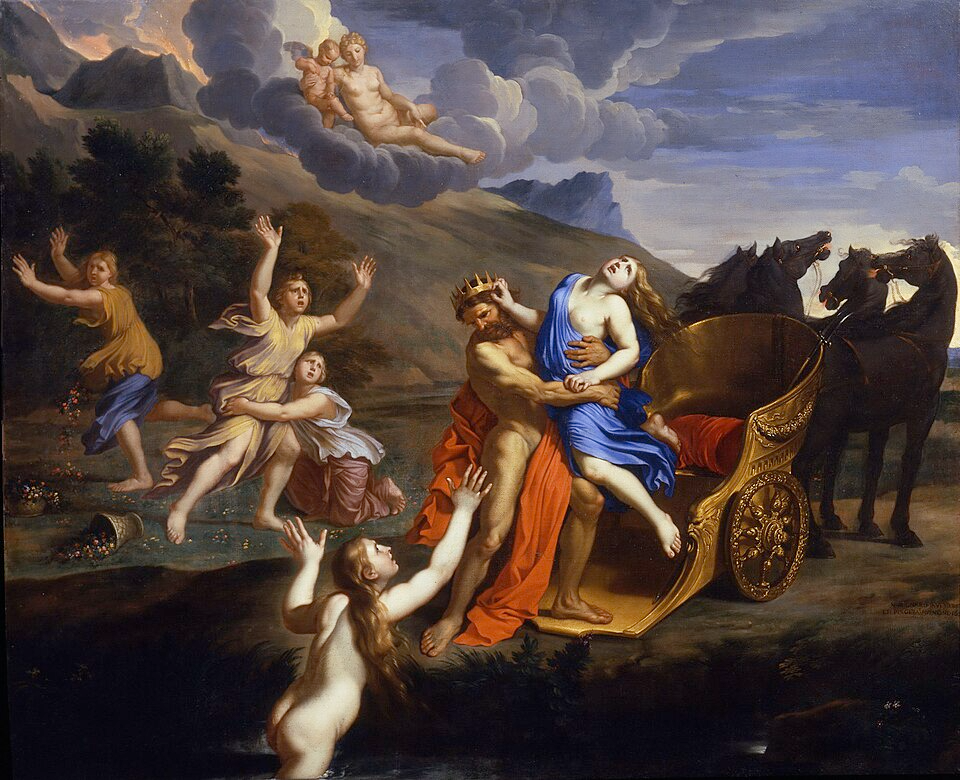
The Rape of Proserpina by Nicolas Mignard (1651)
“All the world is afraid of images,” said Jean Luc Godard, the late great master of French New Wave cinema.
Godard believed that while we experience reality as a unified and coherent whole, an image can make us aware of its own partial, curated nature - its own incompleteness. He thought that images are more real than reality because they can teach us how to see the incompleteness of reality itself; how reality too, like an image, “breaks” and “leaks”.
The task at hand, regarding the myths of Ceres and Demeter is to show you the incompleteness in their image-representations; to ask “what are Ceres and Demeter hiding?”
What is it that we don’t see when we see them (and their associated motifs: wheat, plough, scythe/sickle)?
And if they indeed symbolise new beginnings, one might also ask the naive question:
The beginnings of what?
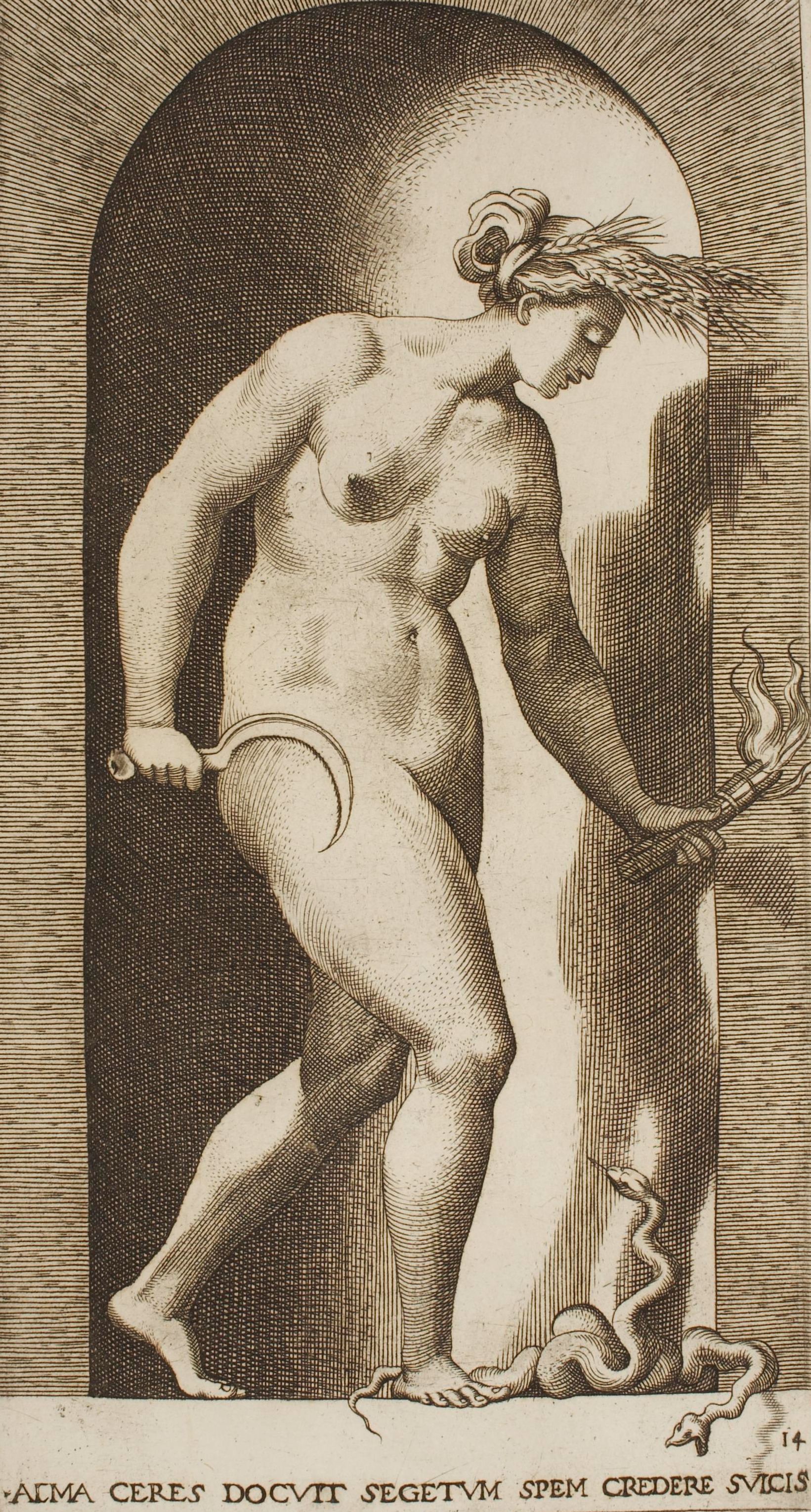
Ceres Searches for Persephone
The Metamorphosis continues...
"...the mother, fearing, searches in vain for the maid, through all the earth and sea… Lighting pine torches with both hands at Etna’s fires, she wanders, unquiet, through the bitter darkness, and when the kindly light has dimmed the stars, she still seeks her child, from the rising of the sun till the setting of the sun."
ROME, Italy, 133BC. The Roman Republic is experiencing widespread food scarcity, rising grain prices, and hunger as slave labour replaces agricultural jobs and small farms are increasingly acquired by large private estates. In Sicily, slave revolts cause grain prices to rise still further, and Roman Legions are sent to violently suppress the uprisings.
Cornelia Africana was Mother of the Gracchi. She was admired in the Roman Republic as a virtuous, dutiful Roman Matron. She was a single mother, in fact. Her husband died the year her second son Gaius Gracchus was born; her first son was just 14 years old. She refused to remarry (even to a King, Ptolemy VIII). Cornelia herself took charge of her children’s education and went on to council her sons when they became key political figures in the Republic - a very rare occurrence as women could neither vote, hold public office, nor speak in the senate.
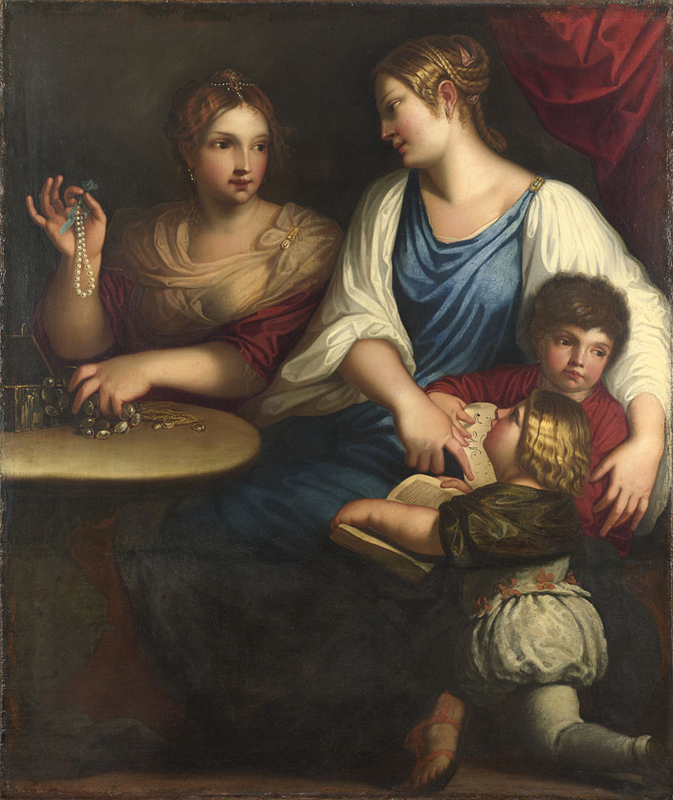
A friend shows off her jewellery, to which Cornelia, indicating to her sons, replies “these are my jewels”; Gaius, the younger brother, holding a book.
At the age of 29 (more or less), her eldest - Tiberius Gracchus - was elected to public office.
He managed to push a law into force (Lex Sempronia Agraria) which put a limit to the amount of land that could be owned by the wealthy, expropriating and redistributing the surplus to poor Roman citizens.
Within a year a mob was mobilised by political opponents and Tiberius and his supporters were slaughtered.
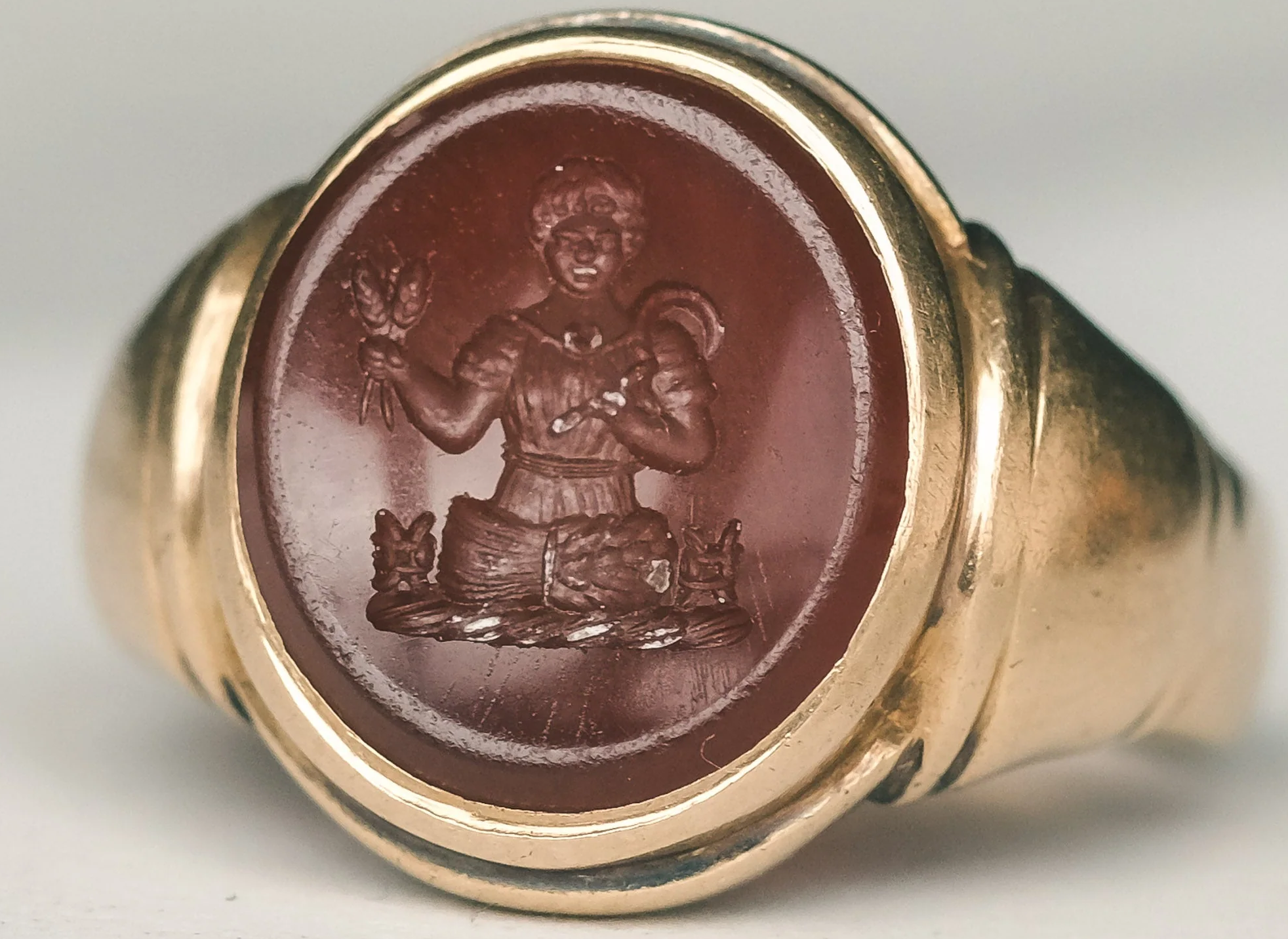
After Tiberius’s death her youngest, Gaius Gracchus, followed in his brother's political footsteps.
Gaius established what was basically a price cap on grain (Lex Sempronia Frumentaria); a fixed price and minimum ration to protect poor Romans from food scarcity and inflation.
He also aimed to extend citizenship rights to neighbours and allies of the Republic. Before they came for Gaius, as they had come for his brother, a speech was given in the Senate by an opponent of the Citizenship Bill which reads as if it were given yesterday:
"I suppose you imagine that, if you give citizenship to the Latins, you will still have a place in the assembly in which you are standing, and will participate in the games and festivals. Don't you realise that they will swamp everything?"
...from The Cambridge Ancient History, Volume IX (page 83)
History does not repeat, but it often rhythms, so they say.

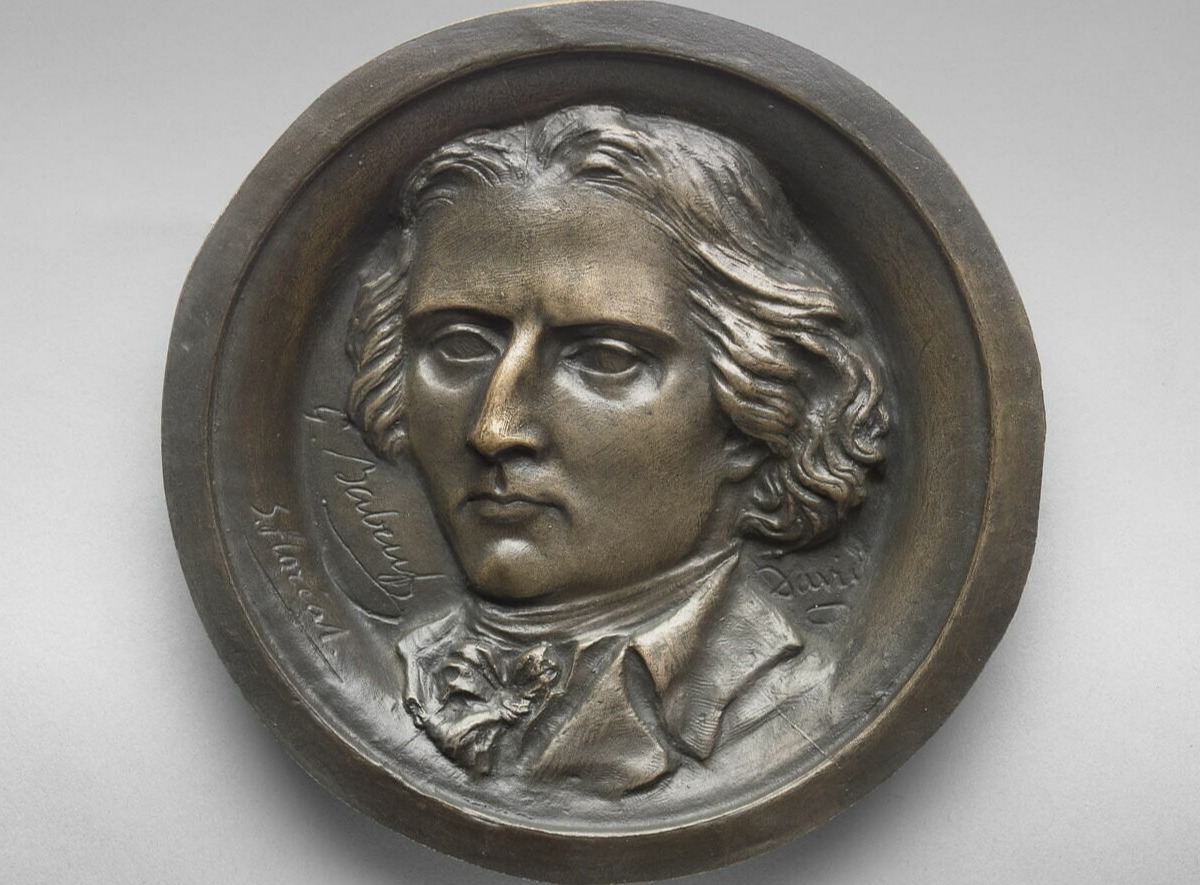
Fast forward a thousand years or so to revolutionary France, 1790s. A journalist and revolutionary author, François-Noël Babeuf, restyled himself as Gracchus Babeuf. Among other revolutionary reforms, this new 'Gracchus' was calling for fair distribution of land and grain.
Gracchus Babeuf was not only referencing the Roman Gracchi, but also the demands of the March on Versailles - a turning point in the lead-up to the revolution when grain shortages and bread prices brought women onto the streets of Paris in protest. Their numbers grew to several tens of thousands and they marched to the Royal Palace at Versailles, forcing the Royals to accept some of their reforms, taking the royal family back to Paris and placing them under effective house arrest.
Ceres takes Direct Action
From Ovid's Metamorphosis:
"with cruel hands, she broke the ploughs that turned up the soil, and, in her anger, dealt destruction to farmers, and their fields, alike, and ordered the ever-faithful land to fail, and spoiled the sowing…"
Ireland, from the early 1700s had effectively been an English colony whose trade and parliamentary procedures were overseen and restricted from the English government in London. In the 1790s, French revolutionaries both inspired and supported the Society of United Irishmen - an Irish Nationalist organisation which opposed colonial rule.
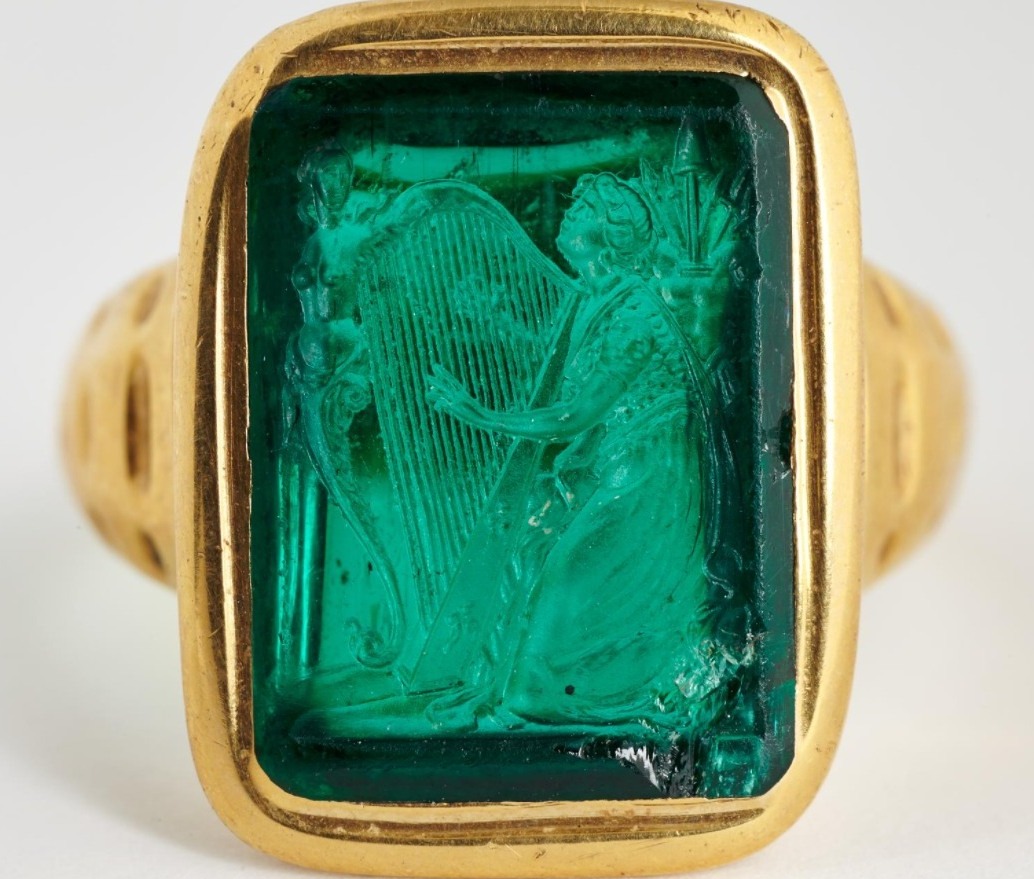
The London Corresponding Society had links with the United Irishmen (or at least, the British Government thought they did). Both groups were connected to French revolutionaries through Thomas Paine.
The London Corresponding Society (LCS) existed before the creation of the first trade unions. But it was organising and collaborating with workers, and pressuring the British government to try to bring about political reforms that would create a government of and by the people - and the workers.
The LCS - founded by a shoemaker in 1792- was, for the first time, educating workers in class consciousness and collective action.
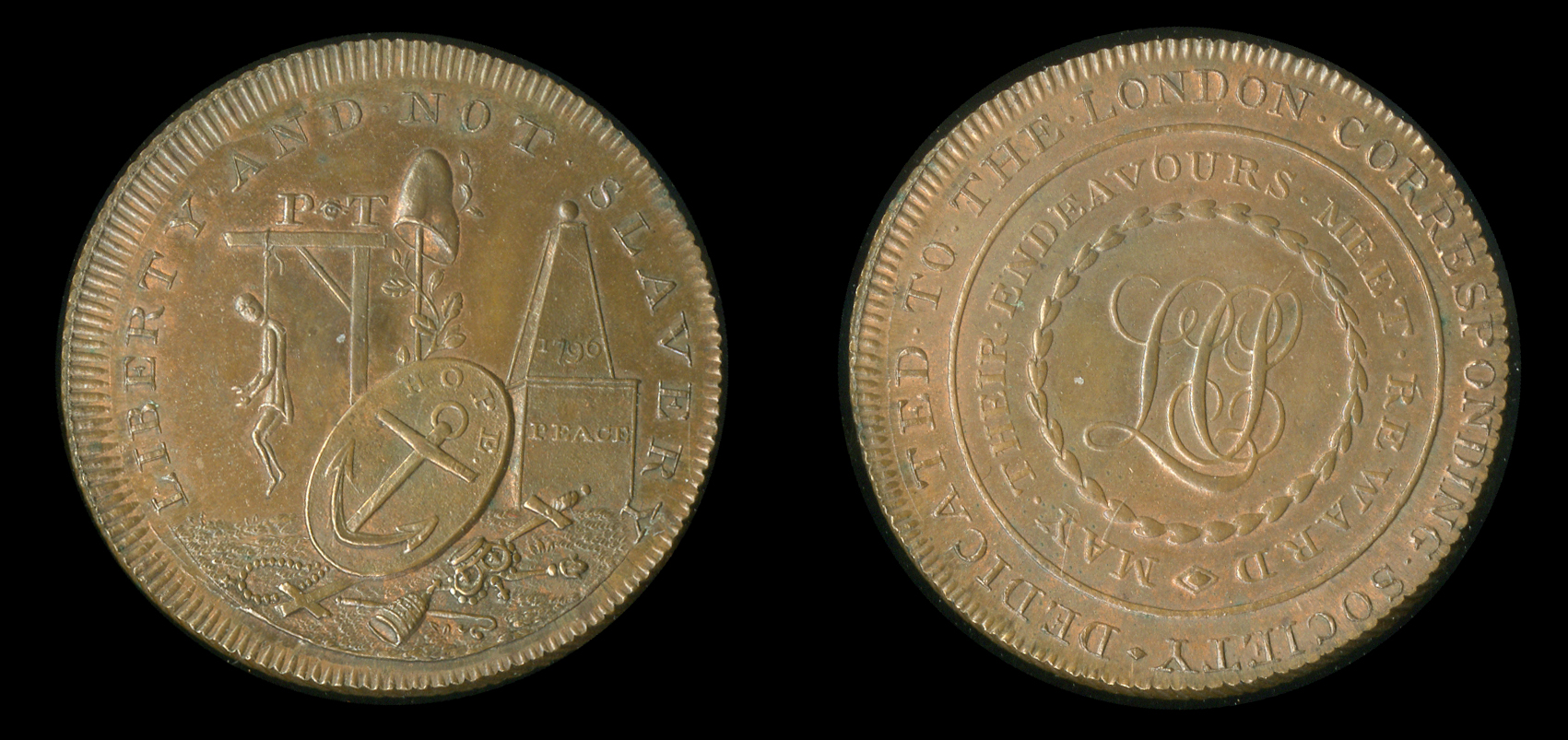
British Museum: Halfpenny (1796)
LIBERTY. AND. NOT. SLAVERY. - DEDICATED . TO . THE . LONDON . CORRESPONDING . SOCIETY .
In the 1800s a new generation of United Irishmen, the sons of Roger O'Connell were leading revolutions on two continents - Francis O’Connell led an Irish Battalion in Simon Bolivar’s Revolutionary armies in South America.
Feargus O’Connell, by the 1830s, was giving speeches to masses of mobilised workers and newly formed trade unions - fruits of the LCS - across Great Britain. Feargus O’Connell became an honorary member of the London Working Men’s Association. In 1838 this organisation published the People’s Charter - a document demanding a list of reforms from the British Parliament.
The followers of this Charter - the first truly organised working class movement in history - became known as The Chartists.

A Modern Posy Ring, 22k gold by LOST OWL containing an inscription derived from the Chartist Anthem
Like the late Roman Republic, The United Kingdom of Great Britain and Ireland was suffering profound inequalities and food scarcity. Through the 1830s and into the early 1840s, strikes and grain riots shook the country and its colony.
And in 1845, in a population already suffering from extreme food insecurity, the potato blight arrived.
The wave of Irish refugees would bring the jewellery of the diaspora to the United States on the estimated 5000 ships that set sail from the starving island to the New World through the mid-to-late 1840s.
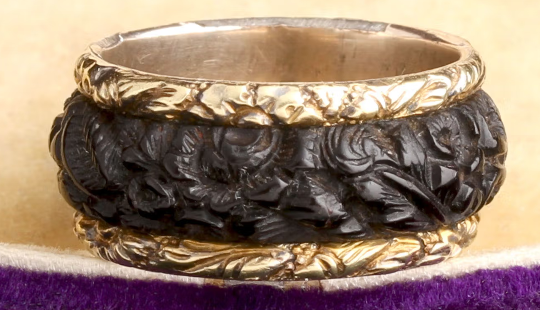
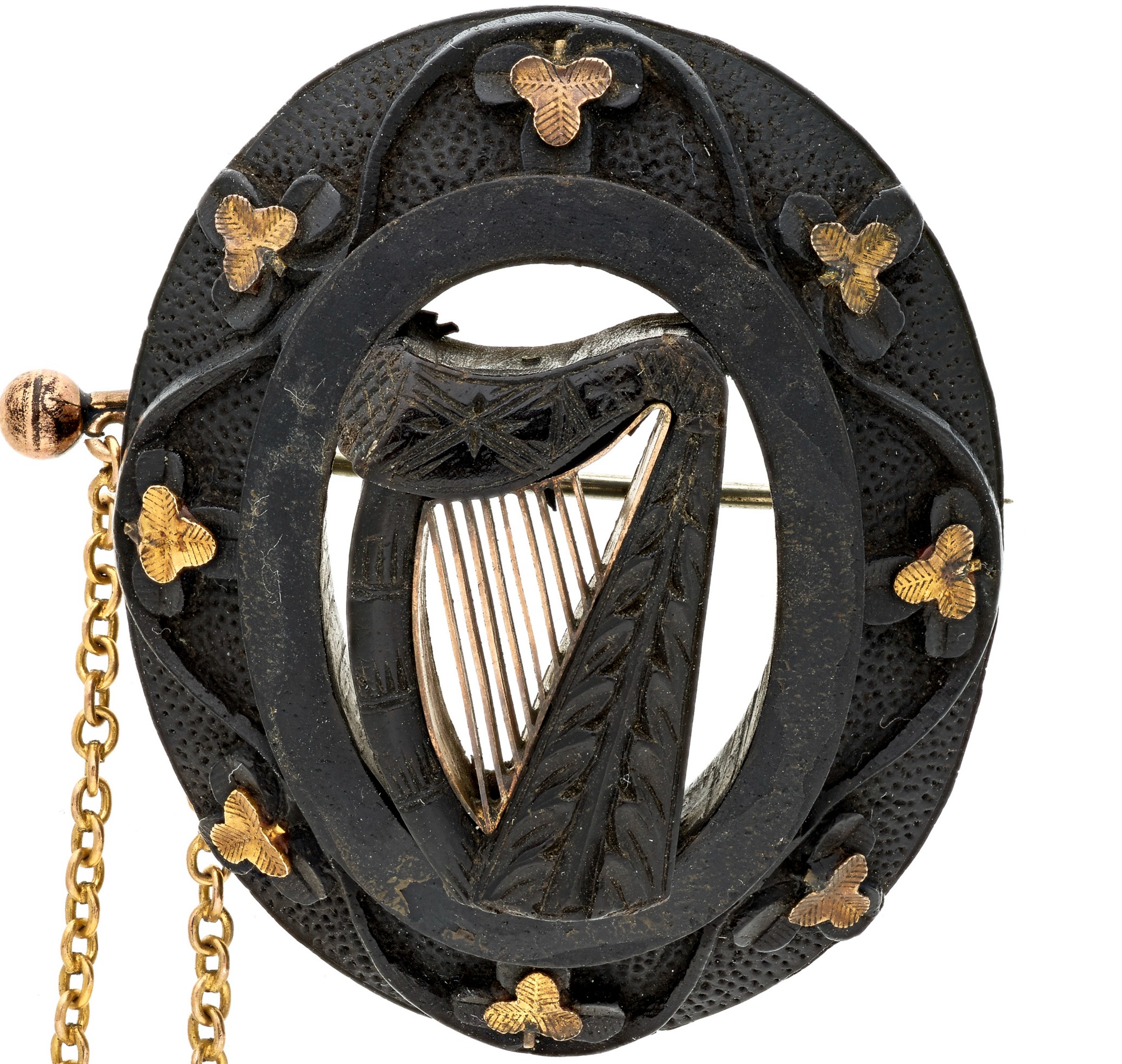
Smithsonian: Irish bog oak Brooch, National Museum of American History (mid 1800s)
The blight had already taken hold in Europe, but nowhere were the effects as profound as in Ireland.
The key to the famine, paradoxically, is not the potato but grain. Throughout the late 1840s, the London "Laissez-faire capitalist" government of Liberals, forced Ireland to export its grain while the keystone of the Irish diet - the potato - was collapsing.
But the Chartists were trying to feed people. They opposed the government through protest and petition, through peaceful and political action they tried to force the British government to change policy. They attempted to acquire and redistribute land to the poor.
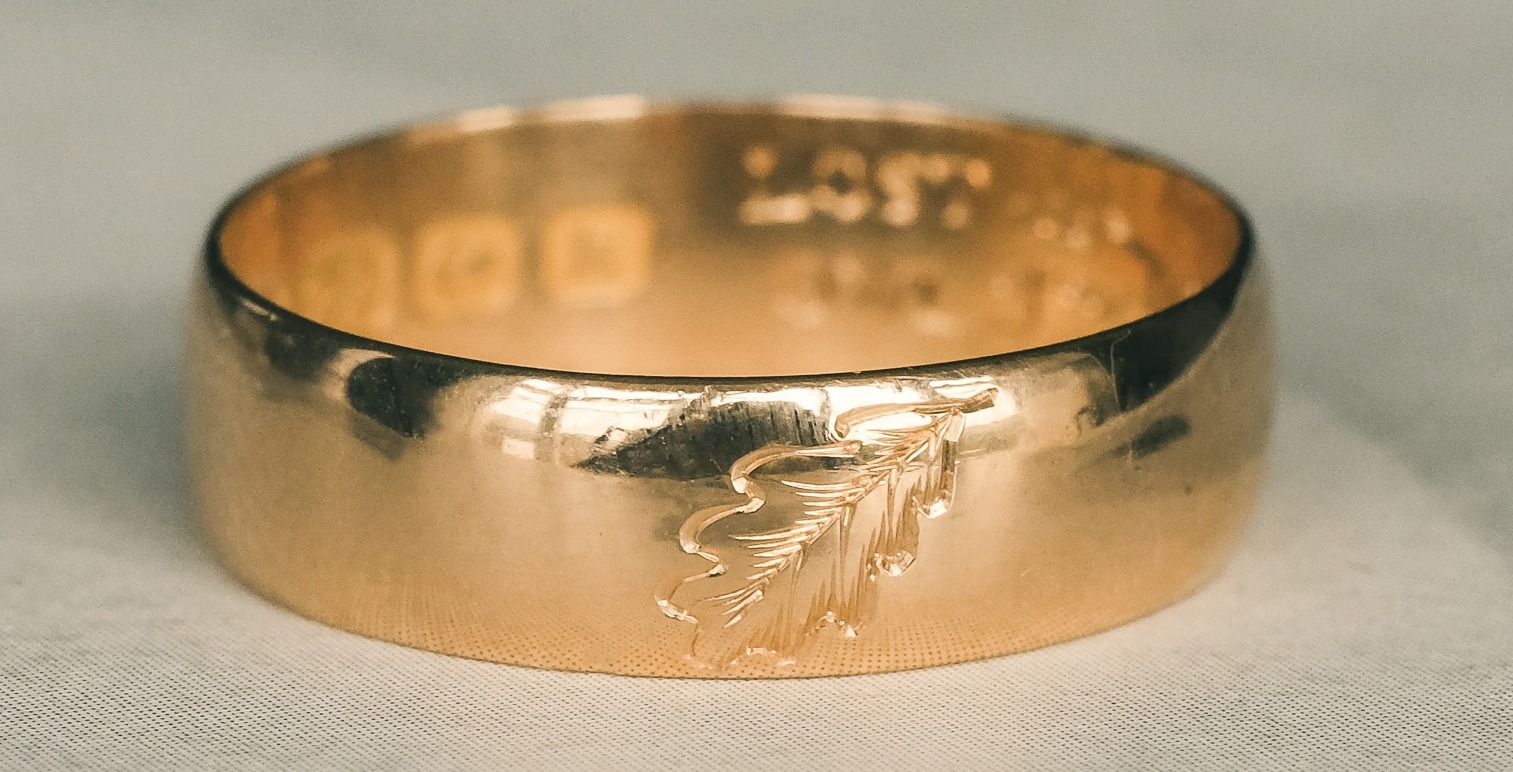
A Modern Posy Ring, 22k gold by LOST OWL containing an inscription derived from the Chartist Anthem
Nevertheless, by the end of the 1840s the population of Ireland had declined by almost a quarter - around 1 million dead and almost 2 million had boarded ships to the States.
Some of those ships were organised by the Grinnell family of New York. The politicians and merchants of the Grinnell family were great uncles of a New York banker, Mr. Grinnell. Almost a century later in 1934, Mr. E. Grinnell's wife donated a mourning ring to the MET museum.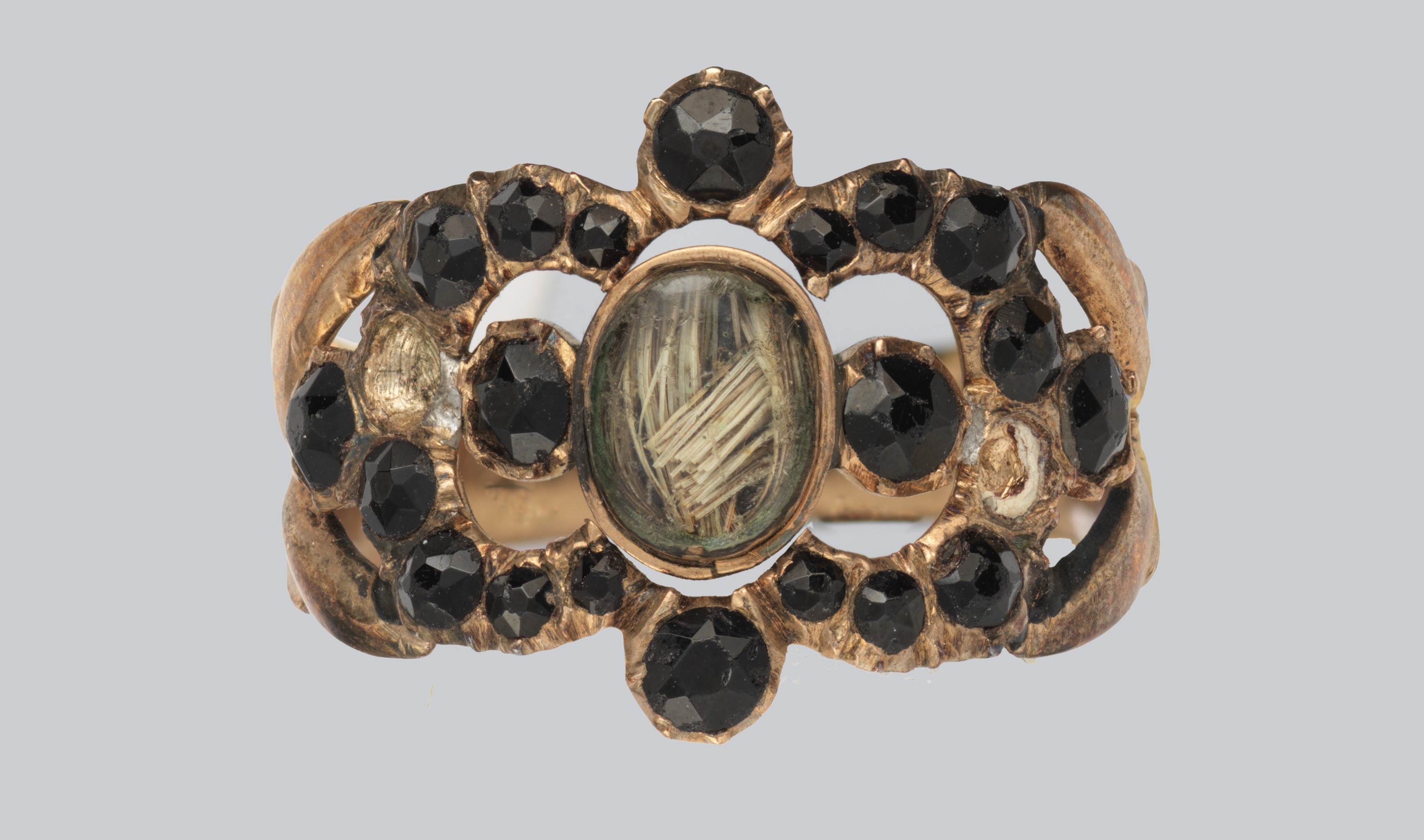
- Ob: for the Latin Obiit, meaning "he/she died".
- Oct. 21, 1848: The date of death.
- AE 19: Abbreviation for Aetatis Suae or simply Ae, meaning "in their 19th year" (19 years old).
Who does the ring commemorate? Did it, too, make the journey from Ireland to the States? And did the hair it preserves belong to a victim of England’s man-made famine?
The Grinnells, through the hundreds of ships they provided the Irish refugees, without doubt had strong connections to the Irish diaspora. But whether or not the family acquired this mourning ring from Irish immigrants selling their possessions to make a new life for themselves in the United States is impossible to say.
Jupiter negotiates with Ceres
From Ovid's Metamorphosis:
"the crops died as young shoots, destroyed by too much sun, and then by too much rain. Wind and weather harmed them, and hungry birds gathered the scattered seed. Thistles and darnel and stubborn grasses ruined the wheat harvest."
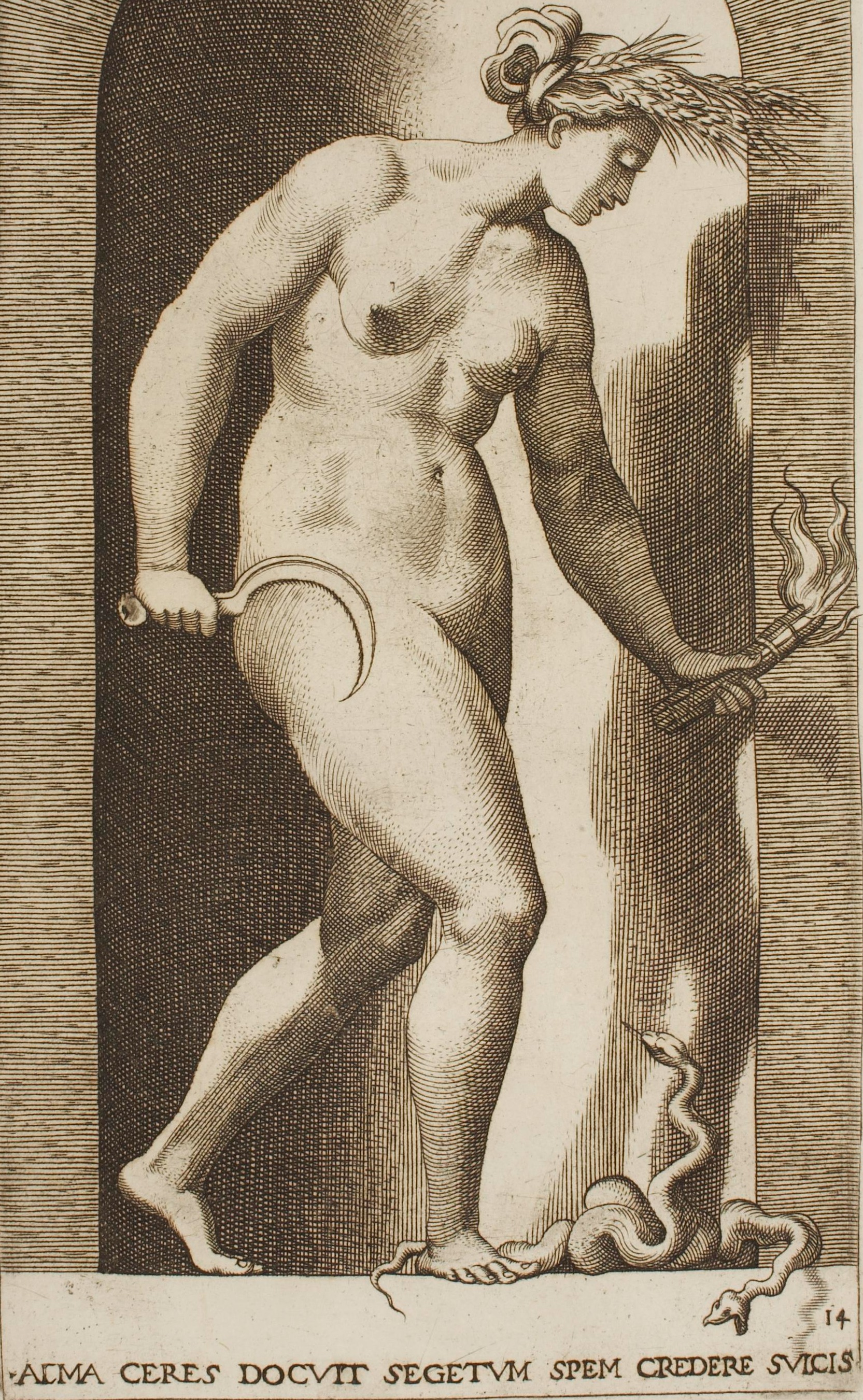
Despite the mothers aggressive form of "protest" - not only akin to a general strike but also a widespread destruction of industrial/agricultural tools (a form of protest known as luddism) - the inscription at the foot of this engraving reads:
“Kind Ceres taught us to trust in the hope of the crops.”
Ceres knowingly provokes an economic disaster in order to cripple the exploitative system which deprives heaven and earth of her daughter Proserpina (literally, of prosperity).
She does this so that her daughter might return, bringing with her the “everlasting Spring” that the world knew prior to the abduction - a world of post-scarcity.
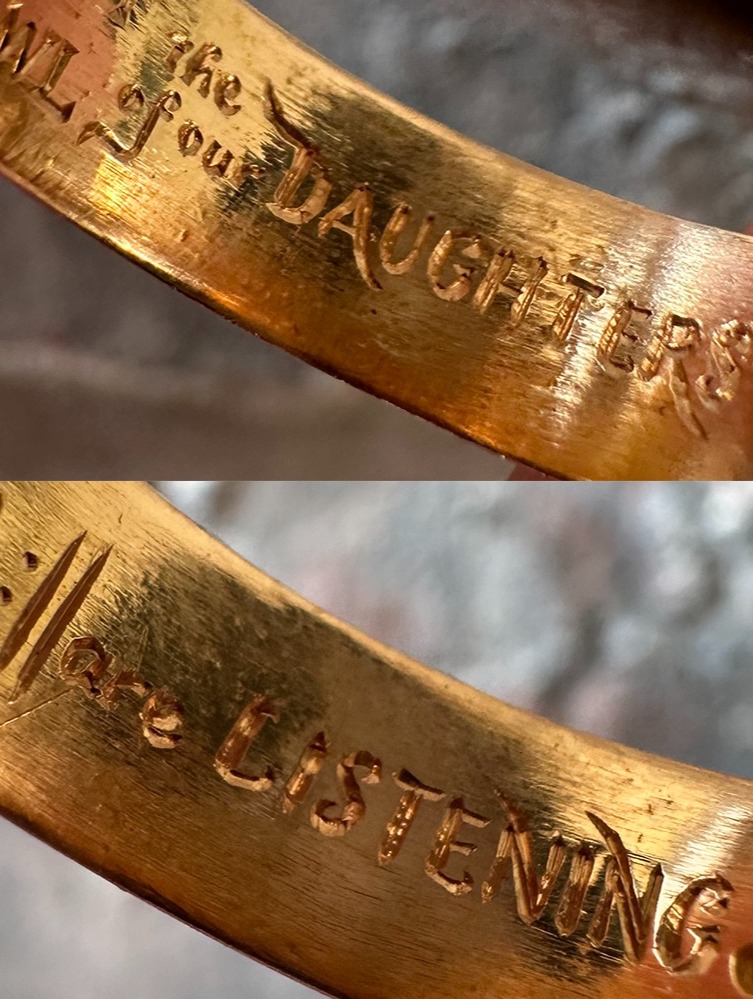
Modern Posy Ring by Lost Owl. The inscription reads: "The Daughters of our Daughters are Listening," taken from the Chartists Anthem (1847)
- Ceres and Demeter represent the forces of production (physical and human elements of production, technology, machinery, raw materials, and skills).
- Pluto represents the capitalist class. His abduction of Proserpina/Persephone is the extraction of surplus value produced by labour.
- Proserpina - prosperity - is surplus value, extracted profit.
- The Fates, according to myth, dictate the laws to which Jupiter/Zeus must adhere. So, Jupiter is the Marxist superstructure (government , state institutions etc) while The Fates represent the mode of production i.e. slavery, feudalism, capitalism - the economic system itself.
Ceres uses these instruments against Pluto, Jupiter, and the Fates - against the system that is exploiting her; against the system that seeks to deprive her of "prosperity".
She holds to ransom the instruments of labour (plough) and the subjects of labour (crops, land), which together constitute the means of production.
Might we also then read the inscription - “hope of the crops” -, which Ceres "teaches", as hope in the power of class solidarity to bring about change? In this way doesn’t Ceres tie all these stories together - from the Gracchi to the Chartists to any Grain or Bread Riot or any struggle for economic rights?
The "King of the Gods," the voice of the Fates, must negotiate with Ceres so that productive systems - brought to a standstill by Ceres - can begin again.
What are Ceres and Demeter Hiding?
Their revolutionary-syndicalist credentials, clearly. The sickles behind their backs. Or are we simply forgetting to see them? Have they been too often omitted from the retelling of the story?
Jupiter has been forced to the negotiating table. He must ensure the continued reign of the Olympian Gods and their legitimacy in the eyes of humankind. Thus, he must bargain with Ceres.
Jupiter, according to Ovid’s Metamorphosis, says:
"Proserpine shall return to heaven, but on only one condition, that no food has touched her lips, since that is the law, decreed by the Fates."
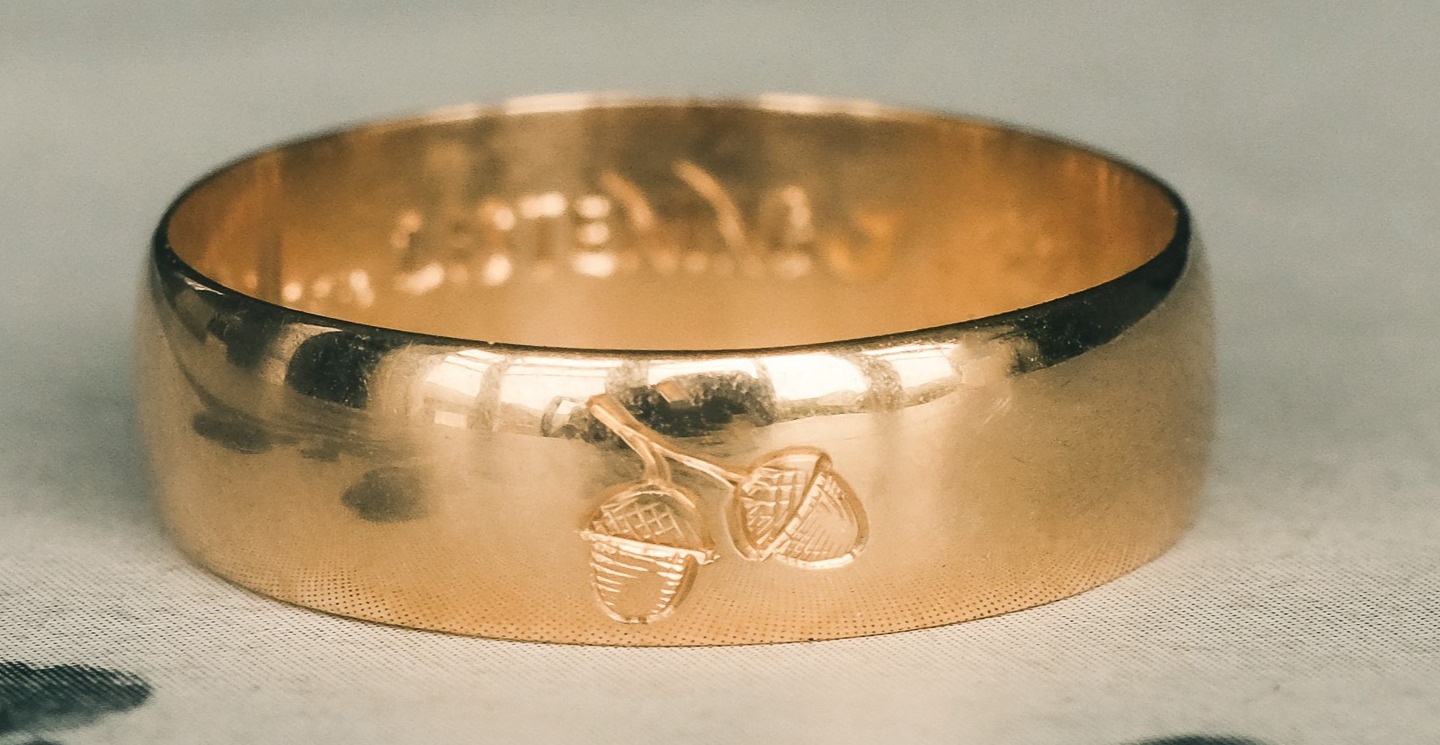
Modern Posy Ring by Lost Owl. "The Daughters of our Daughters are Listening,"
Recall the proverb from Geoffrey Chaucer's epic poem 'Troilus and Criseyde'
“Mighty oaks from little acorns grow”
Curious is the notion that Proserpina/Persephone, already in captivity, must also starve herself in order to return from the Underworld. Regardless, the (victim-blaming) story goes that Proserpina/Persephone eats pomegranate seeds while in captivity meaning she is unable to completely return, having inadvertently become Pluto’s Queen. So…
"Jupiter, intervening, between his brother and grieving sister, divides the turning year, equally. And now the goddess, Proserpina, shared divinity of the two kingdoms, spends so many months with her mother, so many months with her husband."
The implication is that Jupiter’s bargain is the only option - either the annihilation of humanity through famine or the continuity of the Olympian Gods’ regime.
Jupiter cannot alter the laws of “the Fates” - much like our Western governments, he can only do as the “fates” - market forces, the economic system - tell them.
But what about Ceres? Aren’t we confronted in the myth with something akin to Mark Fisher’s notion of Capitalist Realism? Fisher said:
"it is easier to imagine an end to the world than an end to capitalism”.
Let's change this quote to fit our context of “Olympian Realism”:
"it is easier for Ovid to imagine an end to the world than an end to domination by the Olympian Gods and the Fates”.
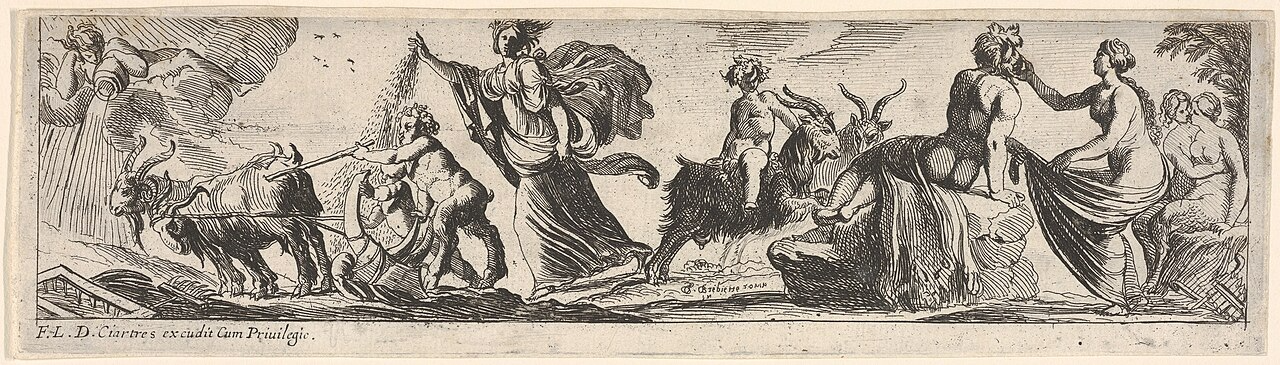
Ceres Sows Seeds and Walks behind a Goat-Drawn Plough, Pierre Brebiette, (ca. 1617–1625) MET
Conclusion: balance restored?
From Ovid's Metamorphosis:
"Now the goddess’s looks are glad... Just as the sun, hidden, before, by clouds of rain, wins through and leaves the clouds"
Proserpina's return brings happiness to Ceres that in turn brings forth the sun and the restoration of land and fertility. But Proserpina now ...
"...spends so many months with her mother, so many months with her husband"
The status quo ante is not restored, but rather Proserpina's movement to and from the Underworld and her mother's accompanying cycles of grief and happiness give rise to the changing seasons - the cyclical dying of the crops.
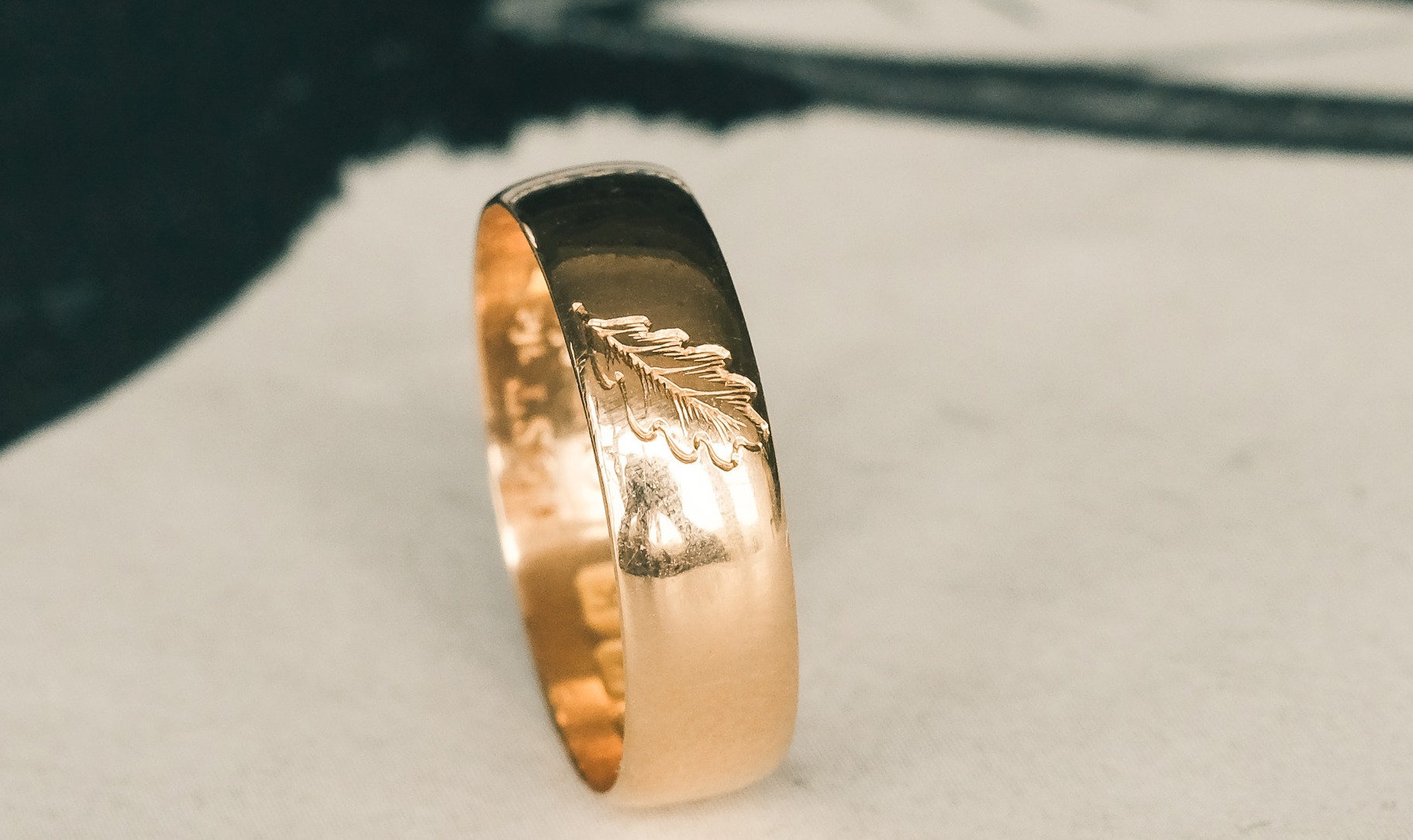
Might then, Proserpina have returned to a world no longer ruled by Jupiter and the Fates, bringing with her ever-lasting Spring and a new world of post-scarcity?
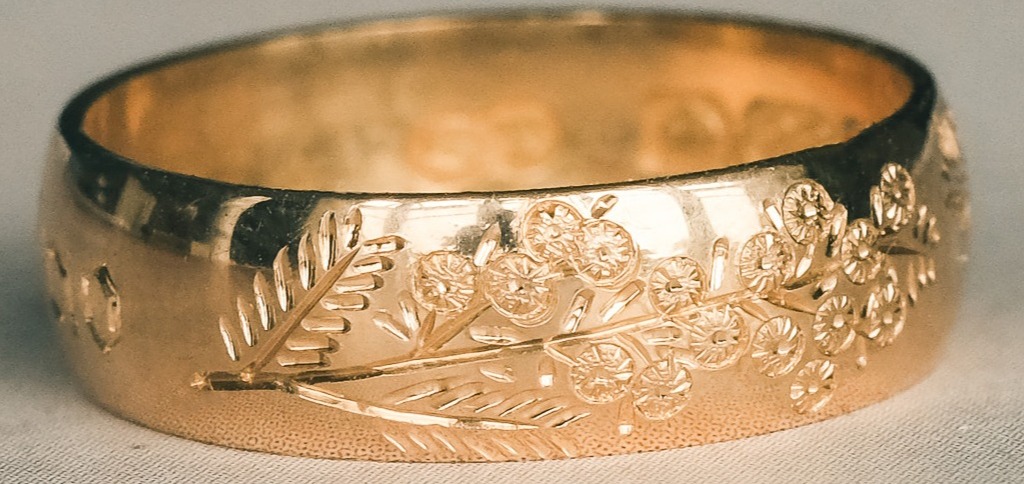
While debating about whether or not money should be used in the regime, the right-wing Communists argue in favour:
“of course, if there is no money there can be no exchange of commodities”.
The left-wingers, old followers of Trotsky, retort: “money is alienation, exploitation, there can be no money”.
And Stalin intervenes saying:
“Comrades, the truth is dialectical synthesis of the opposites: in communism, there will be money and there will not be money”.
Both right-wing and left-wing, stunned, ask comrade Stalin how this will work in practice.
Stalin replies, simply: “some people will have money, other people will not have money.”
Pluto is the right wing faction. He defends the status quo, the abduction of Proserpina and their arranged/forced marriage as a mere (capitalist) exchange of commodities.
The left-wing Ceres argues “No, the abduction is unjust, it is exploitation.”
Jupiter - supreme deity who has the ear of the Fates - intervenes and says "under the regime of the Olympian Gods, there both will be exploitation and there will not be exploitation”
Ceres and Demeter must remind us not that their position is correct, but that their search, their struggle, their forced compromise, brings to light the underlying obscenity of the debate. A system which gives rise to such a debate is already broken. The parameters of some debates are simply wrong; should simply never be on the table.
Slavoj Zizek, in his film "The Pervert's Guide to Ideology", responds to Fisher's notion of "Capitalist Realism" saying...
"Perhaps the time has come to set our possibilities straight and to become realists by way of demanding what appears as impossible"
Ceres and Demeter remind us that the limits of what is considered possible must be redefined.
The mothers symbolise new beginnings. Are they new beginnings in which their daughters are only half exploited?

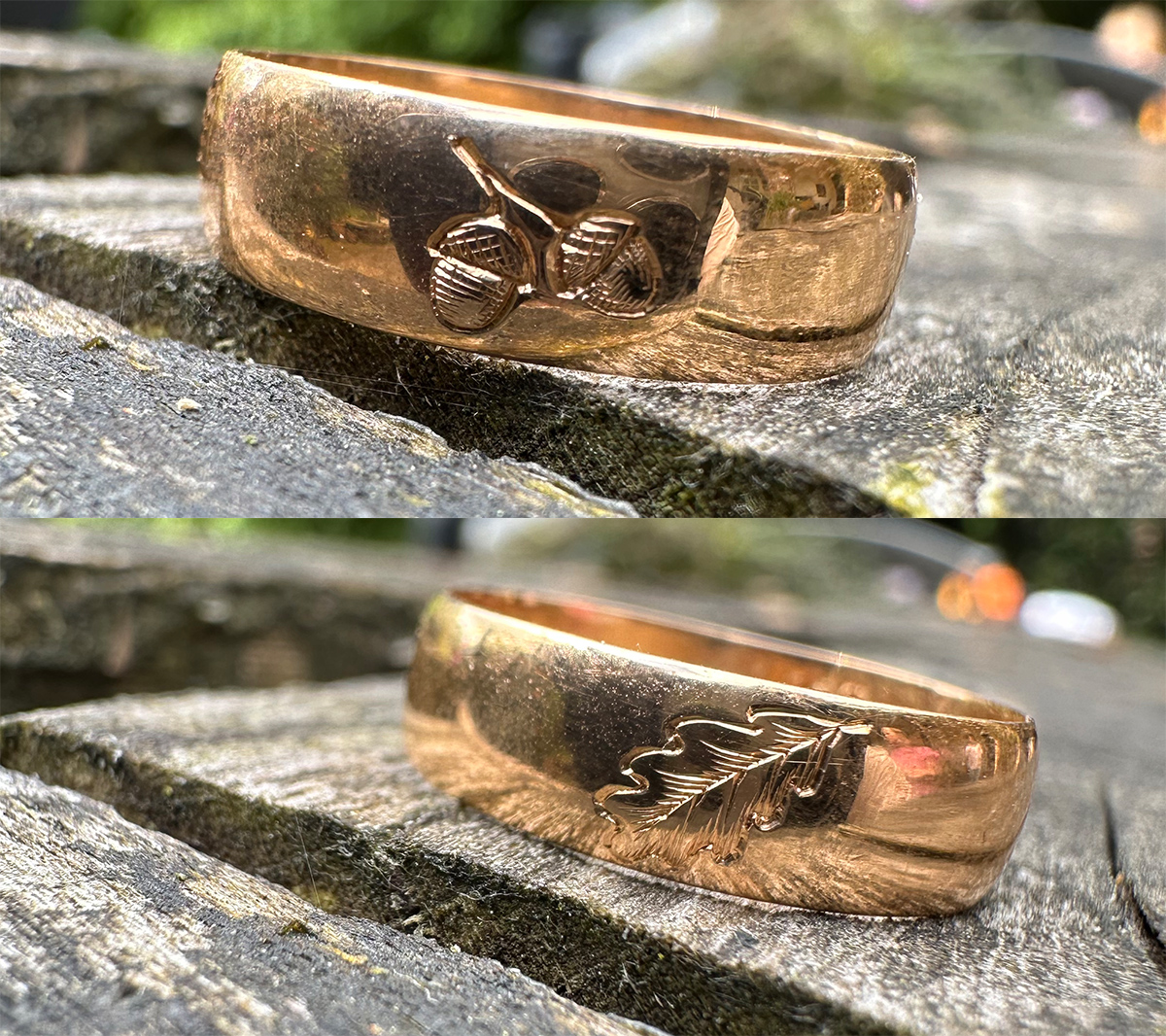
Lost Owl: A Modern Posy Ring.
Subtitle Reference
- Excerpt of Nemik’s manifesto as quoted from episode 12 of Disney's TV series Andor:
Bibliography
Mythology
- Ovid's Metamorphosis, Bk V:385-571, Translated by A. S. Kline (2000) link
Rome and the Gracchi
- Aly, Samuel, The Gracchi and the Era of Grain Reform in Ancient Rome, Harding University (2017)
- THE CAMBRIDGE ANCIENT HISTORY, VOLUME IX ,The Last Age of the Roman Republic, 146-43 B.C. Cambridge University Press (2008)
-
Arslan, Y. The land reform of the Gracchi brothers: A struggle for social justice. İçtimaiyat, 9(1), pp. 517-537 (2025)
Ireland, The Chartists and the Grinnell Family
- American Aristocracy website
-
Burtenshaw, R; The Irish Chartist who Led Britain Towards Revolution; tribunemag.co.uk (2022)
Myth and Marxism
- Fisher, M, Capitalist Realism: Is There No Alternative? Zero Books (2009)
- Marx, K, Capital, A Critique of Political Economy, Volume I, First English edition of 1887 (link)
About the Author
Daniel is a language expert and hispanophile who, through his work with heritage professionals in Spain - his adopted home - , has developed an unexpected interest in all things history-adjacent.
His collaboration with Lost Owl is an endeavour to pursue the many half-written or incomplete stories in the history of jewellery. In this capacity, he turns his attention to the stately-yet-weather-beaten garden path of art history, caringly and tentatively turning over its many loose cobblestones and hoping to capture and share in writing the great craftsmanship and the stranger-than-fiction vicissitudes that the historic-landscaper repeatedly bears witness to.
But now as he writes and as ever, he must be true to his daily passions - the pot on the stove which requires his attention, and his electronic music which will - much to his perpetual frustration - not produce itself.